
Key Takeaways
- Small apartments don't mean your cat has to miss out on vertical space, enrichment, or scratching surfaces
- Wall-mounted options and slim-profile towers are ideal for tight floor plans
- The best compact cat trees balance height, stability, and features without overwhelming a room
- Aesthetics matter in apartment living - modern minimalist designs blend into contemporary interiors
- Cat Tree Haven stocks a wide range of apartment-friendly options with free shipping across Australia
Living in a smaller home or apartment is increasingly common across Australian cities. Sydney, Melbourne, Brisbane - rents are high, floorplates are shrinking, and yet millions of us still share our compact spaces with cats who have absolutely no interest in living small. They want to climb. They want to scratch. They want to perch up high and survey everything from a position of absolute authority.
The challenge is finding a cat tree that actually fits your space without dominating it. Plenty of cat trees on the market are built for large homes with open plan living and generous floor space. When you're working with a one-bedroom apartment or a studio, you need something smarter - something that makes the most of vertical space rather than eating into your floor plan.
This guide walks through what to look for in a compact cat tree, which styles work best in smaller homes, and some specific options worth considering.
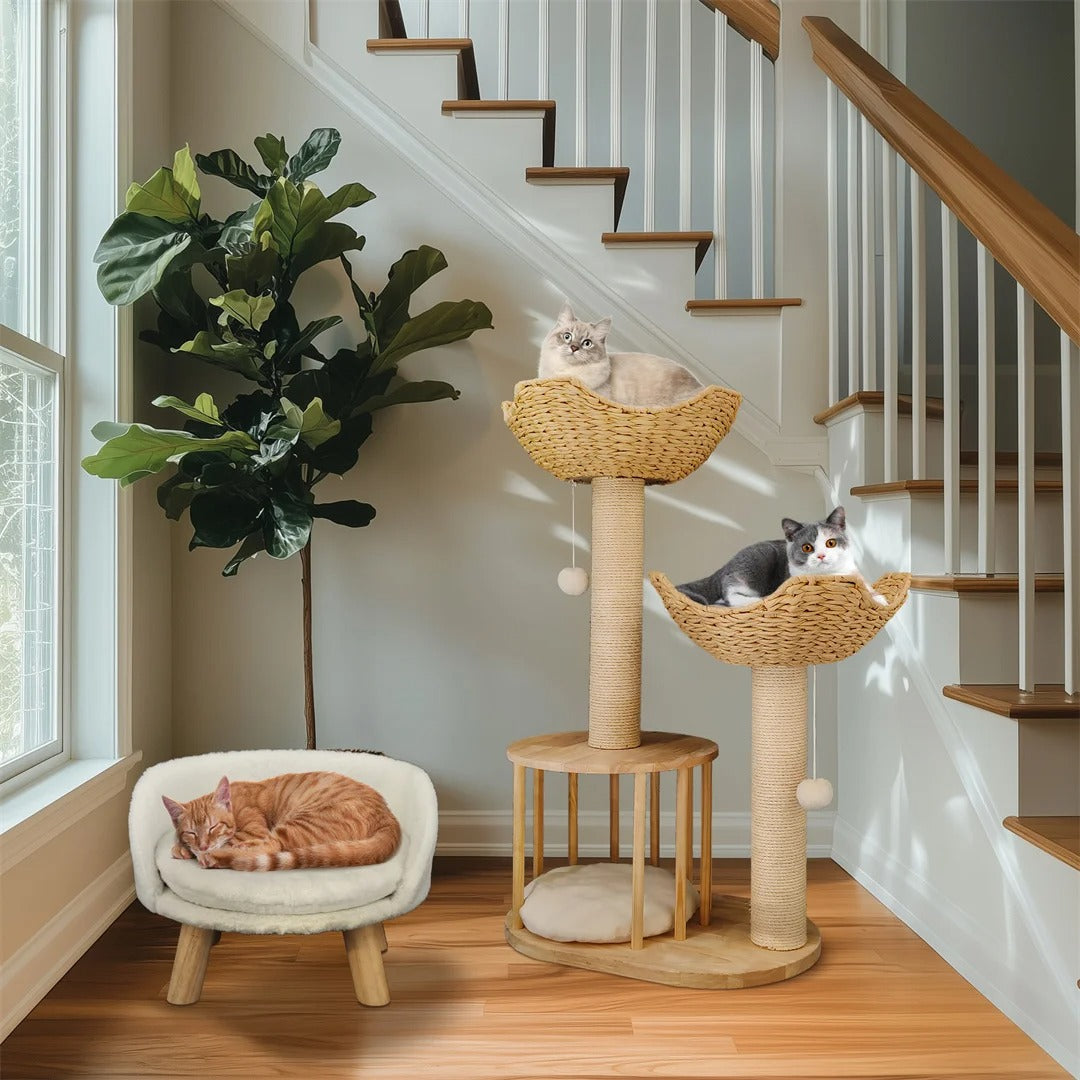
Why Vertical Space Matters More in Small Apartments
Cats are natural climbers. In the wild, height gives them safety, a vantage point, and a place to rest undisturbed. In an apartment, vertical space is genuinely underutilised - most of your wall height goes completely unused. A well-chosen cat tree reclaims that space for your cat without taking up the floor room that you need for furniture, movement, and day-to-day life.
There's also a behavioural dimension to this. Indoor cats who lack climbing and scratching outlets are more likely to redirect that energy toward your couch, curtains, or bookshelves. A cat tree placed in a meaningful spot - near a window, along a wall, in a corner - gives your cat a dedicated territory they actually want to use.
If you'd like to understand more about why this matters for your cat's overall wellbeing, our post on how cat trees promote healthy exercise and mental enrichment for indoor cats goes into this in more detail.
What to Look for in a Cat Tree for a Small Apartment
Footprint vs. Height Ratio
The best apartment cat trees are tall but narrow. A small base is essential when you're limited on floor space, but you still want enough height to give your cat genuine climbing satisfaction. Look for trees that rise to at least 90-100cm from a compact base, ideally with multiple perching levels.
Stability
A narrow, tall cat tree needs to be stable. Wobbly structures are not just annoying - they're a safety risk, and a cat that gets startled by a shaking tree often won't use it again. Look for solid bases, quality materials, and designs that have been built with stability in mind rather than purely cut down in size.
Scratching Post Quality
Sisal-wrapped posts are the gold standard for scratching surfaces. They're durable, satisfying for cats to use, and much better at redirecting scratching behaviour than carpet-covered alternatives. In a small apartment where your furniture is close by, having a proper scratching post integrated into the cat tree is especially important.
Design and Aesthetics
This is often overlooked in cat furniture guides, but it genuinely matters when you're living in a smaller space. A bulky beige carpet tower in a small apartment is hard to ignore. Modern minimalist cat trees - those using natural wood tones, clean lines, and neutral plush - blend into contemporary Australian interiors far more naturally.
We've written more about this in our guide to creating a cat-friendly home that integrates seamlessly with modern Australian interiors, which is worth reading if you care about how your space looks as much as how it functions.
The Best Types of Cat Trees for Small Apartments
Slim Multi-Level Towers (Under 100cm)
For very compact spaces - studio apartments, small bedrooms, or a corner of a living room - a tree under 100cm can still provide multiple levels, a scratching post, and a cosy perch. These aren't just starter options; some are genuinely well-designed pieces that cats use reliably.
The 97cm Scandinavian-style cat tree is a good example. It sits at a comfortable height, uses a design language that doesn't look out of place in a modern home, and packs in a scratching post and perch without sprawling across the floor. It's the kind of piece that works in a rental apartment without looking temporary.
Our small cat trees collection (under 100cm) is a good starting point if you know size is your main constraint.
Modern Minimalist Mid-Range Trees (100-150cm)
This is the sweet spot for most apartment dwellers. You get genuine height - enough for a cat to feel like they've climbed somewhere meaningful - without the structure dominating your room. Modern minimalist designs in this height range use natural wood panels, simple shapes, and restrained colour palettes that sit comfortably alongside contemporary furniture.
The 132cm modern minimalist-style cat tree is a strong option in this category. It's tall enough to be satisfying for active cats, compact enough in footprint to slot into a corner without trouble, and designed to look like a considered piece of furniture rather than an afterthought.
If you have slightly more height to work with, the 147cm modern minimalist-style cat tree gives a bit more vertical range while keeping the same clean aesthetic.
Wall-Mounted Cat Furniture
Wall-mounted options are the most space-efficient solution available. They use vertical wall space that would otherwise sit empty, leave your floor completely free, and can be arranged to create a customised climbing route that suits your specific apartment layout.
These work particularly well in apartments where floor space is genuinely at a premium but wall space is available - which is common in many Australian apartments built in the last two decades.
Our wall-mounted cat furniture collection includes shelves, hammocks, ladders, and platforms that can be combined in different configurations. The main consideration with wall-mounted options is that they do require some basic installation, and if you're renting, you'll want to check your lease agreement before drilling into walls.
Placement Tips for Small Apartments
Getting the placement right makes a significant difference to whether your cat actually uses the tree.
Near a window. Cats love watching the outside world. A cat tree positioned near a window - even a small one - gives your cat a perch with a purpose. This is especially meaningful for apartment cats who don't have outdoor access.
In a corner. Corner placement makes a slim tree feel more secure and less visually intrusive. It also means the tree is backed against two walls, which adds a sense of stability.
Away from foot traffic. Cats are more likely to use a tree that's positioned somewhere calm. A tree placed in the middle of a busy walkway gets knocked into, feels exposed, and tends to be avoided.
Not blocking light. In a small apartment, natural light is precious. Choose a position that makes use of nearby light rather than blocking it.
For more placement ideas, our piece on smart placement ideas for cat trees in compact spaces has some practical suggestions that work well in apartments specifically.
A Note on Renters
A lot of apartment dwellers in Australia are renting, which adds a layer of complexity to choosing cat furniture. Wall-mounted options may not be possible without landlord approval. That said, most freestanding cat trees leave no trace when removed - a well-built floor-standing tree with a stable base is a perfectly viable option for renters who need something they can take with them when they move.
Lightweight but stable designs are worth prioritising if you move frequently. Some of the modern minimalist trees are considerably lighter than traditional carpet-covered structures, which makes them easier to transport and reassemble in a new space.

Keeping Things Tidy in a Small Space
One genuine advantage of modern cat tree designs is that they're considerably easier to keep clean than older carpet-heavy structures. Plush fabric panels and natural wood surfaces can be wiped down, vacuumed more easily, and don't trap odours the way thick carpet does. In a small apartment where everything is close together, this matters.
Regular spot cleaning and occasional deeper maintenance keeps the tree hygienic and extends its life significantly. Our cat tree maintenance guide covers the basics clearly, including what to clean, how often, and what to avoid.
Finding the Right Fit
There's no single best cat tree for every apartment. The right choice depends on your room layout, your cat's habits and energy level, your aesthetic preferences, and how much you're willing to spend.
What we'd suggest is starting with your constraints: measure the floor space you can dedicate, measure your ceiling height, and think about where the tree will sit relative to windows and furniture. From there, filter by height range and style rather than starting with a specific product and hoping it fits.
At Cat Tree Haven, we stock a range that covers compact options for studios right through to larger trees suited to open plan apartments. Free shipping across Australia means you can order without the added logistics cost that often applies to bulky pet furniture.
Ready to Find the Right Cat Tree for Your Space?
If you'd like help narrowing down the right option for your apartment, our team is happy to assist. Whether you have a specific size constraint, a style preference, or questions about a particular product, we're easy to reach.
Get in touch with the Cat Tree Haven team and we'll help you find something your cat will actually use - without taking over your apartment.
Frequently Asked Questions
What is the best cat tree size for a small apartment? For most small apartments, a cat tree with a compact base and a height between 90cm and 150cm strikes the right balance. It gives your cat meaningful vertical space without overwhelming the room. If floor space is extremely limited, wall-mounted cat shelves or a slim-profile tower under 100cm are worth considering.
Can I put a cat tree in a rental apartment?
Yes, freestanding cat trees are perfectly suitable for rental apartments - they leave no marks and can be taken with you when you move. Wall-mounted options require drilling into walls, so you'll need landlord permission before installing those. Always check your lease agreement first.
What style of cat tree works best in a modern apartment?
Modern minimalist cat trees using natural wood, neutral plush, and clean geometric shapes blend most easily into contemporary Australian apartment interiors. They tend to look like considered furniture rather than bulky pet accessories, which matters when your living space is compact.
Are wall-mounted cat trees good for small apartments?
Wall-mounted cat shelves, hammocks, and climbing platforms are among the most space-efficient options available. They use vertical wall space that would otherwise be unused and leave your floor entirely free. The main limitation is installation - they require wall fixings, which may not be suitable for all rental properties.
How do I stop my cat from scratching furniture in a small apartment?
The most effective approach is providing a cat tree with proper sisal scratching posts and placing it near the furniture your cat is targeting. Cats scratch for natural reasons - to maintain their claws, stretch their muscles, and mark territory. A well-placed cat tree with quality scratching surfaces redirects this behaviour reliably over time.
Do cats actually use cat trees in apartments?
Yes, provided the tree is placed thoughtfully - near a window, in a calm corner, and in a location the cat passes regularly. Cats are more likely to use a tree that's positioned in a spot that already interests them rather than one placed in an out-of-the-way corner. Most cats take to a new tree within a few days.
How much should I spend on a cat tree for an apartment?
There's a wide range available at different price points. The key is not buying on price alone - a cheaper tree that's unstable or poorly made will often be avoided by cats and need replacing sooner. Investing in a mid-range option with solid construction, real sisal posts, and quality fabric tends to be better value over time than repeatedly replacing budget alternatives.