
It is one of those questions almost every cat owner eventually faces. You find yourself browsing cat trees online, and within five minutes you are staring at two products that look similar but are priced $150 apart. One costs $79. The other costs $229. And your cat, blissfully indifferent to your budget anxiety, is probably already scratching your couch.
So what actually separates a budget cat tree from a premium one? Is the difference meaningful, or are you mostly paying for packaging and marketing? We have put a lot of thought into this at Cat Tree Haven, and the honest answer is: it depends on what you are comparing. Not all expensive cat trees are worth the price. And not all affordable ones are poor quality.
Here is a straightforward guide to help you figure out where your money is best spent.
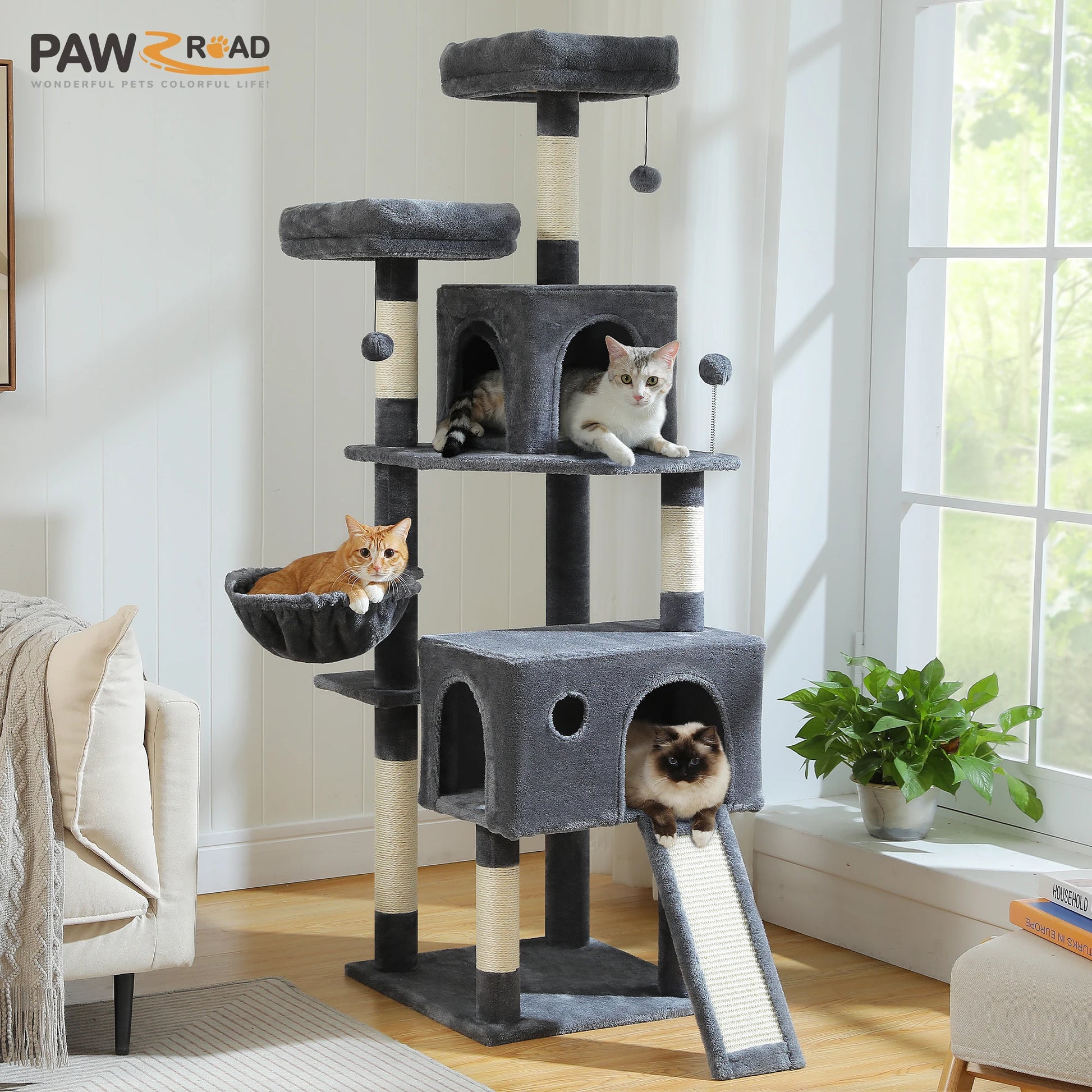
The Three Price Tiers (and What They Actually Mean)
The cat tree market generally falls into three broad categories:
Budget (under $100): These typically use MDF or particleboard cores, thinner fabric coverings, and lighter sisal rope. They can be perfectly functional for kittens, single cats, or households where the cat is not particularly active. The downside is that they tend to show wear faster, and the stability can become a concern if you have a heavier or more energetic cat.
Mid-range ($100-$250): This is where most cat owners land, and for good reason. Mid-range trees usually feature reinforced posts, better-quality sisal, thicker plush or faux fur, and sturdier bases. You get meaningfully better durability without crossing into luxury pricing. For the average Australian household with one or two cats, this tier covers most needs very well.
Premium ($250 and above): At this level, you are looking at solid wood construction, commercial-grade sisal, designer aesthetics, and sometimes modular or replaceable components. Premium cat trees are genuinely better built. However, some of the price difference in this range comes down to retail overhead, branding, and distribution markups rather than the product itself. A cat tree that costs $350 in a pet store may have left the factory at a price that a direct-to-consumer retailer could sell it for $180.
That last point matters. When you shop online through a specialist like us, you are cutting out the layers of retail rent, storage costs, and sales staff that inflate the sticker price in a physical store.
What Is Actually Worth Paying For
Regardless of which price tier you are shopping in, these are the features and materials that genuinely affect how long a cat tree lasts and how much your cat will actually use it.
1. Sisal Quality
Sisal is the natural fibre rope wrapped around scratching posts. It is what cats naturally gravitate toward because the texture satisfies their scratching instinct and helps shed the outer layer of their claws. The difference between cheap sisal and quality sisal is significant. Budget options often use short-fibre rope that frays within months. Better sisal uses tightly wound long fibres that can hold up for years of daily scratching.
If a cat tree uses carpet on its posts instead of sisal, it is worth knowing that carpet can actually encourage cats to scratch household carpet, since the textures feel similar. Natural sisal is the better choice for both durability and redirecting scratching behaviour. Our cat scratching post range covers everything from standalone scratching posts to integrated options across our full cat tree collection.
2. Base and Post Construction
A wobbly cat tree is one your cat will stop using very quickly. Cats are instinctively cautious about unstable surfaces, and a structure that sways or tips is not a place they will feel safe enough to climb, sleep, or relax. Stability comes from a wide, heavy base and thick central posts.
Budget trees often use narrow bases and hollow or thin posts. A heavier base with reinforced supports is one of the clearest signs that a tree is built to last. If you have a large cat - a Maine Coon, Ragdoll, or similar breed - this matters even more. For bigger cats, our large cat tree collection includes options specifically suited to heavier and more energetic animals.
3. Platform Size and Depth
The perches and platforms on a cat tree need to actually fit your cat. Smaller cats can manage with compact platforms, but a full-grown adult cat needs enough room to curl up comfortably or sit without hanging limbs. Budget trees sometimes have very small platforms to keep material costs down. This is an easy thing to check before purchasing - look at the platform dimensions in the product specifications, not just the overall tree height.
4. Cover Materials and Cleaning
Plush coverings on cat trees serve two purposes: comfort for your cat, and aesthetics for your home. Cheap synthetic fabrics pill, develop bald spots, and look worn within a year. Better-quality plush holds its shape and texture even with regular climbing and kneading.
Cats also shed, and cat tree fabrics trap hair. Some premium trees include removable, washable covers on condos and perches - this is genuinely useful and worth factoring into your decision if hygiene and maintenance matter to you.
Where Budget Trees Fall Short (and Where They Do Not)
It is worth being fair here. A $79 cat tree can be a perfectly reasonable choice in certain situations. If you have a young kitten whose preferences you are still figuring out, or if you want a second smaller tree in a bedroom or study without committing to a large investment, budget options have their place. They are also a reasonable starting point if you are new to cat ownership and unsure how much your cat will actually use a tree.
Where budget trees consistently underperform is in multi-cat homes, homes with larger or more active cats, and situations where long-term value matters. A cheaper tree that needs replacing every 12 to 18 months ends up costing more over five years than a well-built mid-range option bought once.
Our post on what makes a cat tree genuinely good quality goes into more detail on how to assess construction before you buy.
Expensive Does Not Always Mean Better
This is something we feel strongly about. Some cat trees carry a high price tag simply because of where they are sold - in premium pet boutiques with high overhead, or through brands that invest heavily in lifestyle marketing. The product itself is not necessarily superior to what you can find at a mid-range price through a direct retailer.
That is the model we have built at Cat Tree Haven. We work directly with factories and sell online, which removes the distribution markups that can turn a $90 product into a $280 shelf item. Our goal has always been to offer well-built, thoughtfully designed cat furniture at a price that Australian cat owners can realistically afford - not to charge premium prices for the sake of appearing premium.
If you are comparing options and wondering whether a significantly higher price reflects genuine quality or mainly reflects retail positioning, it is worth reading our honest breakdown on whether expensive cat trees are actually worth it.
A Few Products Worth Considering
If you are currently deciding between tiers, here are some options across our range that illustrate the difference between well-built and merely functional.
For a mid-range tree that genuinely delivers: the 150cm cactus cat tree with hammock and condo offers solid sisal posts, a cosy enclosed condo, and a hammock in a fun design that suits most standard Australian living spaces. It is well-suited to single-cat and two-cat households that want real value without a premium price tag.
For something larger and more robust: the 142cm solid natural wood cat tree uses genuine wood construction rather than MDF, which puts it closer to premium quality at a mid-range price point. It is a good option for larger cats or owners who prioritise longevity.
And for those who prefer extra vertical space and adjustability: our floor-to-ceiling adjustable cat tower provides the kind of height that active climbers genuinely use, with the added stability of ceiling tension rather than base weight alone.
How to Think About Value (Rather Than Just Price)
A useful mental shift when shopping for cat furniture is to think about cost per year rather than upfront cost. A tree that costs $150 and lasts five years works out to $30 per year. A tree that costs $75 but is replaced after 18 months works out to $60 per year, with the added inconvenience of reassembly and disposal. The maths generally favours better-built options, even when they cost more upfront.
The other factor worth thinking about is your cat's specific needs. An older or less mobile cat does not need a towering multi-level structure. A kitten or a highly active younger cat will use every level you provide. A multi-cat household genuinely benefits from more perches, more vertical territory, and more robust construction. Matching the tree to your cat's life stage and energy level helps you spend where it counts rather than on features your cat will ignore.
For a detailed guide on this, our post covering how to choose a cat tree for older or less mobile cats has some practical guidance worth reading before you decide.

The Bottom Line
Budget cat trees are not automatically bad, and premium cat trees are not automatically worth the price. The difference that matters is in the materials, the stability, and the construction - not the label or the price point.
What we try to offer at Cat Tree Haven is the quality you would expect from a premium product at a price that removes the retail overhead you would otherwise be paying for. If you are unsure which option suits your cat and your home, we are happy to help you work through it.
Get in touch with our team and we will point you in the right direction. No sales pressure, just honest advice from people who genuinely care about getting this right for your cat.
Frequently Asked Questions
Is a more expensive cat tree always better quality?
Not necessarily. Price reflects many factors, including retail markups, branding, and distribution costs. A direct-to-consumer retailer can sometimes offer better-built products at lower prices than a high-street pet store. Focus on materials and construction rather than price alone when comparing options.
What is the most important feature to look for in any cat tree?
Stability. A cat tree that wobbles or tips will be ignored or actively avoided by your cat. Look for a wide, heavy base and thick, reinforced central posts. This is important regardless of price tier.
Is natural sisal worth paying extra for?
Yes. Natural sisal lasts significantly longer than carpet-wrapped posts and better satisfies a cat's scratching instinct. It is also less likely to encourage scratching of household carpets. Tightly wound long-fibre sisal is what to look for.
How long should a well-built cat tree last?
A mid-range to premium cat tree with quality materials should last three to five years or more with regular cleaning. Budget options may need replacing within 12 to 18 months under heavy use.
Is MDF or particleboard a problem in cat trees?
Not inherently. Many well-built cat trees use MDF or particleboard. The concern is whether the material is thick enough and the joins are secure enough to maintain stability over time. Very thin MDF can crack or sag under a heavier cat's repeated jumping.
Do I need a premium cat tree for a single, small cat?
Probably not. A mid-range option with quality sisal and good stability is usually more than sufficient for a single adult cat of average size. Save the investment in a premium or heavy-duty tree for multi-cat homes or larger breeds.
What should I do if my cat ignores an expensive cat tree?
Placement matters as much as the tree itself. Cats prefer elevated positions near windows or in areas where the household is active. Try moving the tree to a different spot, adding catnip, or hanging a toy from one of the perches to encourage initial use. Our team is always happy to offer advice if you get in touch.