
Keeping your cat tree clean is not just about appearances. Fabric surfaces collect fur, dander, dust, and everyday odours far more quickly than most owners realise. One of the most common questions we hear at Cat Tree Haven is simple but important: can you actually wash cat tree fabric, or will cleaning ruin it?
The short answer is yes, cat tree fabric can usually be cleaned, but how you do it matters. Washing the wrong way can weaken materials, damage internal boards, or leave smells that cats avoid. In this guide, we explain what works, what does not, and how to clean your cat tree fabric safely without shortening its lifespan.
Key takeaways
- Most cat tree fabrics can be cleaned, but not all should be fully washed
- Vacuuming and spot cleaning handle most mess effectively
- Removable covers are easier to maintain than fixed fabric
- Strong chemicals and excess water can damage structure and adhesives
- Regular gentle cleaning helps cat trees last longer and smell fresher
Why cat tree fabric gets dirty so quickly
Cats spend a lot of time on their trees. They sleep, groom, scratch, and play on the same surfaces day after day. Fabric areas act like a magnet for loose fur, oils from your cat’s coat, and airborne dust.
In Australian homes, warmer weather and open windows can increase dust levels. Over time, this buildup can cause lingering odours and make fabric feel flat or rough. Cleaning helps maintain hygiene and keeps the cat tree appealing so your cat continues to use it.
If you are choosing your first setup or upgrading, the material choices across the Cat Tree Haven range are designed with real-world use and maintenance in mind.
Can you wash cat tree fabric?
The answer depends on how the fabric is attached and what sits underneath it.
Most cat trees fall into one of three categories:
- Fixed fabric glued or stapled to boards
- Removable fabric components like cushions or hammocks
- Mixed designs with both fixed and removable sections
Understanding which type you have is essential before reaching for water or detergent.
Fixed fabric surfaces
Fixed fabric is the most common. It is usually wrapped tightly around timber or engineered boards and secured with adhesive.
These surfaces should not be soaked or machine washed. Excess water can:
- Weaken glue bonds
- Cause boards to swell or warp
- Trap moisture inside the structure
For fixed fabric, cleaning should focus on dry methods and light moisture only.
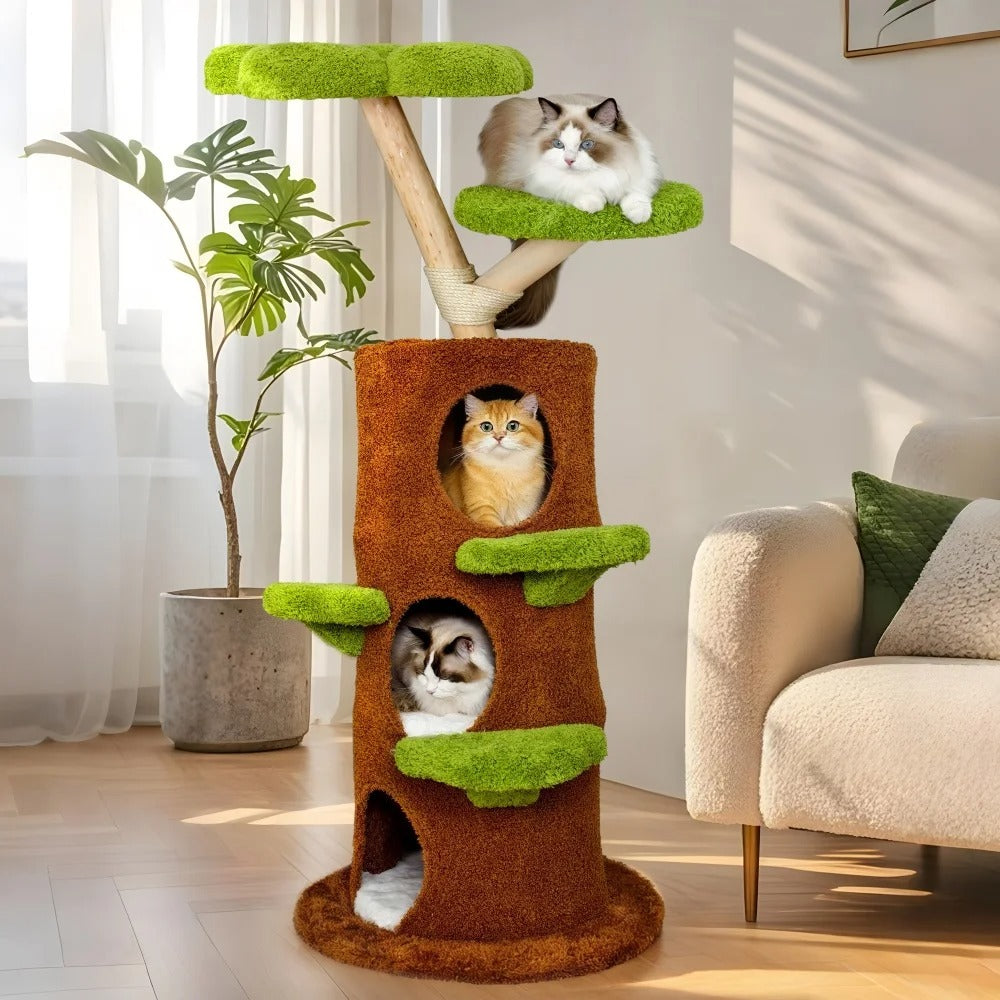
Removable fabric parts
Some cat trees include removable cushions, hammocks, or covers. These can often be washed more thoroughly, provided you follow care instructions carefully.
Always check:
- Stitching quality and seams
- Whether inner padding is foam or fibre
- Any manufacturer guidance included with the product
Trees with modular or removable components are generally easier to maintain long term.
Mixed material designs
Many modern cat trees combine fabric, wood, and sisal rope. Each material needs different care. Treating everything the same can cause avoidable damage.
Our guide to choosing durable and well-made cat trees explains how materials affect cleaning and longevity.
Cleaning methods that actually work
After years of customer feedback, these are the methods that consistently deliver good results without harming the structure.
Step 1: Vacuum regularly
Vacuuming is the most important and most overlooked step.
Use a brush attachment and:
- Vacuum all fabric platforms
- Get into corners and seams
- Clean inside condos and tunnels
Weekly vacuuming significantly reduces odour and allergen buildup and makes deeper cleaning easier when needed.
Step 2: Spot clean stains gently
For spills, vomit, or visible marks, spot cleaning is effective when done carefully.
How to do it:
- Mix lukewarm water with a small amount of mild detergent
- Dip a clean cloth and wring it out thoroughly
- Blot the stain rather than rubbing
- Use a second cloth with plain water to remove residue
Avoid soaking the area. Always allow the fabric to dry fully before your cat uses it again.
Step 3: Deodorise without strong chemicals
Strong scents can deter cats from using their tree. Instead of sprays, try gentle options.
Light deodorising methods:
- Baking soda sprinkled lightly, left for 15 minutes, then vacuumed
- Fresh air circulation near an open window
- Regular vacuuming to remove odour-causing debris
Never use essential oils or heavily fragranced cleaners on cat furniture.
Step 4: Washing removable fabric safely
If your cat tree includes removable fabric, hand washing is usually safest.
Best practice:
- Use cold or lukewarm water
- Choose a mild, unscented detergent
- Hand wash or use a gentle machine cycle inside a laundry bag
- Air dry completely away from direct heat
Avoid tumble drying unless the care label clearly allows it.
Products with removable elements, like the multi-level cat tree with condo and soft platforms, make this process far simpler.

What to avoid when cleaning cat tree fabric
Some common cleaning habits cause more harm than good.
Avoid:
- Steam cleaners, which force moisture deep into boards
- Bleach or disinfectants that break down fibres
- Saturating fabric with water
- Scrubbing aggressively, which damages pile and stitching
These methods may clean quickly but often shorten the usable life of the cat tree.
Cleaning different cat tree materials
Cat trees are rarely just fabric. Knowing how to clean each surface properly helps maintain the whole structure.
Sisal scratching posts
Sisal should never be washed with water.
Instead:
- Vacuum to remove loose fibres and dust
- Trim loose strands carefully with scissors
- Rotate the tree to spread wear evenly
If scratching behaviour is intense, pairing your tree with a separate scratching option from the cat scratching post collection can reduce fabric wear.
Wooden or solid surfaces
Wooden platforms and frames need minimal moisture.
Use:
- A lightly damp cloth
- Immediate drying
This applies to designs like the modern solid wood cat tree with sisal posts, where fabric and wood meet closely.
Enclosed condos and tunnels
These areas trap odours faster.
Monthly maintenance should include:
- Vacuuming interior walls
- Spot cleaning visible marks
- Allowing airflow for drying
If your cat avoids enclosed areas after cleaning, residual moisture or scent may be the cause.
How often should you clean cat tree fabric?
Cleaning frequency depends on use and household conditions.
General guidance:
- Vacuum weekly or fortnightly
- Spot clean as needed
- Deeper cleaning every 1 to 3 months
Multi-cat households may need more frequent attention. Our article on maintaining cat furniture for long-lasting use provides additional context for busy homes.
When cleaning is no longer enough
Sometimes fabric cleaning cannot solve underlying wear.
Signs it may be time to repair or replace:
- Fabric pulling away from boards
- Persistent odour after cleaning
- Flattened or torn sleeping surfaces
If the structure is still solid, replacing individual components may be possible. If not, upgrading to a design better suited to your cat’s habits can improve hygiene and comfort long term.
Our overview of signs your cat needs updated furniture explains how to assess when maintenance is no longer sufficient.
Cleaning with long-term use in mind
At Cat Tree Haven, we design our products to balance comfort, durability, and practical care. Regular, gentle cleaning helps protect materials and ensures your cat continues to enjoy their space.
By avoiding harsh methods and focusing on consistent upkeep, most cat trees remain clean, safe, and inviting for years.
Need help with cleaning or choosing the right materials?
If you are unsure how to clean a specific model or are considering a design that better suits your cleaning routine, we are here to help.
Contact Cat Tree Haven for personalised advice on care, maintenance, or choosing a cat tree that fits your home and your cat’s lifestyle.
Frequently asked questions
Can I put my whole cat tree in the shower or outside to hose it down?
No. Excess water can damage internal boards and adhesives, even if the fabric appears to dry on the surface.
Is it safe to use pet disinfectant sprays on cat tree fabric?
Only if they are clearly labelled as fabric-safe and unscented. Even then, use sparingly.
Why does my cat avoid the tree after cleaning?
Residual moisture or unfamiliar smells can deter cats. Ensure thorough drying and avoid scented products.
Can I remove cat hair without vacuuming?
Lint rollers or rubber brushes can help between vacuuming sessions but should not replace it.
How do I clean a cat tree in a small apartment?
Regular vacuuming and spot cleaning prevent the need for large-scale washing that requires space.
Does washing fabric reduce its lifespan?
Frequent or aggressive washing can shorten fabric life. Gentle, targeted cleaning is more effective.
Are removable fabric parts worth it?
Yes. They make deeper cleaning easier and often extend the overall lifespan of the cat tree.