
Key Takeaways
- Natural light interiors work best with cat furniture in neutral tones, natural wood, and minimal visual clutter
- Wall-mounted cat furniture is one of the smartest choices for bright, open-plan Aussie homes
- Materials like solid wood and sisal photograph well and age gracefully in sun-drenched spaces
- Placement near windows satisfies your cat's instinct to climb and perch while keeping the room cohesive
- Minimalist and Scandinavian-style cat trees tend to blend seamlessly into modern Australian interiors
If you have spent any time decorating a home filled with natural light, you already know the challenge. Everything shows. Shadows, texture, colour temperature - it all becomes much more apparent when the sun streams through your windows for most of the day. That same scrutiny applies to your cat's furniture, which, let's be honest, is often one of the larger objects in the room.
Choosing cat furniture that actually belongs in a bright, airy space is not about compromise. It is about understanding how light interacts with materials and colour, and then matching that understanding to what your cat genuinely needs. At Cat Tree Haven, we have thought a lot about this. We know that Australian homes, particularly those built or renovated in the last decade, lean heavily toward open-plan layouts, large windows, and a palette that lets natural light do the decorating. Our range reflects that.
Here is how to approach the decision thoughtfully.
Why Natural Light Changes Everything
Natural light is not static. In the morning, it tends to be cooler and more directional. By midday, it flattens out and bleaches lighter tones. In the afternoon, it warms up significantly, casting golden tones across everything in the room.
This means a cat tree that looks fine in a dimly lit corner can look completely wrong when placed near a large north-facing window. Plush fabrics that appear soft and muted under artificial light can look faded or mismatched in full sun. Dark tones that anchor a space beautifully in one light can feel heavy and out of place in another.
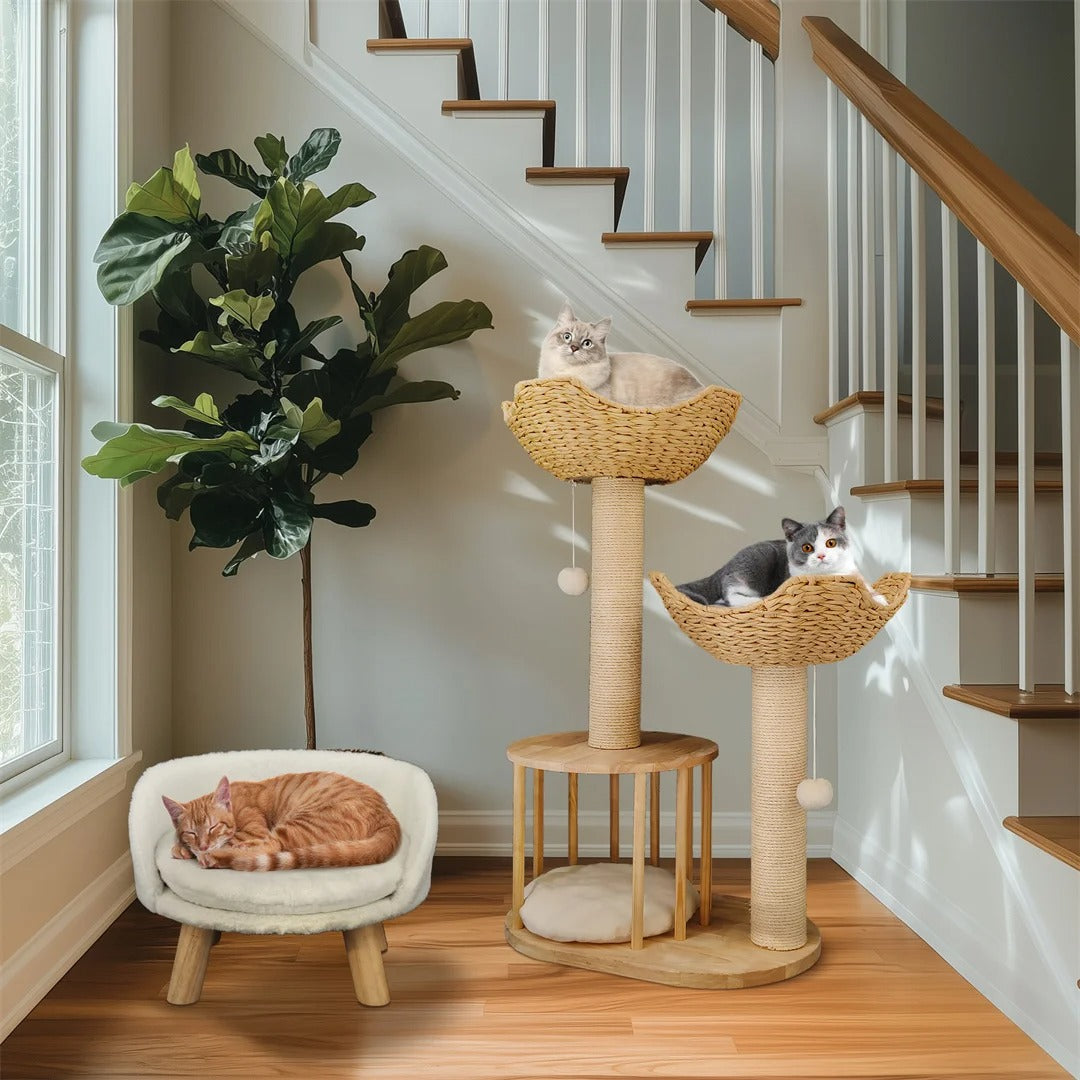
The materials and colours that tend to hold up best across all of these conditions are natural wood, neutral upholstery, and clean silhouettes. Not coincidentally, these are also the materials and shapes that tend to photograph well for interiors - which is why Scandinavian and Japanese-influenced design has become so dominant in Australian homes.
Materials That Work in Light-Filled Spaces
Solid Wood
Wood is forgiving. It has a warmth that works in both morning and afternoon light, and it develops character over time rather than looking worn. For cat furniture specifically, solid wood frames with sisal scratching posts are a reliable choice because sisal also ages well - it does not show dirt the way plush fabric does, and its natural texture complements timber nicely.
Our 91cm modern solid wood cat tree with sisal scratching post is a good example of how a compact piece can feel intentional rather than incidental in a well-decorated room. The clean lines and natural materials mean it reads more like furniture than pet accessory.
Neutral and Light Upholstery
Cream, grey, and beige tones work well in naturally lit spaces because they do not compete with the light itself. The risk with very light plush is that it shows fur, but for many cat owners, that is a manageable trade-off when the alternative is a bulky piece in a colour that clashes with the rest of the room.
Avoid High-Shine Synthetics
Shiny faux fur and heavily textured synthetic fabrics can look cheap in bright light. They also tend to attract and hold static, which means more fur and more visible wear over time. If your home gets a lot of direct sunlight, prioritise matte finishes and natural fibres wherever possible.
Styles That Suit Australian Interiors
Minimalist and Scandinavian
This is probably the easiest fit for most modern Australian homes. Simple geometric shapes, natural wood, and a restrained colour palette work in almost any light condition. Our 147cm modern minimalist cat tree is a strong option here - it has the vertical presence that cats love without the visual weight of more traditional designs. In a room with high ceilings and good natural light, a piece like this reads as a deliberate design choice rather than something that simply had to go somewhere.
Wall-Mounted Systems
Wall-mounted cat furniture is arguably the best solution for light-filled interiors because it removes the footprint from the floor entirely. It keeps the sightlines clean, which matters a great deal in open-plan spaces. It also allows you to position the furniture in ways that take advantage of existing light, such as running a series of shelves and platforms along a sun-facing wall.
Our wall-mounted wooden climbing shelves with hammock and jumping platform work well in this context. The natural wood finish sits comfortably against both painted and textured walls, and because the piece attaches directly to the wall, it does not interrupt the floor space that natural light loves to travel across.
If you are considering this approach more broadly, our wall-mounted cat furniture collection has a range of options suited to different wall configurations and room sizes. We have also written about why wall-mounted cat trees can be a genuinely practical choice for smaller Australian homes if you want to explore the reasoning further.
Placement Matters as Much as Style
Even the right piece of furniture can feel wrong if it is placed without thought. In a naturally lit interior, placement is a design decision in its own right.
Near Windows
Cats are instinctively drawn to height and light. A cat tree or perch positioned near a window gives your cat exactly what it wants while placing the piece in a location that makes visual sense to anyone looking at the room. The furniture becomes part of the window view rather than something that interrupts it.
Against a Feature Wall
If your home has a textured feature wall - exposed brick, timber panelling, or a deep-toned paint - placing cat furniture against it creates a natural visual grouping. The furniture anchors itself to the wall rather than floating in the middle of the room.
Avoid Cluttered Corners
One of the most common mistakes is pushing cat furniture into a corner simply to get it out of the way. In a light-filled room, corners are often where shadows gather - and a cluttered corner with a bulky cat tree can drag the whole aesthetic down. If the corner is your only option, opt for a taller, narrower silhouette that draws the eye upward rather than outward.
For more detail on placement thinking, our piece on fitting cat trees into your existing home decor covers the topic in more depth.
Thinking About Scale
Natural light tends to exaggerate scale. Small rooms feel smaller when cluttered, and large rooms feel more spacious when furniture is proportionate. The same logic applies to cat furniture.
If you have a compact home or apartment with good natural light, a floor-to-ceiling cat tree may genuinely overpower the space, even if your cat would love it. In that case, a piece from our large cat tree collection (100cm to 200cm) offers a middle ground - substantial enough to satisfy an active cat, but scaled appropriately for rooms that are not enormous.
On the other hand, if you have high ceilings and a generous open-plan living area, a taller structure can actually help to define a zone and give the room a sense of vertical interest. In light-filled spaces, verticality tends to work better than width.
Keeping It Cohesive
The simplest test for whether a piece of cat furniture will work in your home is this: does it look like it belongs to the same design language as the rest of the room? Not identical to everything else, but part of the same family.

If your home uses a lot of timber, rattan, linen, and plants, a wooden cat tree with sisal accents will slot in naturally. If your space is more contemporary with clean lines and monochrome tones, a minimalist cat tower in grey or white will feel appropriate. If your interior is eclectic and layered, you have more flexibility - but it still helps to connect the piece to at least one other element in the room through material or colour.
We have written about how Aussie homes can incorporate cat furniture without sacrificing their design aesthetic, and the core message there is the same: intentional choices make the difference.
A Few Practical Notes
- If your home gets very intense afternoon sun, check whether the fabric on any cat furniture is UV-resistant or colourfast. Light colours will fade less noticeably, but no upholstered piece is entirely immune to long-term sun exposure.
- Sisal and natural rope are more resistant to UV degradation than synthetic plush, which is another reason we lean toward them in our design preferences.
- If you are unsure about fit, our team is happy to help you think through options for your specific space.
Ready to Find the Right Piece?
At Cat Tree Haven, we work hard to offer cat furniture that Australian homes can actually use - not just pieces that end up hidden away because they do not fit the space visually. If you have a specific room, aesthetic, or question in mind, we would love to help.
Get in touch with our team here and we can help you find cat furniture that works for both your cat and your home.
Frequently Asked Questions
What colour cat furniture works best in a bright, light-filled room?
Neutral tones - cream, warm grey, oatmeal, and natural wood finishes - tend to work best. They do not compete with the light and they age more gracefully than darker or more saturated colours in sun-exposed spaces.
Is wall-mounted cat furniture better for open-plan homes?
For many open-plan homes, yes. Wall-mounted cat furniture removes visual clutter from the floor, keeps sightlines clean, and can be positioned to take advantage of natural light near windows. It is a practical and aesthetically sound option for modern Australian interiors.
What materials hold up best in Australian sun?
Solid wood, sisal rope, and natural fibres generally hold up better in intense Australian sunlight than synthetic plush or faux fur. Matte finishes also show less wear over time than shiny or highly textured synthetic materials.
Can a cat tree look good in a minimalist interior?
Yes, provided you choose the right style. Minimalist cat trees with clean lines, simple shapes, and natural or neutral finishes are designed specifically to integrate with modern interiors. They tend to look like intentional design choices rather than afterthoughts.
Where is the best place to put a cat tree in a naturally lit room?
Near a window is often ideal - it gives your cat a perch with a view, which cats naturally prefer, and it places the furniture in a location that makes visual sense in the room. Along a feature wall is another strong option.
Does cat furniture near windows fade faster?
It can, particularly if the upholstery is a deep or saturated colour and the room receives direct afternoon sun. Choosing lighter coloured upholstery and natural fibre scratching surfaces (such as sisal) reduces the visible impact of UV exposure over time.
How do I choose the right size cat tree for my room?
Start with ceiling height and floor space. In smaller rooms with good natural light, a narrower, taller silhouette tends to work better than a wide base. In larger, open-plan spaces, you have more flexibility - but the piece should still feel proportionate to the room rather than filling it for its own sake.