
Key takeaways
- Fighting in multi-cat homes often stems from space and territory stress.
- Vertical space allows cats to avoid conflict without confrontation.
- Cat trees help cats establish boundaries and personal zones.
- Multiple access points and levels reduce competition.
- The right cat tree layout supports calmer, more predictable behaviour.
Living with more than one cat can be deeply rewarding, but it can also come with challenges. One of the most common concerns we hear at Cat Tree Haven is tension between cats that seem to clash without obvious reason. While food, litter trays, and personality differences all play a role, one factor is often overlooked: how space is shared.
Cats are not naturally social in the same way humans are. In the wild, they avoid conflict by spreading out. When multiple cats share a home without enough options to separate vertically, stress can build quietly and then spill over into chasing, swatting, or ongoing hostility.
Why cats fight in shared spaces
Cat fights are rarely about dominance in the way people imagine. More often, they are about access and escape. When cats feel cornered or forced into close contact, they may react defensively.
Common triggers include:
- Narrow hallways or single access points
- Limited resting spots
- One cat blocking movement between rooms
- Competition over preferred sleeping areas
Even cats that generally tolerate each other can clash when they feel their personal space is compromised.
The role of vertical territory in cat behaviour
Cats think in three dimensions. Height gives them options. When a cat can move up instead of forward, it can avoid another cat without a direct encounter. This ability to pass, retreat, or observe from above dramatically reduces stress.
Vertical territory allows cats to:
- Share rooms without sharing the same floor space
- Observe safely without engaging
- Rest without being disturbed
- Move through the home without crossing another cat’s path
This is why homes with well-planned vertical furniture often experience fewer conflicts over time.
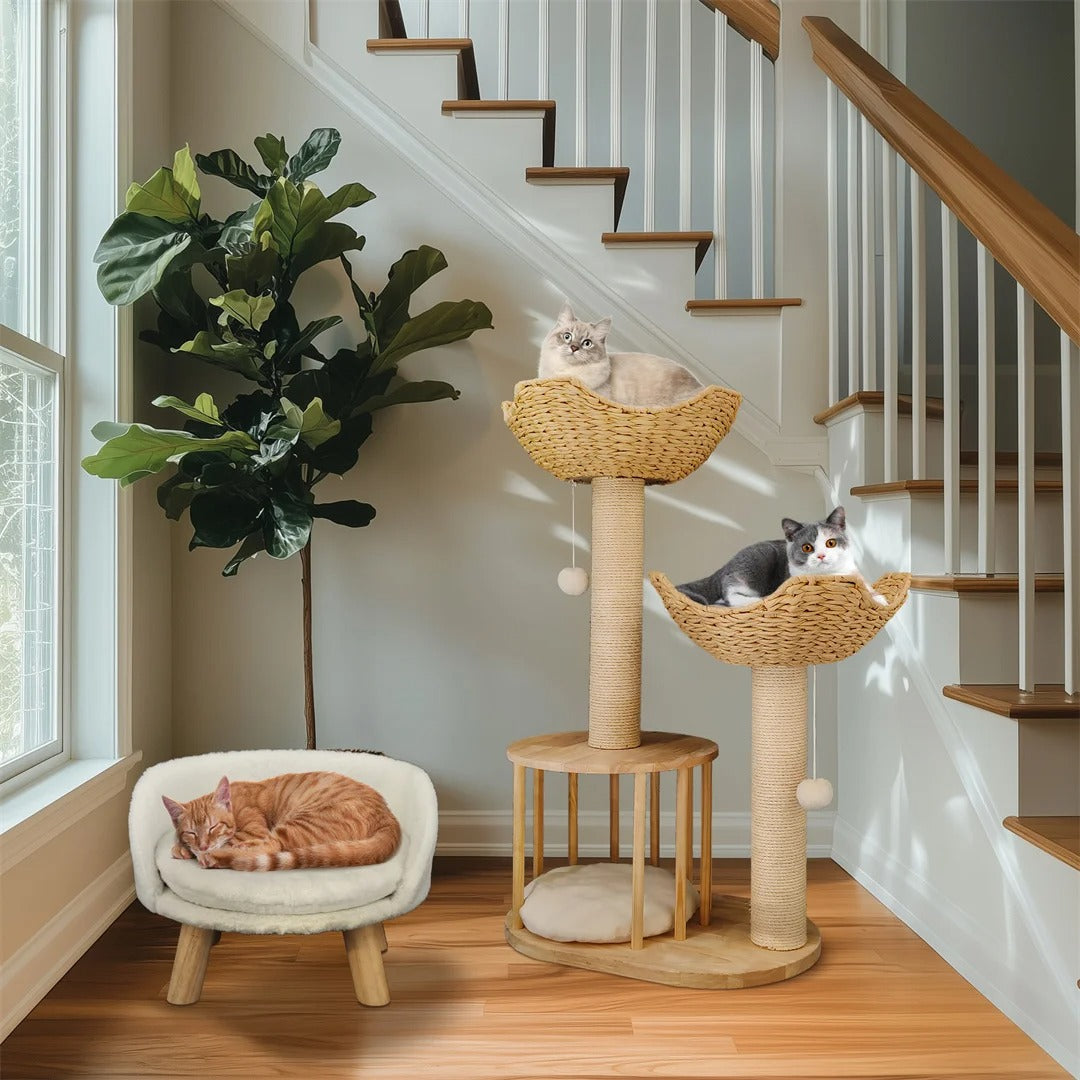
How cat trees create natural boundaries
A well-designed cat tree does more than provide a place to climb. It creates structure. Platforms, perches, and enclosed areas allow cats to choose where they feel comfortable.
In multi-cat homes, cat trees help by:
- Offering multiple resting heights
- Providing separate entry and exit points
- Allowing cats to pass above one another
- Reducing competition for sofas and beds
A tall option with several platforms, such as the large solid wood cat tree with condo and scratching post, can comfortably support more than one cat at a time without forcing interaction.
Why height reduces confrontation
Cats prefer avoidance over conflict. When vertical space is available, a cat that feels threatened can simply move higher rather than reacting.
This behaviour is explained further in our article on how elevated environments influence cats emotionally: how height supports feline confidence.
By giving cats a way to remove themselves from stressful situations, we reduce the need for defensive behaviour.
Managing shared resources with cat trees
In many homes, fighting occurs near shared resources like food areas or favourite windows. Cat trees placed strategically near these zones can change how cats interact.
For example:
- A cat tree near a window creates multiple viewing spots
- Vertical platforms near feeding areas allow waiting without crowding
- Perches near walkways prevent blocking behaviour
A thoughtfully designed piece like the modern multi-level cat tree with cozy condo and hammock offers both open and enclosed spaces, which suits cats with different confidence levels.
The importance of multiple access points
Single-entry furniture can become a problem in multi-cat homes. If one cat guards the entrance, another cat may feel trapped.
Good multi-cat cat trees include:
- More than one way up or down
- Open platforms rather than narrow tunnels
- Clear sightlines so cats can assess safety
When cats can see who is nearby and choose their movement freely, anxiety drops.
Wall-mounted solutions for conflict reduction
Not every home can accommodate large floor-based cat trees. Wall-mounted systems are an effective alternative, especially in smaller Australian homes.
Wall-mounted furniture creates vertical pathways that allow cats to move around a room without touching the floor. This can be especially helpful when one cat tends to chase another.
Our wall-mounted cat set collection is often chosen by multi-cat households looking to reduce tension without overcrowding shared spaces.
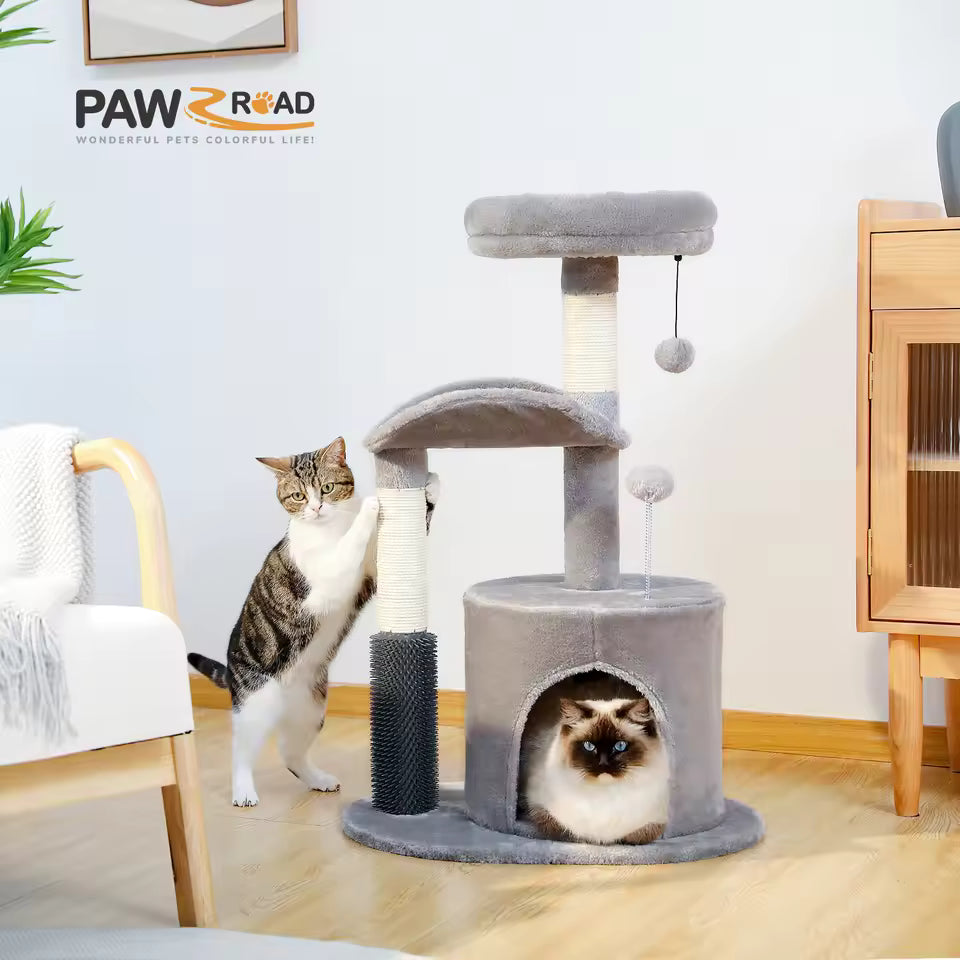
How cat trees support long-term harmony
Reducing fights is not about stopping cats from expressing themselves. It is about giving them better options.
When cats feel secure in their environment, you may notice:
- Less stalking or chasing
- More relaxed shared resting
- Improved confidence in shy cats
- Fewer defensive reactions
These changes usually happen gradually. Consistency and placement matter more than speed.
Our guide on building peaceful shared environments offers additional insight into this process: creating a multi-cat friendly home.
Choosing the right cat tree for multiple cats
Not all cat trees are suitable for shared use. When selecting a tree for a multi-cat home, consider:
- Weight capacity and stability
- Number of platforms and spacing
- Mix of open and enclosed areas
- Scratching surfaces on multiple levels
A structure like the luxury multi-level cat tree with hammock and ladder offers layered access and varied resting spots, which can suit cats with different personalities.
Our approach at Cat Tree Haven
At Cat Tree Haven, we understand that multi-cat homes require thoughtful design. We do not view cat trees as simple accessories, but as tools that support natural behaviour and household harmony.
Our collections are curated to:
- Encourage vertical movement
- Reduce resource competition
- Support different confidence levels
- Fit real Australian homes
If fighting or tension has become part of daily life, adjusting the environment is often a constructive first step.
👉 Contact Cat Tree Haven to discuss cat tree solutions that support peace and balance in your multi-cat home.
Frequently Asked Questions
Can cat trees really stop cats from fighting?
Cat trees can reduce triggers for conflict by improving space management, though behaviour change is gradual and depends on individual cats.
How many cat trees does a multi-cat home need?
Many homes benefit from more than one vertical structure, especially if cats spend time in different rooms.
Should each cat have its own cat tree?
Not always, but shared trees should have multiple levels and access points to prevent guarding.
Where should cat trees be placed to reduce conflict?
Near shared areas like windows or walkways, where cats would otherwise compete for space.
Are wall-mounted cat trees suitable for multiple cats?
Yes, when installed correctly they provide excellent vertical pathways and escape routes.
Will older cats use cat trees in multi-cat homes?
Older cats often prefer lower platforms and stable access, which should be considered when choosing designs.
How long does it take to see improvement?
Some cats adjust quickly, while others take weeks. Consistency and placement are key.