
Open-plan living spaces are designed to feel spacious, connected, and easy to move through. They allow light to travel freely and bring different areas of the home together into one cohesive environment. When pets are part of the household, the challenge is not whether to include pet furniture, but how to include it without disrupting the flow of the space.
At Cat Tree Haven, we work with many Australian households living in open-plan homes. The goal is always the same. Create an environment that supports a cat’s natural behaviour while maintaining visual balance and practicality for everyday living. With the right approach, pet furniture can enhance an open-plan layout rather than compete with it.
Key takeaways
- Open-plan homes benefit from intentional pet furniture placement
- Fewer, well-designed pieces work better than multiple bulky items
- Vertical and wall-mounted options help maintain visual flow
- Materials and colours should complement existing interiors
- Pet furniture can define zones without closing off space
Understanding the challenges of open-plan living
Open-plan spaces combine areas such as the kitchen, dining, and living room into a single visual field. This openness is what makes them appealing, but it also means that every item is on display.
Bulky or mismatched pet furniture can quickly draw attention and interrupt sightlines. Poor placement may block walkways or make the space feel crowded. These issues are not caused by pet furniture itself, but by a lack of planning.
At Cat Tree Haven, we approach open-plan design with the understanding that pet furniture needs to work as part of the overall layout, not as an afterthought.

Start by identifying natural zones
Even in open-plan homes, zones still exist. Seating areas, dining spaces, and transitional walkways all serve different purposes. Identifying these zones helps determine where pet furniture can fit naturally.
Cats often prefer areas that offer visibility without being in the centre of activity. Corners near windows, edges of lounge areas, or quieter sections of the room often work well. These locations allow cats to observe without interrupting the main flow of the space.
This approach aligns with principles discussed in our guide on creative placement ideas for cat furniture in the home, which focuses on working with existing layouts rather than against them.
Choosing furniture that complements open spaces
In open-plan homes, pet furniture should feel like part of the interior rather than a separate category. This starts with choosing designs that match the scale and style of the space.
Clean lines, balanced proportions, and neutral materials tend to blend more easily. Oversized or overly complex designs can dominate the room and reduce the sense of openness.
Our large cat tree collection includes options that provide vertical enrichment without overwhelming open living areas, making them suitable for shared spaces rather than hidden corners.
Using vertical space to preserve openness
One of the most effective ways to integrate pet furniture into open-plan living is to build upward rather than outward. Vertical designs support natural climbing behaviour while keeping floor areas clear.
Wall-mounted furniture is particularly effective in open layouts. It allows cats to move through the space without adding visual clutter at ground level. When installed thoughtfully, these pieces can resemble shelving or architectural features.
Our wall-mounted cat sets are designed to support this approach, offering functional climbing and resting options that do not interrupt the flow of the room.
This strategy is especially useful in homes where maintaining clear walkways and sightlines is a priority.
Let materials and colours do the blending
In open-plan spaces, colour consistency matters more because everything is visible at once. Pet furniture that clashes with flooring, cabinetry, or upholstery can feel out of place.
Natural wood tones, soft neutrals, and understated finishes tend to integrate well across different zones. These materials reflect common design choices in Australian homes and help pet furniture recede visually.
At Cat Tree Haven, we prioritise materials that feel intentional and adaptable, allowing furniture to sit comfortably within a range of interior styles.
Selecting multifunctional pieces
Open-plan living benefits from furniture that serves more than one purpose. The same principle applies to pet furniture.
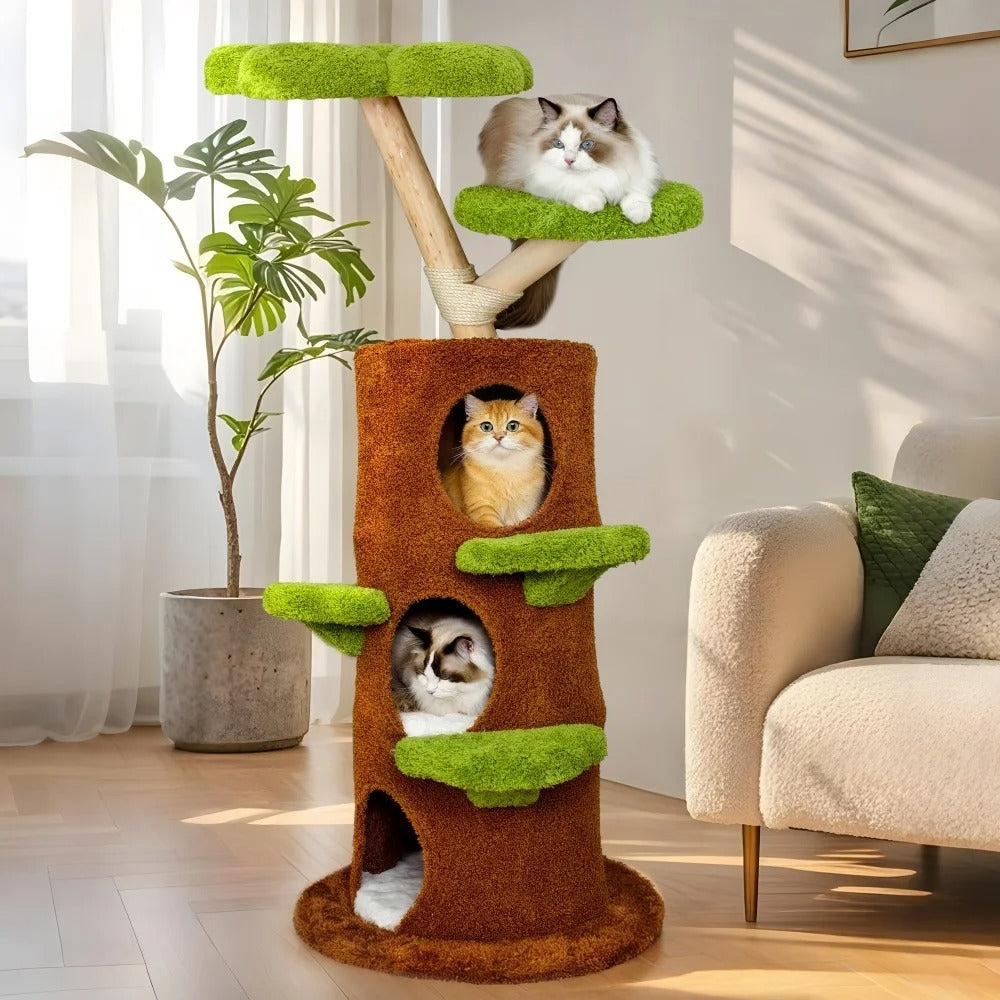
A well-designed cat tree can provide scratching, resting, and observation in one footprint. This reduces the need for multiple items spread across the space.
A product such as the 147cm modern minimalist style cat tree is often chosen for open-plan homes because it offers essential features without unnecessary bulk.
For smaller zones within open spaces, compact designs like the 97cm Scandinavian style cat tree can fit neatly alongside seating or near windows without dominating the area.
Defining zones without closing them off
Pet furniture can also help subtly define zones in an open-plan layout. A cat tree placed near the edge of a living area can signal a transition without creating a barrier.
This works particularly well when the furniture height aligns with other elements such as bookcases or shelving. The space remains open, but the layout feels intentional.
This concept is also explored in our article on integrating cat furniture into home décor, which looks at how design choices influence flow and balance.
Supporting calm behaviour in shared spaces
Open-plan homes often involve more movement, noise, and activity. Providing cats with elevated or tucked-away resting areas can help them feel secure without leaving the space entirely.
Cat furniture that offers observation points above floor level allows cats to remain part of the environment while avoiding constant interaction. This balance supports calmer behaviour and reduces the likelihood of stress-related habits.
The connection between environment and emotional wellbeing is discussed further in our resource on why cat trees support mental wellbeing in indoor cats.
Avoiding common mistakes in open-plan homes
One common mistake is placing pet furniture directly in main walkways. Even visually appealing pieces can disrupt flow if they interrupt movement.
Another issue is overcrowding. Open-plan spaces often feel larger than they are. Adding too many items can quickly make the area feel busy and unbalanced.
A more effective approach is to choose fewer, well-positioned pieces that meet your cat’s needs without competing with the layout.
Adapting as your home evolves
Open-plan homes are often rearranged over time. Furniture moves, zones shift, and routines change. Choosing adaptable pet furniture makes these transitions easier.
Neutral designs and modular options tend to suit evolving layouts. They allow you to reposition pieces without them feeling out of place in a new configuration.
At Cat Tree Haven, we design with long-term use in mind, recognising that both homes and cats change over time.
Creating harmony with Cat Tree Haven
Blending pet furniture into open-plan living spaces is about balance. When design, placement, and function work together, pet furniture becomes part of the home rather than something to work around.
At Cat Tree Haven, our focus is on helping households create spaces that support cats while respecting modern living layouts. With thoughtful choices, open-plan homes can remain calm, functional, and welcoming for everyone.
You can explore our full range at Cat Tree Haven or reach out to our team via our contact page for personalised advice on integrating pet furniture into your open-plan home.
Frequently asked questions
Can pet furniture work in open-plan living spaces?
Yes. With thoughtful placement and design, pet furniture can blend naturally without disrupting flow.
Where should cat furniture be placed in an open-plan home?
Edges of living zones, quiet corners, and areas near windows often work best.
Is wall-mounted furniture suitable for open layouts?
Wall-mounted designs are often ideal as they preserve floor space and maintain openness.
How many pieces of pet furniture should an open-plan home have?
Fewer, multifunctional pieces are usually more effective than several separate items.
Do open-plan homes affect cat behaviour?
They can. Providing elevated or quiet resting areas helps cats feel secure in shared spaces.
Should pet furniture match the rest of the décor?
Complementary materials and colours help furniture blend naturally into the space.
Can cat furniture help define zones in open-plan homes?
Yes. Well-placed furniture can subtly signal transitions without closing off areas.