
Choosing the right cat tree height sounds simple, but it is one of the most important decisions you will make for your cat and your home. Too short, and your cat may lose interest. Too tall, and it might feel unstable or overwhelm the space. At Cat Tree Haven, we help Australian cat owners find the sweet spot where safety, comfort, and vertical adventure all come together.
Whether you live in a compact apartment or a spacious family home, the right height cat tree can transform unused vertical space into your cat’s favourite place to climb, nap, and observe the world.
Key takeaways
- The ideal cat tree height depends on your ceiling height, available floor space, and your cat’s age and confidence
- Short cat trees suit small spaces, kittens, and senior cats
- Medium-height cat trees work well for most homes and single-cat households
- Tall and extra-tall cat trees are ideal for confident climbers and multi-cat homes
- Stability and base width matter as much as height
- Always match the cat tree height to your cat’s mobility and daily habits
Why cat tree height matters more than most people think
Cats are natural climbers. Height gives them a sense of safety, control, and enrichment. A well-sized cat tree allows your cat to stretch, scratch, climb, and rest at different levels without feeling cramped or unsafe.
From our experience at Cat Tree Haven, we see many customers focus on design or colour first, then realise later that height plays a much bigger role in long-term use. A cat tree that fits both your home and your cat’s behaviour is far more likely to become part of their daily routine.
Step one: measure your space before shopping
Before looking at any cat tree, measure three things:
- Ceiling height
- Available floor space
- Clearance around windows, doors, and furniture
In most Australian homes, ceiling heights range between 2.4 and 2.7 metres. This means many standard and tall cat trees will fit comfortably, but floor-to-ceiling models need careful measurement.
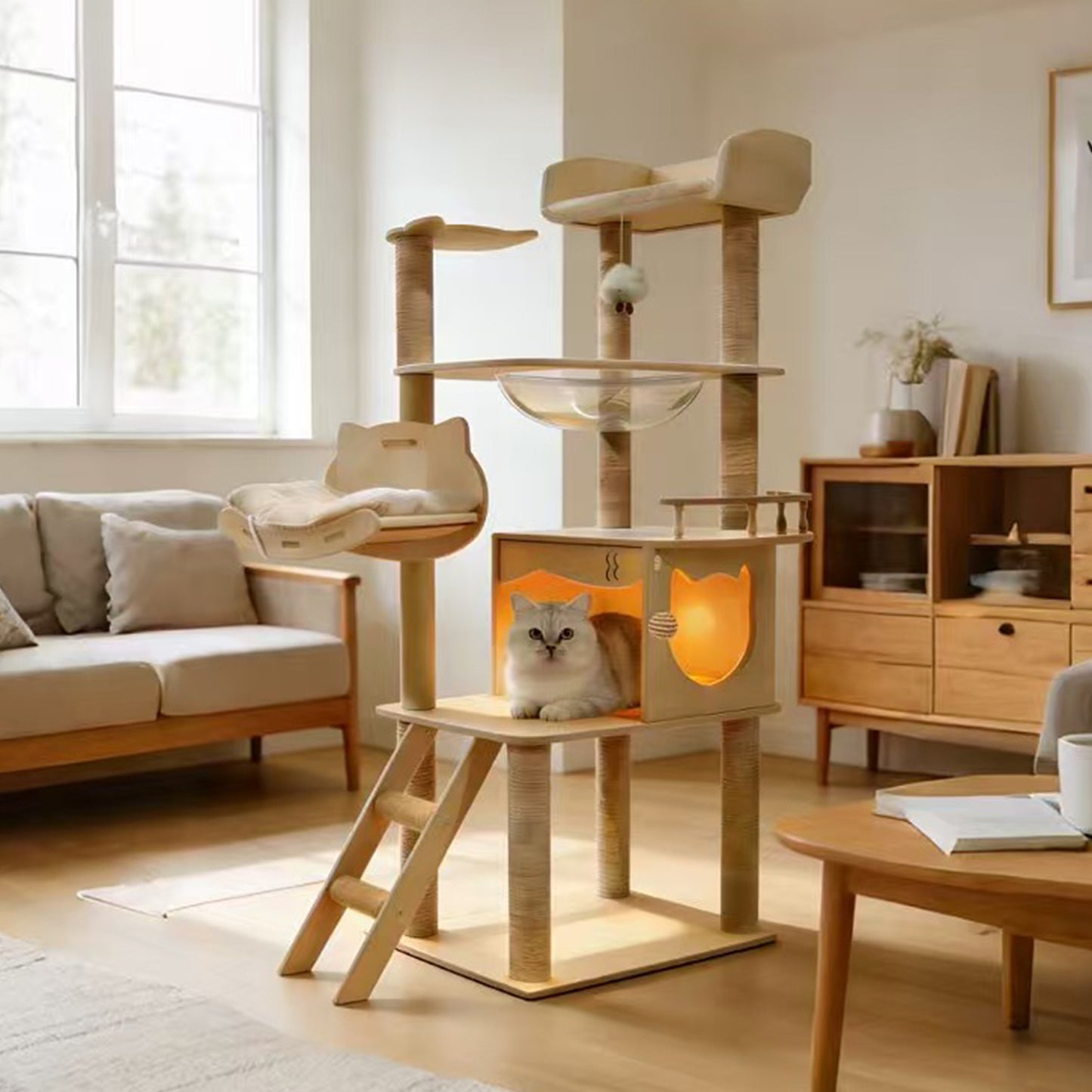 If space is limited, browsing compact designs from our small cat tree collection under 100cm can help you visualise what works without overwhelming the room.
Short cat trees under 100cm: who are they best for?
Short cat trees are often overlooked, but they serve an important purpose.
They are ideal if:
- You live in a small apartment or unit
- Your cat is older or less mobile
- You want a secondary climbing option in another room
A lower height reduces impact on joints while still offering scratching and lounging spots. Many customers choose shorter designs as starter trees for kittens or as bedside companions for senior cats.
A practical example is the 73cm cat climbing frame with scratching post, which provides enrichment without taking over the space.
Medium-height cat trees 100cm to 150cm: the most versatile option
For most Australian households, medium-height cat trees strike the best balance.
They work well because they:
- Fit comfortably under standard ceilings
- Offer multiple platforms for climbing and resting
- Suit cats of different ages and confidence levels
This height range is popular with single-cat homes and smaller multi-cat households. Cats can climb, perch, and scratch without needing extreme athletic ability.
Our large cat tree collection from 100cm to 200cm includes designs that combine stability with generous vertical space.
A strong example is the 153cm tall cat tree with large condo and perch, which offers height without feeling imposing in the room.
Tall and extra-tall cat trees over 180cm: for confident climbers
If your cat loves to climb high and observe from above, a taller cat tree can be incredibly rewarding.
These heights are best suited for:
- Active adult cats
- Multi-cat households
- Homes with open-plan living areas
Extra height allows cats to establish vertical territory, which can help reduce tension in multi-cat environments.
For homes with higher ceilings, our extra large cat trees over 200cm are designed with stability in mind.
Floor-to-ceiling designs like the adjustable floor-to-ceiling cat tree tower provide maximum climbing potential while remaining secure when installed correctly.

Matching cat tree height to your cat’s age and mobility
Not all cats experience height the same way. Choosing the right cat tree height means considering your cat’s physical abilities.
- Kittens benefit from moderate heights with closely spaced platforms
- Adult cats often enjoy taller designs with multiple levels
- Senior cats usually prefer lower heights with easy step access
If your cat has reduced mobility, look for designs that offer gradual climbs rather than large vertical jumps. We explore this in more detail in our guide on choosing a cat tree for older or less mobile cats.
Stability matters as much as height
A tall cat tree is only enjoyable if it feels safe. Height should always be balanced with:
- A wide, weighted base
- Solid materials
- Secure joints and fittings
This is especially important for energetic cats that jump onto platforms with force. Even a medium-height cat tree can become unstable if the base is too narrow.
We recommend reading our detailed breakdown on cat tree safety and stability at home before choosing taller designs.
Using height to solve behaviour and space challenges
The right cat tree height can help with common household issues.
Vertical space allows cats to:
- Retreat when feeling overwhelmed
- Observe without interfering with daily activity
- Reduce boredom in indoor-only environments
In homes with limited floor space, vertical solutions can be more effective than adding multiple small items. Our article on using vertical cat furniture to save space explains how height can work smarter, not harder.
Finding the right balance for your home
There is no universal best height for a cat tree. The right choice depends on your home layout, ceiling height, and your cat’s personality.
At Cat Tree Haven, we encourage customers to think in layers rather than extremes. A well-chosen medium or tall cat tree that fits naturally into your home is far more likely to be used daily than an oversized tower that feels out of place.
If you are unsure, starting with a versatile mid-height option often provides the best long-term value.
Need personalised advice?
If you are still unsure which cat tree height suits your space, we are here to help. Our team at Cat Tree Haven can guide you based on your home layout and your cat’s needs.
Contact us here to get personalised recommendations and expert support before you buy.
Frequently asked questions
What is the best cat tree height for apartments?
For most apartments, cat trees between 100cm and 150cm work well. They offer vertical enrichment without overwhelming limited floor space.
Are taller cat trees safe for cats?
Yes, when designed properly and placed on a stable surface. Look for wide bases, quality materials, and clear assembly instructions.
Do cats prefer tall or short cat trees?
Most cats enjoy height, but preferences vary. Confident climbers often prefer taller trees, while older or cautious cats may prefer lower designs.
Can a cat tree be too tall for a cat?
A cat tree can feel intimidating if platforms are spaced too far apart or if the structure feels unstable. Matching height with accessibility is key.
How close should a cat tree be to the ceiling?
Floor-to-ceiling designs should fit snugly without pressure. Always follow manufacturer guidelines for safe installation.
Is one tall cat tree better than multiple small ones?
It depends on your space and number of cats. One tall tree can work well in open areas, while multiple smaller trees suit multi-room layouts.
Should kittens use tall cat trees?
Kittens can use taller trees if platforms are closely spaced and easy to climb. Supervision during early use is recommended.