
Buying a cat tree should feel like a positive upgrade for your home and your cat. Unfortunately, many cat owners only realise they chose poorly after the tree arrives, wobbles on the floor, or starts falling apart within weeks.
At Cat Tree Haven, we regularly hear from customers who have replaced multiple cat trees before finding one that actually lasts. Most of the time, the warning signs were there from the start, just easy to miss when shopping online.
This guide explains how to spot a poor-quality cat tree before you buy, so you can avoid frustration, wasted money, and unnecessary replacement.
Key takeaways
- Poor-quality cat trees often show warning signs before purchase
- Instability and weak materials are common red flags
- Cheap construction usually leads to faster wear and replacement
- Cats are less likely to use furniture that feels unsafe
- Investing in quality saves money and stress long-term
Why spotting poor quality matters
A cat tree is not decorative furniture. It is a piece of equipment your cat climbs, jumps on, scratches, and rests in every day. When quality is lacking, the risks increase.
Poor-quality cat trees can lead to:
- Reduced use because cats sense instability
- Faster breakdown and replacement costs
- Increased scratching of household furniture
- Potential safety issues from collapsing parts
At Cat Tree Haven, we focus on helping owners make informed decisions rather than replacing furniture repeatedly.
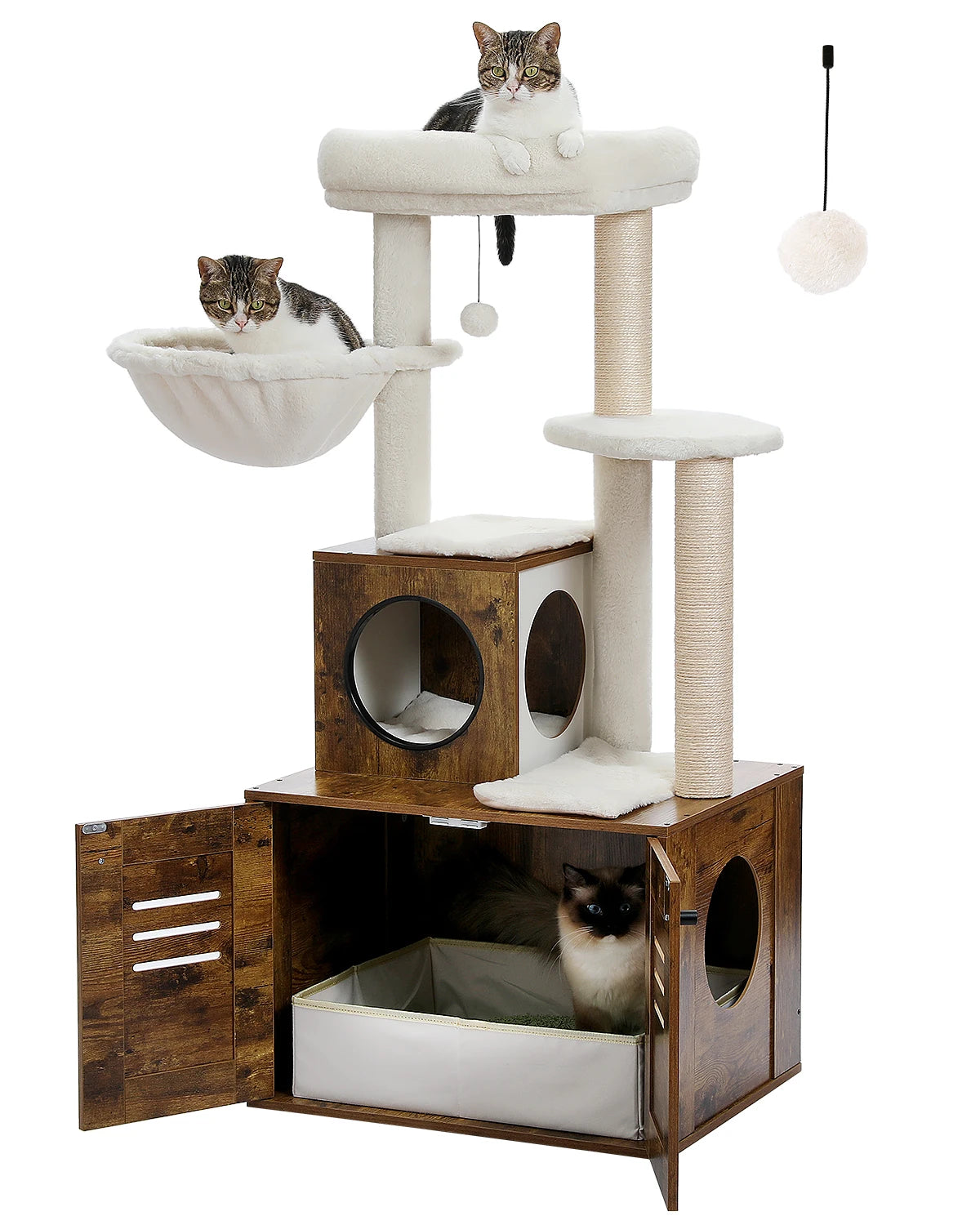
Warning sign one: Lightweight or unstable bases
The base is the foundation of the entire structure. If it is too light, narrow, or thin, the rest of the tree will suffer.
Common red flags include:
- Bases that look small compared to the overall height
- Lack of information about base weight or thickness
- Designs that rely on height without counterbalance
A cat tree should not rock when a cat jumps onto it. Even subtle movement can make cats hesitant to use it fully.
If stability is a concern, larger, well-balanced designs from our cat tower collection are built with proportion and balance in mind.
Warning sign two: Thin or loosely wrapped scratching posts
Scratching posts take the most wear of any component. Poor-quality trees often cut corners here.
Signs to watch for:
- Very thin posts that flex under pressure
- Sisal or rope that looks loosely wrapped
- Large gaps between wraps or visible glue
Loosely wrapped posts fray quickly and lose appeal for cats. Once the main scratching area fails, the entire tree often becomes unused.
Our guide on what to look for in durable cat tree construction explains why post quality is so important.
Warning sign three: Weak materials hidden behind fabric
Many poor-quality cat trees rely on soft coverings to hide weak internal materials. While fabric feels pleasant, it tells you very little about what is underneath.
Be cautious if:
- The product description avoids material details
- Panels are described only as lightweight or compact
- There is no mention of internal frame or board thickness
Low-density particleboard or cardboard cores can crack or collapse under regular use.
By contrast, products like the large cat tree with integrated sisal columns clearly focus on structure as well as surface comfort.
Warning sign four: Poor joint and connection design
Cat trees rely on joints and fixings to stay safe. Poor-quality designs often fail at connection points first.
Look out for:
- Minimal fixings supporting large platforms
- Long spans without vertical support
- Screws placed close to board edges
If joints loosen easily, the entire structure becomes unstable. Retightening may help temporarily, but repeated loosening usually signals a deeper design issue.
Our article on cat tree safety and stability covers how proper construction prevents these problems.
Warning sign five: Height without function
Tall cat trees look impressive, but height alone does not equal quality. Poor designs prioritise height over usability.
Common problems include:
- Platforms spaced too far apart
- Narrow perches at high levels
- Limited access routes for climbing
Cats prefer gradual height progression. If the layout does not match how cats move, the top levels may never be used.
Well-designed options like the multi-level cat tree with condo and scratching areas focus on usable height rather than maximum height.
Warning sign six: Overly low prices without explanation
Price alone does not determine quality, but extremely low prices often indicate compromises.
Ask yourself:
- How can this tree cost significantly less than similar designs
- Where might materials or construction be reduced
- Will this tree realistically last more than a few months
Replacing a cheap tree multiple times usually costs more than investing in a well-made option once.
We explore this cost comparison further in our article on whether expensive cat trees are worth it.
Warning sign seven: Limited or vague product information
Poor-quality products often come with minimal descriptions. A lack of detail can be a sign that durability is not a selling point.
Be cautious if the listing does not clearly state:
- Dimensions and weight
- Materials used for posts and platforms
- Intended cat size or weight range
Transparent product information signals confidence in construction. This is why Cat Tree Haven prioritises clarity across our range.
How poor quality affects cat behaviour
Cats are sensitive to movement and sound. A tree that creaks, wobbles, or shifts can feel unsafe.
When this happens, cats may:
- Avoid higher platforms
- Scratch furniture instead of posts
- Lose interest in the tree altogether
We discuss this behaviour in more detail in our article on why cats sometimes ignore cat trees.
What to look for instead
Avoiding poor quality is easier when you know what good quality looks like.
Key indicators include:
- Stable, proportionate bases
- Thick, well-wrapped scratching posts
- Clear material descriptions
- Layouts designed for real cat movement
Collections such as our large cat tree range focus on these fundamentals to support long-term use.
For smaller spaces, well-designed compact options often outperform larger but poorly built alternatives.

Our approach at Cat Tree Haven
At Cat Tree Haven, we design and curate cat furniture with long-term use in mind. Our goal is to help owners choose once, not replace repeatedly.
We focus on:
- Structural stability
- Practical layouts
- Materials chosen for durability
- Designs suited to Australian homes
This approach helps customers avoid the common pitfalls outlined above.
Final thoughts
Spotting a poor-quality cat tree before you buy saves time, money, and frustration. Most issues reveal themselves through careful attention to materials, structure, and design details.
A cat tree should feel safe, stable, and inviting. If something looks questionable in the listing, it often becomes a problem in real life.
If you would like help assessing options or choosing a cat tree that suits your space and cat, our team is always happy to assist.
Contact us here: Get in touch with Cat Tree Haven
Frequently asked questions
Are cheap cat trees always poor quality?
Not always, but very low prices often reflect compromises in materials or construction.
How can I tell if a cat tree will be stable?
Look for a wide, heavy base and multiple support points in the design.
Do taller cat trees need extra support?
Yes. Height should be balanced with base size and structural reinforcement.
Is fabric covering a sign of quality?
Fabric alone does not indicate quality. Internal materials matter more.
How long should a good cat tree last?
With normal use and basic care, several years is common.
Can poor-quality trees affect cat confidence?
Yes. Instability can make cats hesitant to climb or rest on the tree.
Should I replace a tree if it wobbles slightly?
Minor movement may be fixable, but persistent wobbling often signals poor design.