
Choosing a cat tower often feels simple until you reach one key decision. Should it live indoors or outdoors? For Australian cat owners, this question matters more than many realise. Climate, space, lifestyle, and your cat’s daily habits all play a role.
At Cat Tree Haven, we speak with customers every week who are weighing up this exact choice. Some want to enrich an indoor-only cat’s environment. Others are looking to safely extend their cat’s territory outdoors. Both options can work well, but they serve different needs.
This guide breaks down the differences clearly so you can decide what suits your home and your cat best.
Key takeaways
- Indoor and outdoor cat towers serve different behavioural needs
- Australian weather plays a major role in outdoor suitability
- Indoor towers support safety, routine, and year-round use
- Outdoor towers require careful placement and material awareness
- The right choice depends on your cat’s lifestyle and your space
Understanding how cats use vertical space
Cats are natural climbers. Height gives them a sense of security, control, and stimulation. A well-placed tower allows them to observe, rest, scratch, and move through their environment confidently.
Whether indoors or outdoors, the core purpose of a cat tower remains the same. It should provide stable vertical access, scratching surfaces, and comfortable resting spots.
At Cat Tree Haven, we focus on designs that reflect how cats actually move and rest, not just how towers look in photos.
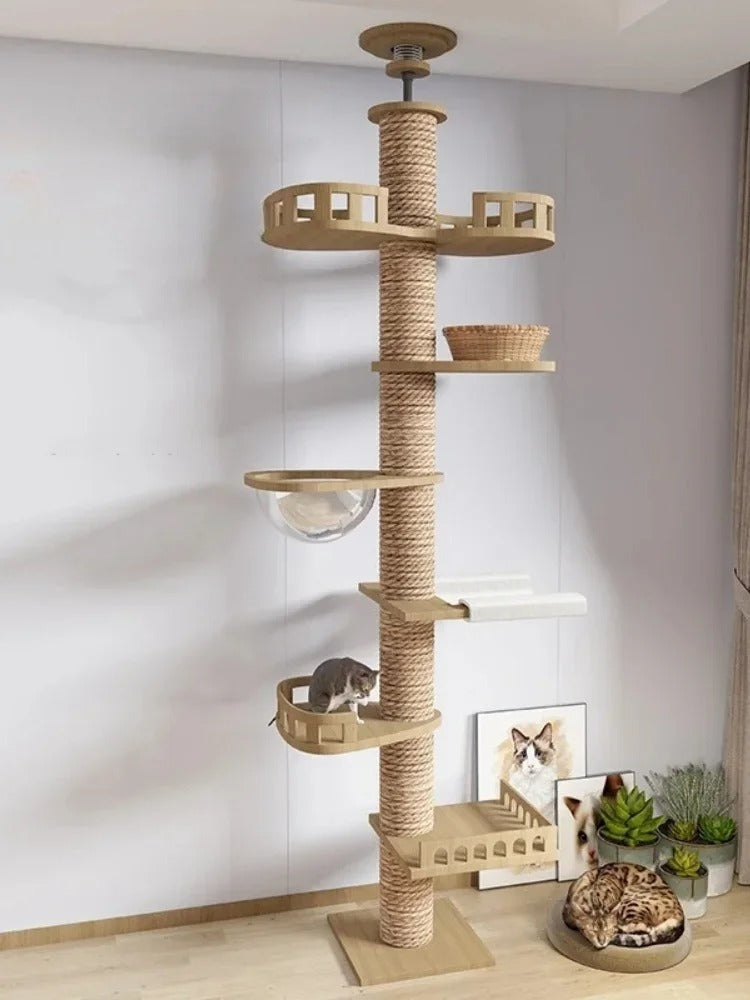
Why indoor cat towers are so popular
Indoor cat towers are the most common choice for Australian households, especially for cats that live fully or primarily indoors.
Benefits of indoor towers
Indoor towers offer consistency and protection. They are shielded from weather and temperature extremes, which means they remain usable year-round.
Key advantages include:
- Protection from rain, heat, and humidity
- Reduced wear on materials
- Predictable placement within your home
- Easy integration with existing furniture
Indoor towers are particularly valuable for apartment living and suburban homes where outdoor access is limited or supervised.
Our cat tower collection is designed with indoor environments in mind, balancing height, stability, and visual appeal.
How indoor towers support indoor-only cats
Indoor-only cats rely entirely on their environment for stimulation. Without vertical structures, they may become bored or anxious.
Indoor towers provide:
- Exercise through climbing and jumping
- Scratching outlets that protect household furniture
- Elevated rest areas that help cats feel secure
If your home has limited floor space, vertical solutions become even more important. This is where well-proportioned towers make a noticeable difference.
Our article on maximising vertical space in the home explains why height often matters more than footprint.
When outdoor cat towers make sense
Outdoor cat towers are less common but can be suitable in specific situations. They are usually placed in enclosed patios, balconies, or cat-safe outdoor areas.
Potential benefits of outdoor towers
Outdoor towers can add variety to a cat’s routine by offering:
- Fresh air and new visual stimulation
- Observation points for birds and outdoor activity
- An extension of indoor enrichment into semi-outdoor spaces
For homes with cat enclosures or protected courtyards, an outdoor tower can be a useful addition.
Our guide on outdoor cat trees and their practical considerations explores these setups in more detail.
The challenges of outdoor placement in Australia
Australian weather is not always kind to outdoor furniture. Sun exposure, rain, humidity, and temperature changes can all affect materials over time.
Outdoor towers face:
- Faster wear on fabrics and scratching surfaces
- Increased maintenance requirements
- The need for careful placement to avoid moisture buildup
Even in covered areas, outdoor use typically shortens a tower’s lifespan compared to indoor placement.
For this reason, we recommend outdoor towers only in well-protected spaces and with realistic expectations about maintenance.
Material considerations for indoor vs outdoor use
Materials matter regardless of location, but they matter more outdoors.
Indoor towers can safely use plush fabrics, engineered wood, and tightly wrapped sisal posts without rapid degradation. Outdoor environments place more stress on these materials.
If you are considering mixed use, choosing designs with robust frames and clearly defined scratching areas is important.
Products such as the large cat tree with integrated sisal columns are designed for heavy indoor use and can sometimes work in sheltered outdoor areas with appropriate care.
Matching the tower to your cat’s lifestyle
Your cat’s daily routine should guide your decision more than trends.
Indoor towers are usually the better choice if:
- Your cat lives indoors full time
- You want consistent access to climbing and resting areas
- Your home layout favours vertical solutions
Outdoor towers may suit cats who:
- Have access to a secure enclosure or balcony
- Enjoy visual stimulation from outside activity
- Are supervised during outdoor time
In multi-cat homes, indoor towers often reduce tension by providing clear vertical territory. Our article on supporting harmony in multi-cat households explains why shared vertical space can ease competition.
Combining indoor and outdoor solutions
For some households, the best option is not choosing one or the other, but using both thoughtfully.
An indoor tower can remain the primary structure, while a smaller outdoor option supports supervised time outside. This reduces wear on outdoor furniture and ensures cats always have a reliable indoor retreat.
Compact items like the multi-level cat tree with condo and scratching areas work well indoors alongside simpler outdoor setups.
If outdoor space is limited, a focused scratching solution such as the durable cat scratch board with climbing elements can provide engagement without overexposure to the elements.
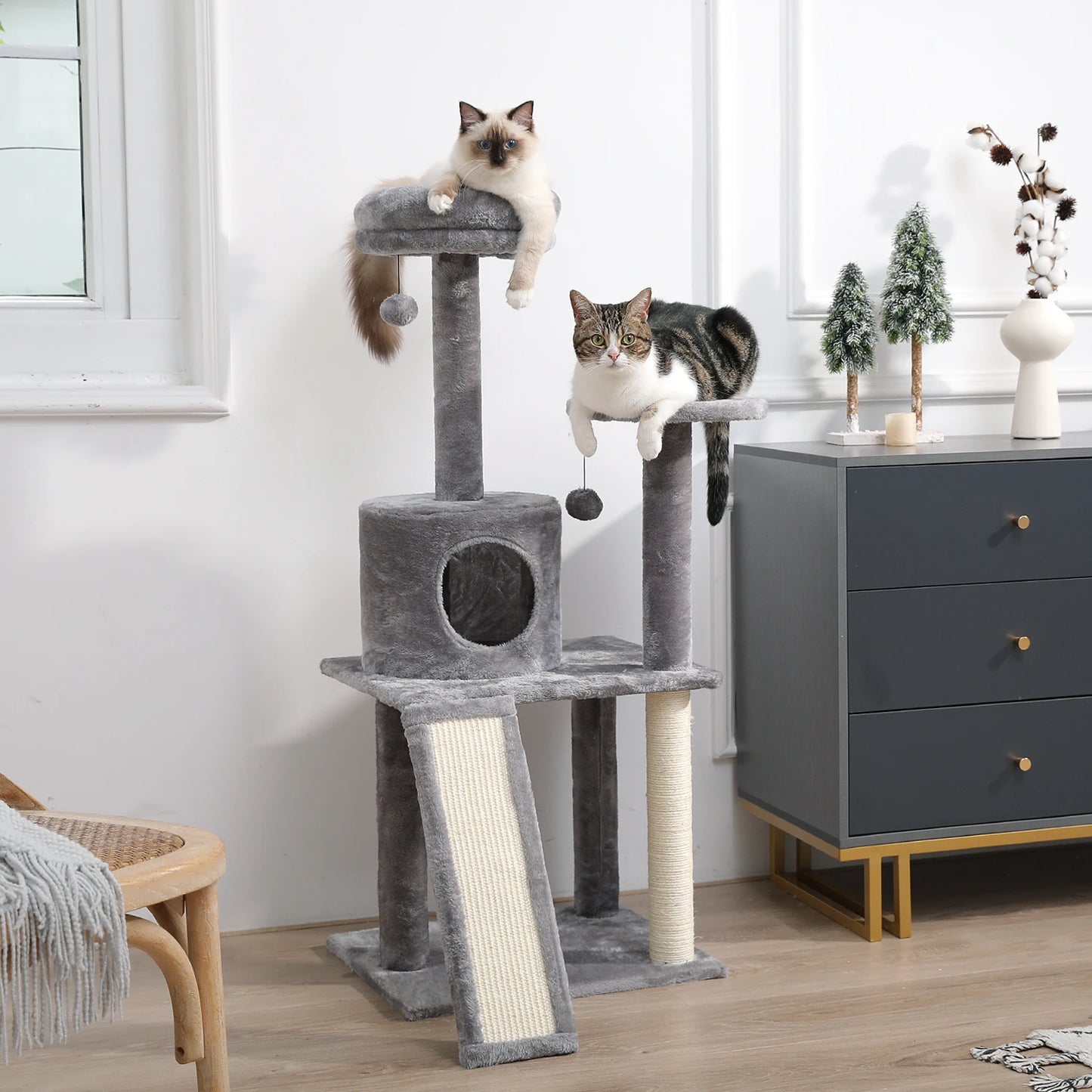
Placement and safety considerations
Regardless of location, safety should always come first.
Key points to consider:
- Towers should be placed on stable, level surfaces
- Outdoor towers must be protected from strong wind and rain
- Indoor towers should not block walkways or doors
- Height should suit your cat’s mobility and confidence
We also recommend reviewing our guide on how cats interact with different environments before committing to an outdoor setup.
Our recommendation at Cat Tree Haven
At Cat Tree Haven, we generally recommend indoor cat towers for most Australian homes. They offer the greatest flexibility, durability, and year-round use.
Outdoor towers can work well in secure, sheltered spaces, but they require more planning and care. When chosen thoughtfully, they can complement an indoor setup rather than replace it.
If you are unsure which option suits your home, we are always happy to help you assess your space and your cat’s needs.
Contact us here: Get in touch with Cat Tree Haven
Frequently asked questions
Are outdoor cat towers safe for cats?
They can be safe when placed in secure, enclosed areas and protected from weather exposure.
Do indoor cat towers last longer than outdoor ones?
In most cases, yes. Indoor placement reduces exposure to elements that cause wear.
Can I move an indoor tower outside occasionally?
Occasional supervised use may be possible, but regular outdoor exposure can shorten lifespan.
What is better for apartment living?
Indoor cat towers or wall-mounted options usually suit apartments best.
Do cats prefer indoor or outdoor towers?
Cats tend to prefer stable, familiar spaces. Preference depends more on placement than location.
Is an outdoor tower necessary if my cat already goes outside?
Not always. Many cats meet their needs through existing outdoor exploration.
How do I choose the right height for a cat tower?
Consider your cat’s age, mobility, and confidence rather than maximum height alone.