
There was a time when buying a cat tree meant resigning yourself to a large, carpeted column in the corner that clashed with everything in the room. You bought it, your cat used it, and you quietly hoped guests would not notice it. That time has passed. Modern cat furniture has become a genuine design category, and the options available today can sit comfortably alongside thoughtful, well-considered interiors without looking like they snuck in from a pet store.
That said, not everything labelled "luxury" or "designer" in the cat furniture market deserves those descriptions. Some products charge a premium for styling that does not hold up in a real home, or use materials that look good in a product photograph but wear poorly under daily cat use. Knowing what to look for makes a significant difference.
At Cat Tree Haven, we have spent time selecting cat furniture that genuinely works in Australian homes - not just functionally, but aesthetically. Here is a practical guide to choosing a luxury cat tree that matches your interior rather than fighting with it.
What Makes a Cat Tree "Luxury" in Practice
The word luxury gets applied loosely in this category, so it is worth being specific. A cat tree earns the description when it combines three things: materials that are built to last, construction that stays stable and safe under regular use, and a design that looks like it belongs in a home rather than a warehouse.
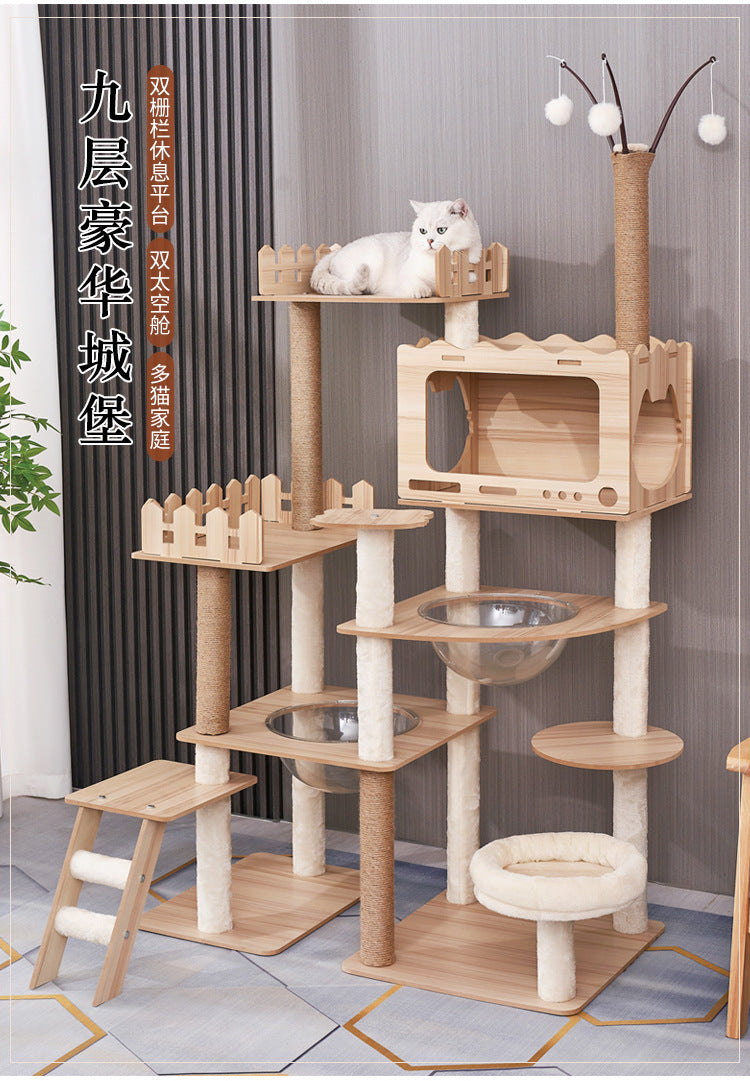
Solid or engineered wood frames are one of the clearest markers. Real wood - particularly timber with visible grain - brings warmth and a natural quality that complements a wide range of interior styles. Even well-made engineered wood with a quality finish can look refined when done properly. The contrast with thin MDF or particleboard is noticeable both in appearance and in how the structure holds up over time.
Tight-wound natural sisal on the scratching posts is another indicator. Premium sisal is dense and long-fibred, which means it holds its form under daily scratching rather than fraying into a matted mess within a few months. From an aesthetic standpoint, a well-wound sisal post reads as a deliberate textural element rather than an obvious concession to cat ownership.
Neutral and considered colour palettes are what allow a cat tree to sit within a designed space. Greys, warm naturals, soft beiges, and matte blacks read as furniture rather than pet accessories. Cover fabrics in plush or woven textures with consistent tones do the same work. Anything with vivid synthetic colours or mismatched materials is harder to place in a room with deliberate design choices.

Matching Your Cat Tree to Your Interior Style
Australia's most common contemporary interior styles each have cat tree equivalents that tend to work well. Here is how to think about it.
Scandinavian and Minimalist Interiors
Scandi-influenced interiors - clean lines, pale timbers, natural textiles, restrained colour - are well-served by wooden cat trees with exposed timber finishes and minimal ornamentation. The goal is a structure that could almost pass for a design object. Exposed wood grain, sisal posts rather than carpeted ones, and clean geometric silhouettes all contribute to this effect.
Our 132cm modern minimalist style cat tree is a strong example of this approach. It uses a grey wood grain polyester covering that reads as furniture-grade rather than toy-like, with a clean profile that sits comfortably in living rooms where design coherence matters. The plush top perch, cave, and hammock are practical features that stay visually tidy.
For something with more solid wood presence, the 91cm modern solid wood cat tree with sisal scratching post is a compact option with genuine natural timber construction. At 91cm, it works well as a secondary tree or in a room where a tall structure would feel out of proportion. The combination of exposed wood, sisal, and soft beds fits the kind of considered simplicity that characterises well-done minimalist interiors.
Contemporary Australian Coastal
Coastal-influenced homes tend to layer natural textures - rattan, linen, wicker, light timber - with neutral or soft blue-green accents. Cat trees that use natural materials and warm tones slot into this aesthetic without much effort.
Wood-based structures with sisal and plush fabric in neutral tones work particularly well here. The texture contrast between smooth wood and rough sisal mirrors the kind of layered natural materials that define coastal interiors, and warm beige or cream fabric coverings read as consistent with the palette rather than disruptive.
Open Plan Contemporary
Open plan living, which is the dominant layout in many newer Australian homes and apartments, presents a specific challenge for cat furniture: the tree is visible from multiple angles and from a greater distance. Silhouette and scale matter more here than they do in a smaller enclosed room.
Taller, multi-level trees can anchor a space well if their proportions are right - they need to feel intentional rather than oversized. The 147cm modern minimalist style cat tree strikes this balance, offering enough height to be genuinely functional for climbing and perching while maintaining the kind of restrained profile that does not overwhelm an open living area. Its neutral finish works in grey, white, and timber-heavy interiors alike.
Wall-Mounted Options: The Most Design-Forward Choice
For design-conscious cat owners, wall-mounted cat furniture is worth serious consideration. Rather than occupying floor space, wall-mounted sets use vertical wall area to create climbing routes, rest spots, and scratching surfaces. Done well, they can look more like sculptural wall installations than pet furniture.
The practical consideration is installation - wall-mounted sets need to be fixed securely and into appropriate wall studs or supports. But for owners who are willing to commit, the result is cat enrichment that contributes to the room rather than competing with it.
Our wall-mounted cat climbing shelves with hammock and jumping platform use solid timber shelving and an integrated hammock to create a climbing and resting system that sits flush against the wall. In a room with exposed brick, a feature wall, or a gallery-style layout, this kind of installation can genuinely enhance the interior rather than detracting from it.
Our full wall-mounted cat furniture collection includes ladder and shelf combinations in different configurations, which allows you to choose a setup that suits the specific wall dimensions and room layout you are working with.
What to Avoid When Buying for a Designed Interior
A few things consistently disrupt an otherwise well-chosen room when it comes to cat furniture.
Bright or clashing colours are the most obvious issue. Vivid reds, electric blues, and high-contrast multi-colour designs were common in earlier generations of cat furniture and still appear in budget options. In a home with a considered palette, these draw the eye in a way that feels unresolved.
Visible carpet-covered posts and platforms tend to read as dated in a contemporary setting. Even quality carpet can look out of place in interiors that use hard surfaces and woven textiles rather than pile fabrics. Sisal, solid wood, or quality plush in muted tones is a more versatile choice.
Poor proportions relative to the room are less obvious but just as disruptive. A very wide-footprint tree in a compact apartment feels crowded and makes the room feel smaller. A very narrow tree in a large open room can look slightly incongruous. Think about the floor area the tree will occupy and how that relates to the other furniture in the space before you commit to a specific model.
Our post on how to match your cat furniture to your home decor goes into more practical detail on this, including how to think about placement and colour when integrating cat furniture into a finished interior.
Balancing Aesthetics With What Your Cat Actually Needs
It is worth being honest about the other side of this equation. A cat tree needs to work for your cat, not just your interior. A beautifully designed tree that your cat ignores or finds too unstable to use is not a good purchase regardless of how it looks.
The features that matter most to cats are stability, appropriate height for their climbing instincts, enough platform area to sit comfortably, and accessible scratching surfaces. Most well-made luxury trees address all of these as a baseline. But it is worth checking the weight capacity, platform dimensions, and base width for any specific tree before purchasing, particularly if you have a larger or more active cat.
Our post on what Australian cat owners look for in quality and durability covers the functional side of this in more detail and is a useful companion read if you are trying to balance aesthetics with practical requirements.
For those interested in how modern cat furniture integrates specifically into contemporary Australian interiors, our post on cat towers that work as design elements in stylish homes offers additional inspiration and practical examples.
Our Approach at Cat Tree Haven
At Cat Tree Haven, we take the position that well-designed cat furniture should not cost the same as imported European designer pieces to be genuinely good. We work directly with manufacturers to offer trees and towers that use quality materials - solid wood, natural sisal, quality plush - at prices that reflect the product rather than retail overhead.
The large cat tree collection on our site includes many of the options that work best in designed interiors: taller, multi-level structures with clean profiles, natural finishes, and the kind of construction that holds up over years rather than months. If you are looking for something specific to a particular interior style or room configuration, we are happy to help you narrow it down.
Choosing the Right Fit for Your Home
The ideal luxury cat tree for your interior is one that you would not feel the need to hide, move before guests arrive, or apologise for. That is a fairly achievable standard with the right product and a bit of thought about materials, scale, and colour.
If you are working through the options and would like a recommendation based on your space and interior style, we are here to help.
Reach out to the Cat Tree Haven team with details about your room and your cat, and we will suggest options that make sense for both.
Frequently Asked Questions
Can a cat tree genuinely look good in a modern interior?
Yes. Modern cat furniture increasingly uses solid or engineered wood, natural sisal, and neutral fabric finishes that complement contemporary interiors. The key is selecting based on finish tone, silhouette, and footprint rather than treating the cat tree as an afterthought.
What materials define a luxury cat tree?
Solid or quality engineered wood frames, tightly wound natural sisal on the scratching posts, and plush or woven fabric in neutral tones are the primary markers. These materials both look better in a designed space and tend to hold up significantly longer under daily use.
Are wall-mounted cat shelves a practical option for apartments?
Yes, provided they are installed correctly into wall studs or appropriate fixings. Wall-mounted systems free up floor space and can contribute positively to a room's look, particularly in open plan or gallery-wall style layouts. They do require a more committed installation than a freestanding tree.
What interior styles suit wooden cat trees best?
Scandinavian, minimalist, coastal, and contemporary Australian interiors all pair well with timber-finished cat trees. The natural grain of wood complements organic textures like linen, rattan, and stone that appear frequently in these styles.
How do I choose the right size cat tree for my room?
Consider both the floor footprint and the height relative to the ceiling and surrounding furniture. A tree that is too wide makes a compact room feel crowded. A tree that is too narrow in a large open plan space can look proportionally awkward. Checking the specific dimensions of a product (not just the height) before purchasing helps avoid these issues.
Is a luxury cat tree worth the investment over a budget option?
For most cat owners who care about the look of their home and expect the tree to last several years, yes. Quality materials reduce the likelihood of needing to replace the tree within 12 to 18 months, and a well-designed piece does not work against your interior in the way a budget option often does. The cost-per-year calculation typically favours a better-built product.
How do I stop my cat from ignoring a new cat tree?
Placement near a window or in an area where the household is active tends to increase use. Adding a small amount of catnip, hanging a toy from a perch, or placing a worn item of clothing on one of the platforms can also help establish the tree as an appealing space. If the issue persists, our team is happy to offer practical suggestions.