
Key takeaways
- Cats rely on vertical space for confidence, comfort, and security.
- Behaviour like climbing furniture or hiding up high often signals unmet needs.
- Vertical environments support natural instincts, especially for indoor cats.
- Well-designed cat trees and wall-mounted systems can reduce stress and conflict.
- Creating height does not require a large home, only smart use of space.
Cats experience the world differently to us. While we think in terms of floor plans and square metres, cats think vertically. Height gives them information, safety, and control. At Cat Tree Haven, we often speak with owners who are trying to solve behavioural issues without realising the root cause is simply a lack of vertical space.
Understanding the signs that your cat needs more height can make a noticeable difference to their behaviour and overall wellbeing. Below, we explore the most common signals and explain how thoughtful vertical solutions can transform life for indoor cats.
Why vertical space matters to cats
In natural environments, cats climb trees, rocks, and elevated surfaces to rest, observe, and avoid conflict. Height allows them to monitor their surroundings while feeling secure. This instinct remains strong, even in fully indoor cats.
Vertical space helps cats:
- Feel safe without hiding
- Avoid unwanted interactions
- Establish territory without confrontation
- Exercise muscles through climbing and jumping
When vertical options are limited, cats often create their own by climbing shelves, wardrobes, or kitchen benches.
Sign 1: Your cat constantly seeks high places
If your cat regularly jumps onto wardrobes, fridges, or the tops of doors, this is a clear sign they are searching for elevation. These spots are not chosen randomly. Cats choose height where they can see clearly and remain undisturbed.
This behaviour is often more noticeable in apartments or homes with open layouts where hiding options are limited. A tall, stable structure designed for climbing is a safer and more satisfying alternative.
Products such as an adjustable floor-to-ceiling cat tower with multiple platforms offer vertical access without taking up excessive floor space.

Sign 2: Increased stress or anxiety indoors
A lack of vertical space can contribute to stress, especially in busy households. Cats that cannot retreat upwards may feel overwhelmed by noise, visitors, or other pets.
Signs of stress can include:
- Hiding for long periods
- Reduced appetite
- Overgrooming
- Avoidance of social areas
Vertical spaces allow cats to remain present while still feeling secure. This is particularly helpful for cats that are shy or adjusting to change.
We explore this further in our article on how height influences feline wellbeing, which explains why elevated environments often support calmer behaviour: how height impacts feline psychology.
Sign 3: Tension in multi-cat households
In homes with more than one cat, vertical space is not optional. It is essential. Cats use height to avoid direct confrontation and establish personal boundaries.
When vertical resources are limited, you may notice:
- One cat blocking access to key areas
- Increased staring or chasing
- Conflict around resting spots
Providing multiple levels allows cats to share space without competition. A combination of freestanding and wall-mounted solutions can significantly reduce tension.
Our wall-mounted cat set collection is often chosen by multi-cat households because it creates clear pathways and resting zones above ground level.
Sign 4: Destructive behaviour at ground level
Scratching furniture, knocking items off tables, or climbing curtains can sometimes be linked to frustration rather than boredom alone. When cats lack suitable outlets for climbing, they may redirect energy into unwanted behaviours.
Vertical furniture that includes scratching surfaces and perches allows cats to stretch, climb, and release tension in appropriate ways.
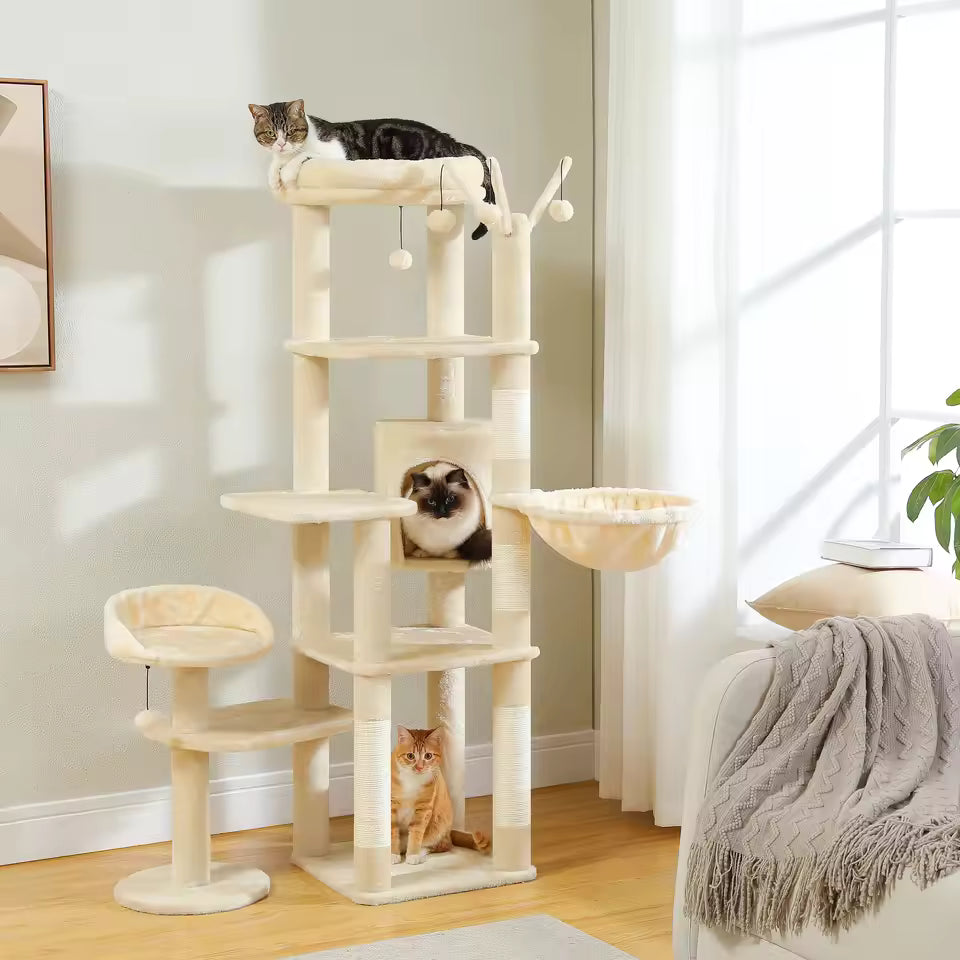
A well-designed option like a multi-level cat tree with condo and scratching posts provides both vertical movement and functional surfaces in one structure.
Sign 5: Your cat watches from above whenever possible
Cats that position themselves on window sills, stair railings, or the backs of sofas are often seeking vantage points. Observation from height is calming and mentally stimulating for cats.
This behaviour becomes especially important for indoor cats that rely on visual stimulation from outside. Elevation near windows allows cats to engage with their environment without risk.
Our guide on creative placement explains how to position vertical furniture for maximum benefit without disrupting your home layout: smart placement ideas for cat trees.
Sign 6: Reduced physical activity indoors
Climbing is a natural form of exercise for cats. Without vertical structures, many indoor cats become less active over time. This does not always show as weight gain immediately, but it can affect muscle tone and mobility.
Vertical furniture encourages:
- Short bursts of climbing
- Jumping between levels
- Stretching through full range of motion
Even smaller homes can support healthy movement with thoughtful vertical design.
How to add vertical space without overcrowding
Adding vertical space does not mean filling your home with bulky furniture. Smart vertical solutions focus on height, not footprint.
Options to consider include:
- Tall cat towers with narrow bases
- Wall-mounted shelves and hammocks
- Modular systems that grow over time
Our cat tower collection is designed with Australian homes in mind, offering height-focused solutions that blend into modern interiors.
For minimalist spaces, wall-mounted systems can create climbing routes without using floor area at all.
Choosing the right vertical solution for your cat
Not all cats use vertical space the same way. Age, confidence, and physical ability all play a role.
When choosing a vertical solution, consider:
- Stability and weight support
- Platform spacing for safe jumping
- Surface texture for grip
- Access points for older cats
A thoughtfully designed product like the wall-mounted wooden climbing shelves with hammock offers gradual height progression and resting areas, making it suitable for a wide range of cats.
Our approach at Cat Tree Haven
At Cat Tree Haven, we design and curate vertical cat furniture that supports natural behaviour without overwhelming your home. We believe height should feel intuitive for cats and practical for owners.
Every product is selected with:
- Behavioural needs in mind
- Stability and safety as priorities
- Aesthetic compatibility with real homes
By recognising the signs early, we can help cats feel more confident, active, and settled indoors.
If you are unsure which vertical option suits your space or your cat, our team is always happy to help.
👉 Contact Cat Tree Haven to discuss vertical solutions tailored to your home and your cat’s needs.
Frequently Asked Questions
How much vertical space does an indoor cat need?
There is no fixed measurement, but most cats benefit from at least one tall structure or multiple elevated resting spots.
Do older cats still need vertical space?
Yes, though they may prefer lower steps and closer platforms rather than high jumps.
Can vertical space reduce behavioural problems?
In many cases, increased access to height can support calmer behaviour by reducing stress and competition.
Is wall-mounted cat furniture safe?
When properly installed and weight-rated, wall-mounted systems are generally safe and well-tolerated by cats.
My home is small. Can I still add vertical space?
Yes. Vertical solutions focus on height rather than floor area, making them suitable for apartments.
Should every cat have its own vertical area?
In multi-cat homes, multiple vertical options can help reduce tension and promote peaceful coexistence.
How quickly will my cat use new vertical furniture?
Some cats explore immediately, while others take time. Placement and familiarity often influence adoption speed.