
Key Takeaways
- Renters can absolutely create a stylish, cat-friendly home without risking their bond or breaching their lease
- Freestanding cat furniture is the most flexible option for renters - it moves with you and requires no wall modifications
- Choosing pieces in natural materials and neutral tones makes cat furniture easier to live with in any rental space
- Scale and placement matter even more in rentals, where spaces are often smaller and layouts less flexible
- Quality matters more for renters than many people realise - a well-built piece withstands moves and lasts across multiple homes
- Protecting rental furniture and flooring from scratching is as important as choosing the right cat tree
Renting with a cat in Australia is more common than ever, and the practical realities of it are something a lot of cat owners quietly navigate. You want a home that works for your cat - with space to climb, places to scratch, somewhere comfortable to rest - but you also want to protect your bond, avoid damaging the property, and end up with furniture that actually fits the space you are in. Add to that the fact that rental properties are often smaller, and you have a situation that rewards careful thinking over impulse purchases.
At Cat Tree Haven, we work with Australian cat owners across all kinds of living situations. Renters make up a significant part of our customer base, and the questions we hear most often are not just about what looks good - they are about what works in a rented home over the long term. Here is what we have found actually helps.
The Rental Reality: What It Means for Cat Furniture
Renting introduces a specific set of constraints that cat furniture decisions need to account for.
First, most rental agreements in Australia require tenants to return the property in the same condition as when they moved in, fair wear and tear excepted. This means scratched walls, damaged flooring, or holes left by wall fixings can result in bond deductions. Cat furniture choices that minimise these risks are not just aesthetically preferable - they are financially sensible.
Second, rental homes are typically smaller on average than owner-occupied homes, particularly apartments and units in major cities. This puts a premium on furniture that earns its floor space rather than simply occupying it.
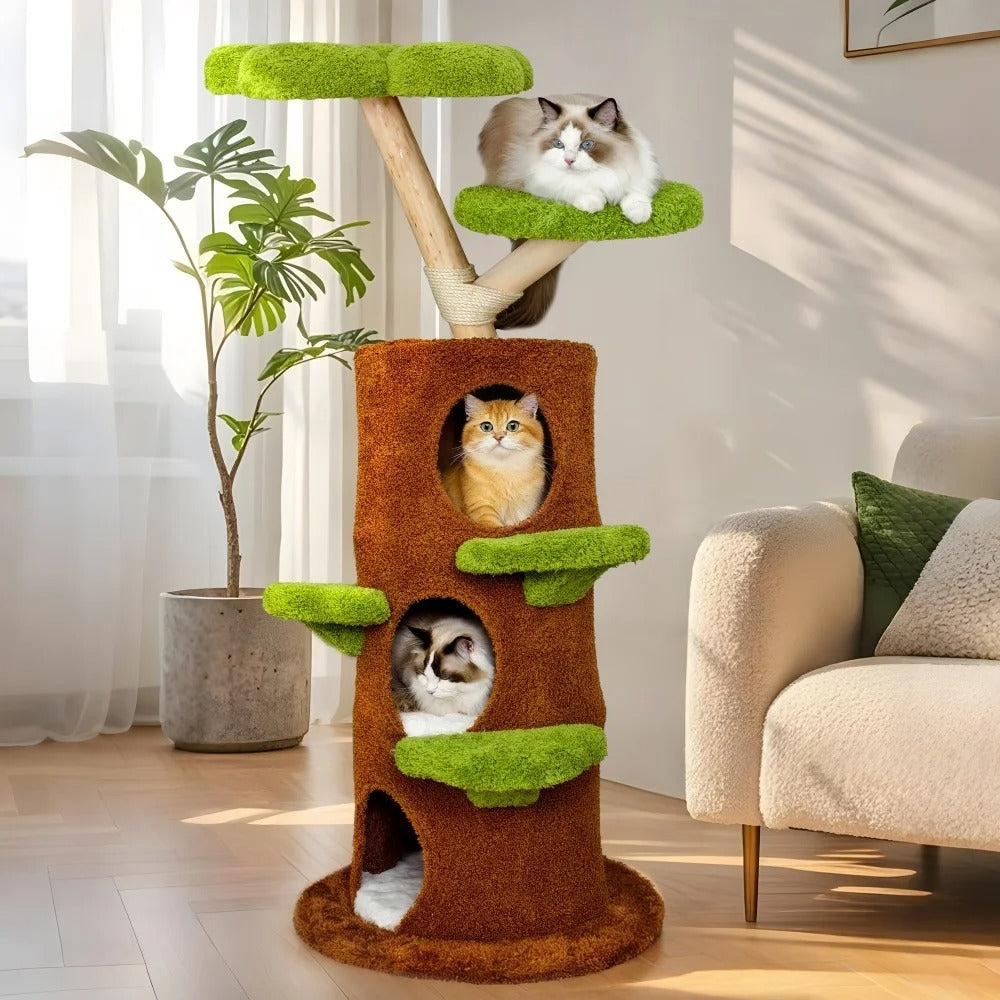
Third, renters move. A cat tree that is well-built and structurally sound will survive multiple relocations. A cheap one, assembled from lightweight particleboard, often does not.
These three factors - bond protection, space efficiency, and portability - shape every recommendation in this guide.
Go Freestanding, Not Fixed
The single most important decision a renter can make when buying cat furniture is to choose freestanding pieces over wall-mounted ones. Freestanding cat trees require no drilling, no wall anchors, and no modifications to the property. They sit on the floor, they move when you move, and they leave no trace when you take them away.
This does not mean you have to settle for less. Freestanding cat furniture has evolved considerably, and there are now options that are genuinely well-designed - pieces with solid timber frames, considered proportions, and natural material finishes that suit modern rental interiors rather than fighting against them.
Our 130cm designer edition durable cat tree is a good example of this direction. The designer construction means it reads as furniture rather than pet equipment, and at a height that works in most rental ceiling heights without overwhelming the room. It is also built to last - which matters when you are factoring in future moves.
A note on wall-mounted furniture: in some Australian states, tenants may be able to make minor modifications with written landlord consent, and some landlords are more flexible than others. If you have a good relationship with your landlord and are keen on wall-mounted options, it is worth having that conversation. We would just recommend getting any agreement in writing before proceeding.
Choose Pieces That Travel Well
One of the hidden costs of cheap cat furniture is that it rarely survives a move intact. Flat-pack designs built from lightweight board tend to loosen at the joints when disassembled and reassembled, and platforms that were stable in one configuration can wobble noticeably in another. After two or three moves, they are often unusable.
Solid wood and heavy-duty frames hold up significantly better through repeated dismantling and reassembly. If you are a renter who moves every one to two years - which is common in the Australian rental market - investing in a well-constructed piece upfront tends to work out more economically over time than replacing a cheaper piece after each move.
Our piece on whether spending more on a cat tree is actually worth it for Aussie buyers works through the cost-per-year logic of this decision in more detail, and the analysis is particularly relevant for renters who move regularly.
Scale Down Without Giving Up Functionality
Rental properties - particularly apartments - often have less floor space than a cat owner would ideally choose. This creates a real tension: cats need vertical space and enrichment, but a large, sprawling cat tree can make a small room feel cramped and difficult to navigate.
The solution is usually to go taller rather than wider. A compact-footprint tree with good vertical height gives a cat meaningful climbing space without consuming large amounts of floor area. It also tends to read better visually in a small room - a slim, tall silhouette is less visually disruptive than a wide base with multiple ground-level platforms.
Our 99cm three-tier cat climbing tower with scratching post is a well-proportioned choice for smaller rental spaces. The three-tier structure provides climbing and scratching functionality within a footprint that does not crowd a room. It is also compact enough to tuck alongside a bookshelf or near a window without disrupting the room's layout.
For renters who have a bit more space to work with - perhaps in a larger apartment or a rental house - our broader range of cat towers in the 100cm to 200cm range offers options at varying heights and footprint sizes suited to different room configurations.
Protect the Rental with the Right Scratching Options
One of the most common sources of bond disputes involving cats is scratching damage - to carpet, skirting boards, door frames, and furniture. Providing your cat with appropriate scratching options significantly reduces the likelihood of them redirecting that behaviour onto the rental property's fixtures and fittings.
A cat tree with good sisal-wrapped posts is the first line of defence. Sisal is a natural fibre that cats find satisfying to scratch, and having it readily available - at the right height and in a location the cat actually uses - draws scratching behaviour away from the walls and flooring.
For renters who want additional protection beyond the cat tree, a self-adhesive scratching mat placed on vulnerable surfaces (such as the corner of a sofa or a section of carpet near a door) can provide a secondary deterrent without leaving permanent marks. Our self-adhesive cat scratching mat is trimmable to size, which means it can be cut to fit specific areas without looking out of place - a practical option for renters managing multiple vulnerable surfaces.
We have also written a broader piece on what Aussie buyers should know about non-toxic and safe cat furniture materials, which is worth reading if you are buying for a home where material safety is a consideration.
Style Still Matters in a Rental
There is a tendency among renters to treat cat furniture as a purely functional decision - something to get sorted quickly rather than something to choose carefully. This is understandable, but it often leads to pieces that end up pushed into corners because they do not fit the space visually.
A cat tree that looks like it belongs in the room tends to be placed better, which means the cat uses it more, which means it does its job of protecting the rental from scratching and wear. The aesthetic choice and the practical outcome are connected.
Rentals in Australia are often decorated in neutral tones - white or off-white walls, grey carpet or timber-look flooring, minimal architectural character. This palette actually works well for natural wood cat furniture with sisal posts and neutral upholstery, because those materials connect to the existing tones rather than clashing with them.
Our 9-level luxury wooden cat tree with condo, hammock, and ladder is an example of a statement piece that still reads as furniture. The multi-level timber structure has enough visual interest to stand as a design element in a room, while the natural wood finish suits most rental colour palettes. For renters who want their home to look considered rather than improvised, a piece like this does more than a generic tower.
Think About Where It Goes Before You Buy
Placement in a rental is often more constrained than in an owned home. Landlords may have restrictions on what can be placed in certain areas, furniture layouts may be dictated by fixed elements like built-in wardrobes or unusual room shapes, and small rooms leave fewer obvious positions.

Before buying, it helps to identify the two or three locations in your rental where a cat tree could realistically go - near a window, alongside a bookshelf, in a corner of the living room - and then measure those spaces. Choosing a piece that fits one of those positions comfortably is more practical than choosing something you love and then trying to find a place for it afterward.
Window placement is usually the most effective in a rental context. It gives the cat something to watch, it positions the furniture in a spot that makes visual sense to anyone looking at the room, and it tends to work regardless of the rental's layout. We have written about making apartment spaces work for both cats and their owners, which covers the placement logic in more detail for smaller spaces.
What to Avoid as a Renter
A few categories of cat furniture tend to cause problems in rental settings and are worth noting:
Very heavy floor-to-ceiling tension poles can leave marks on ceilings, particularly on plasterboard, and the repeated tension can cause hairline cracks over time. These are generally less suitable for rentals unless you are confident in the ceiling's construction.
Heavily synthetic carpet-covered designs tend to shed and leave fibres on rental flooring that are difficult to clean out completely. Natural materials are easier to manage in a home you will eventually have to return to a landlord.
Oversized designs that block windows, obstruct doors, or crowd main circulation paths create friction in day-to-day living and can make a small rental feel significantly smaller than it is.
Renting Does Not Mean Compromising
The right cat furniture for a rental is simply cat furniture that was chosen with the rental context in mind - portable, proportionate, well-built, and visually compatible with the space. None of these qualities require a large budget or unusual taste.
At Cat Tree Haven, we stock a range of options suited to renters across different apartment sizes, lease lengths, and aesthetic preferences. If you have a specific space or situation in mind, we would be glad to help you work through the options.
Ready to Find the Right Fit for Your Rental?
Whether you are in a studio, a two-bedroom apartment, or a rental house, the Cat Tree Haven team can help you identify cat furniture that works for your situation - for the cat, for the space, and for the landlord.
Get in touch with us here and we will point you in the right direction.
Frequently Asked Questions
Can I have a cat tree in a rented apartment in Australia?
Yes. Freestanding cat trees require no wall modifications and can be used in any rental property without breaching a standard lease agreement. They also move with you when the tenancy ends. Always check your specific lease terms and discuss any concerns with your property manager.
What type of cat tree is best for a small rental apartment?
A tall, compact-footprint design is generally the most practical for small rental apartments. It provides the vertical space cats need without consuming large amounts of floor area. Slim, minimalist designs also tend to look less intrusive in smaller rooms.
How do I stop my cat scratching the rental property?
Providing a cat tree with good sisal scratching posts is the most effective first step. Placing the tree near areas your cat tends to scratch, and using additional scratching surfaces such as adhesive scratch mats on vulnerable surfaces, can also help redirect scratching behaviour away from the property's fixtures and fittings.
Is wall-mounted cat furniture suitable for renters?
It depends on your landlord and lease. In some cases, tenants can make minor modifications with written landlord consent. Freestanding cat trees are the safer default choice for most renters as they require no wall fixings and leave no marks when removed.
What materials are best for cat furniture in a rental?
Natural materials - solid timber and sisal in particular - are well suited to rentals. They are easy to clean, age gracefully, and tend to look more compatible with the neutral palettes common in Australian rental properties than synthetic carpet or faux fur alternatives.
How do I choose a cat tree that looks good in a plain white rental?
Natural wood finishes, neutral upholstery in grey or oat tones, and sisal scratching surfaces all work well against white walls. These materials connect to common rental colour palettes without requiring precise matching, and they tend to look like considered furniture choices rather than afterthoughts.
Will a cat tree survive multiple moves between rentals?
A well-constructed cat tree in solid wood with quality joinery will generally withstand repeated assembly and disassembly with minimal wear. Cheaper designs built from lightweight board often loosen at the joints after one or two moves and become unstable. For renters who move frequently, investing in a more durable piece tends to be more cost-effective over time.