
Choosing the right cat tree is only half the story. Where you place it in your home can make the difference between a cat tree that is ignored and one that becomes part of your cat’s daily routine. At Cat Tree Haven, we often hear from customers who love their cat tree but wonder why their cat is not using it as much as expected. In most cases, placement is the missing piece.
Cats are creatures of habit, observation, and comfort. They want to feel safe, stimulated, and involved in their environment. A thoughtfully placed cat tree supports all three, while also helping your home feel more organised and cat friendly.
In this guide, we share practical, real world advice on where to place a cat tree so it gets used consistently, suits Australian homes, and supports your cat’s natural behaviour.
Key takeaways
- Cats use cat trees more when they are placed near people and activity
- Windows are one of the most effective locations for daily use
- Quiet corners work well for rest, but should not feel isolated
- Vertical placement can help manage multi-cat households
- Stability, light, and sightlines matter as much as floor space
- The best placement balances your cat’s needs with your home layout
Why cat tree placement matters
A cat tree is more than furniture. It is a vantage point, a resting place, and often a safe retreat. When placed well, it supports scratching habits, reduces boredom, and gives cats an alternative to climbing shelves or furniture.
At Cat Tree Haven, we design and curate cat trees with real homes in mind, but even the best design will not reach its potential if it is tucked away in a rarely used space. Cats are observant animals. They prefer locations where they can watch what is happening without feeling exposed.
Near a window for natural stimulation
One of the most effective places to put a cat tree is near a window. This offers visual stimulation that keeps cats engaged throughout the day.
From a window-facing cat tree, cats can:
- Watch birds, people, and movement outdoors
- Nap in natural sunlight
- Feel mentally stimulated without leaving the house
This placement works particularly well for indoor-only cats. A medium to tall cat tree positioned beside a secure window often becomes a favourite spot within days.
If space allows, taller designs from our large cat tree collection for medium to tall spaces pair well with windows and give cats multiple levels to choose from.
In the main living area, not hidden away
It can be tempting to place a cat tree in a spare room or quiet corner to keep it out of sight. However, many cats prefer to be close to their people.
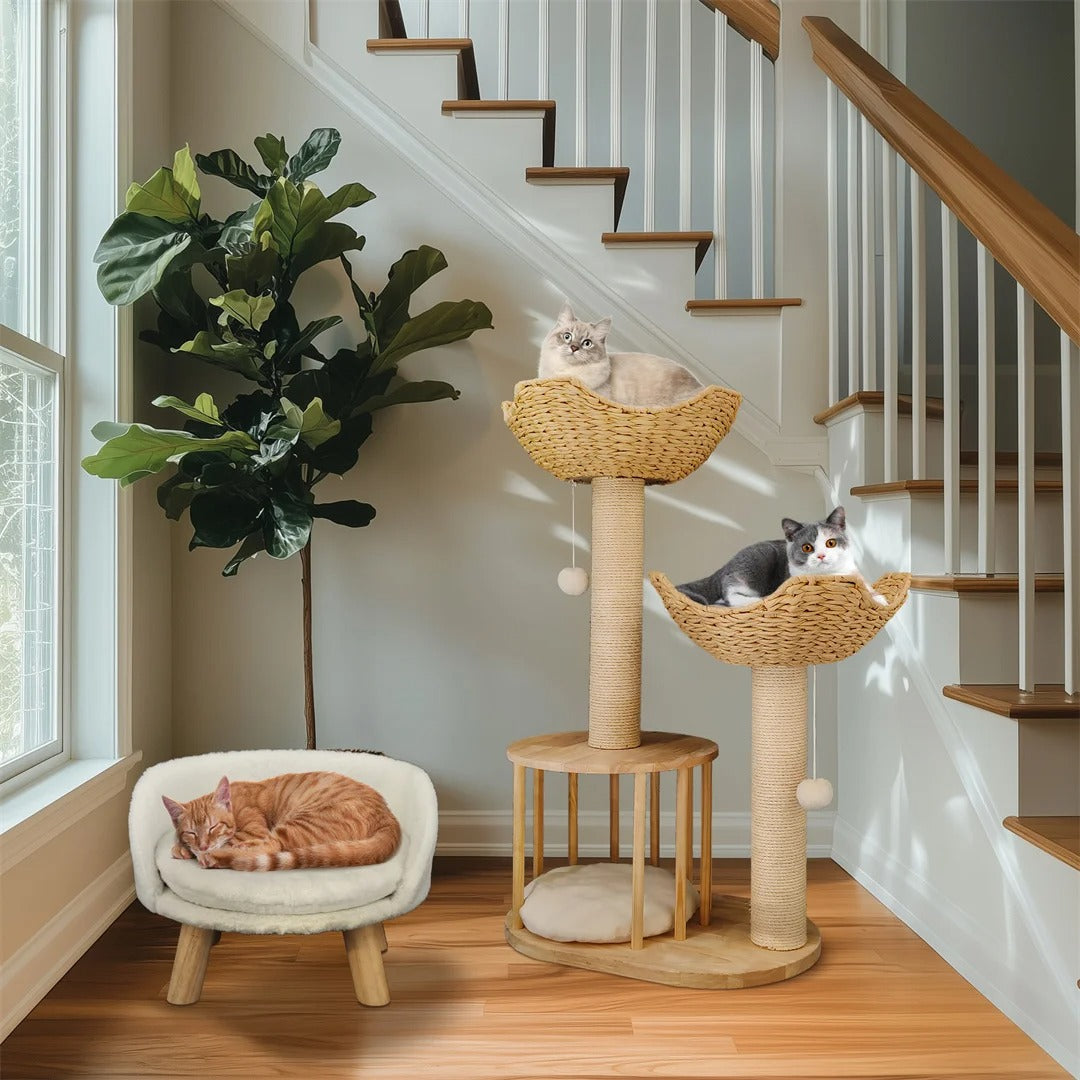 Placing a cat tree in the living room or family area allows your cat to:
- Observe household activity from a safe height
- Feel included without being underfoot
- Switch between rest and interaction easily
This placement is especially effective for social cats who like to follow their owners from room to room. A well designed cat tree can blend into your decor while still serving your cat’s needs.
A versatile option for shared spaces is the 153cm tall cat tree with large condo and perch, which offers height without overwhelming the room.
Corners that provide security and structure
Corners are often underused in homes, but they can be ideal for cat tree placement. A corner offers two solid walls, which can help cats feel more secure while resting or observing.
Corner placement is particularly useful if:
- Your cat is shy or easily startled
- You want to reduce foot traffic around the cat tree
- You are placing a taller structure that benefits from visual stability
Corners near windows or living areas combine the benefits of security and stimulation. This approach also helps larger cat trees feel more integrated into the room.
Bedrooms for calm and routine
Some cats enjoy having a cat tree in the bedroom, especially if they sleep there regularly. A bedroom placement works well for cats that seek calm, predictable environments.
Benefits of bedroom placement include:
- A quiet place for daytime naps
- Easy access during night-time routines
- Reduced competition in multi-cat homes
For bedrooms, mid-height designs with enclosed spaces are often preferred. A thoughtful example is the multi-level cat tree with condo and scratchers, which balances comfort with compact design.
Vertical solutions for smaller homes
In apartments or compact homes, floor space can be limited. In these cases, vertical placement becomes especially important.
Wall-mounted systems and climbing sets allow cats to move vertically without taking up valuable floor area. They also give cats elevated pathways that mimic natural climbing behaviour.
Our wall-mounted cat climbing sets are designed for this purpose and work well in small Australian apartments or townhouses.
If you want to explore how vertical placement can save space, our article on using vertical cat furniture in small homes offers practical insights.
Managing multi-cat households with placement
In homes with more than one cat, placement becomes a tool for harmony. Multiple elevated areas can help reduce competition and stress.
To support multi-cat households:
- Place cat trees in different rooms or zones
- Choose designs with multiple platforms
- Avoid forcing all cats to share a single access point
Tall, multi-level designs placed in social areas can allow cats to coexist while maintaining personal space. This approach is explored further in our guide on creating a peaceful multi-cat environment.
Avoiding common placement mistakes
Even with the right intentions, some placements can reduce how often a cat tree is used.
Try to avoid:
- Placing cat trees near loud appliances
- Blocking access with furniture
- Positioning trees where they wobble on uneven floors
Stability is essential. A cat tree that shifts or feels unstable may be avoided, particularly by cautious cats. If you are placing a taller structure, reviewing safety guidance like our article on securing taller cat trees at home can be helpful.

Matching placement to your cat’s age and ability
Not all cats experience space in the same way. Kittens, adult cats, and seniors all have different preferences and limitations.
- Kittens often prefer central locations where activity is visible
- Adult cats enjoy height combined with sightlines
- Senior cats benefit from quieter locations with easy access
If your cat has reduced mobility, placing a cat tree near a sofa or low surface can make climbing easier. Gradual access often encourages use without strain.
Let your cat guide the final decision
While guidelines are helpful, observing your cat’s behaviour is just as important. Cats often reveal their preferences through where they nap, scratch, or sit.
If your cat frequently sits near a window or perches on furniture, placing a cat tree nearby can redirect that behaviour naturally. A small adjustment in placement can sometimes have a bigger impact than changing the cat tree itself.
At Cat Tree Haven, we always recommend thinking of placement as part of a system rather than a single decision. The goal is to support your cat’s instincts while keeping your home comfortable and functional.
Need help choosing the right setup?
If you are unsure where a cat tree would work best in your home, we are here to help. Our team at Cat Tree Haven can provide personalised advice based on your space, your cat, and your lifestyle.
Get in touch with us here and we will help you create a setup your cat will actually use.
Frequently asked questions
Where should I not place a cat tree?
Avoid areas with constant loud noise, heavy foot traffic, or unstable flooring, as these can discourage use.
Is it better to place a cat tree near a window or in a corner?
Both can work well. A corner near a window often provides the best balance of security and stimulation.
Can I move a cat tree after placing it?
Yes, but frequent moves can confuse some cats. If you do move it, give your cat time to adjust.
Do cats prefer cat trees in busy or quiet rooms?
Many cats prefer being near activity but slightly elevated. The preference can vary based on personality.
How many cat trees should a multi-cat home have?
This depends on space and cat dynamics, but multiple vertical options in different areas often work better than one shared tree.
Will placing a cat tree near furniture stop scratching?
It can help redirect scratching if the cat tree is accessible and appealing, but placement alone may not solve all scratching behaviour.
Is wall-mounted placement safe for cats?
When installed correctly and suited to your cat’s ability, wall-mounted systems can be a safe and effective option.