
Key takeaways
- Scratching is a natural form of cat communication, not bad behaviour.
- Cats scratch to mark territory visually and through scent.
- Scratching helps cats manage emotions like stress, excitement, and confidence.
- The right scratching surfaces can reduce furniture damage.
- Well-designed cat trees and scratchers support both physical and emotional wellbeing.
Scratching is one of the most misunderstood feline behaviours we see as cat owners. It is often labelled as destructive or naughty, when in reality it is one of the clearest ways cats communicate with their environment and with each other. At Cat Tree Haven, we see scratching not as a problem to stop, but as a natural instinct to understand and support.
When we look closely at why cats scratch, we uncover a fascinating mix of communication, territory marking, physical care, and emotional expression. Once we understand this behaviour, it becomes much easier to create a home that works for both cats and humans.
Why scratching is hard-wired into cats
Scratching behaviour is deeply rooted in a cat’s biology. In the wild, cats rely on scratching to survive. It helps them maintain their claws, communicate presence, and feel secure in their surroundings. These instincts do not disappear just because a cat lives indoors.
Even the most gentle, well-trained cat will still feel the urge to scratch. This is not defiance. It is instinct. When scratching opportunities are missing or poorly placed, cats will naturally turn to sofas, carpets, and door frames.
Our role as owners is not to eliminate scratching, but to redirect it in a way that feels natural to the cat and practical for the home.

Scratching as a form of communication
Cats are subtle communicators. Unlike dogs, they do not rely heavily on vocalisation. Scratching plays a key role in how cats send messages.
Visual signals
Scratching leaves visible marks. These marks are intentional. They signal that a space is occupied and actively used. To another cat, these marks communicate presence and confidence.
In multi-cat households, scratching areas can help establish boundaries without confrontation. When cats have enough appropriate scratching zones, tension often reduces naturally.
Scent marking
Cats have scent glands in their paws. When they scratch, they leave behind a scent that humans cannot detect but other cats can. This scent acts like a personal signature.
This is why cats often return to the same scratching spot repeatedly. It is familiar, reassuring, and already marked as safe territory.
Emotional expression
Scratching can also reflect emotional states. A cat may scratch more frequently when excited, stressed, or adjusting to change. New furniture, visitors, or moving house can all trigger an increase in scratching.
Providing consistent, accessible scratching surfaces gives cats a healthy outlet for these emotions.
Territory and confidence in indoor cats
Indoor cats rely heavily on environmental cues to feel secure. Without outdoor territory to patrol, their home becomes their entire world. Scratching helps define that world.
Vertical scratching, in particular, is linked to confidence. When a cat stretches up tall while scratching, it engages muscles and reinforces a sense of strength and control.
This is one reason why cat trees that combine climbing and scratching are so effective. They allow cats to claim space vertically, which is especially important in smaller homes.
For homes with limited floor space, a thoughtfully placed option from our wall-mounted cat sets collection can provide territory without cluttering the room.
How scratching supports physical health
Beyond communication and territory, scratching plays a vital role in physical wellbeing.
Scratching helps cats:
- Shed old claw layers naturally
- Stretch muscles in the shoulders, back, and legs
- Maintain balance and coordination
When cats lack suitable scratching surfaces, they may experience frustration or reduced movement, especially as they age. This can impact joint flexibility and overall comfort.
A stable, well-built scratching structure encourages regular movement without forcing activity.
Why furniture often becomes the target
Cats do not scratch furniture out of spite. They choose surfaces based on texture, stability, and location.
Furniture often meets all three criteria:
- It is sturdy and does not wobble
- It has appealing fabric textures
- It is placed in social or high-traffic areas
This is why placing scratching posts in quiet corners rarely works. Cats prefer to scratch where they spend time and where their scent will be noticed.
A tall, stable option like the large cat tree with integrated jumping platforms can naturally draw attention away from sofas when placed near favourite resting spots.
Choosing scratching solutions that cats actually use
Not all scratching products are equal. From our experience at Cat Tree Haven, successful scratching solutions share a few key traits.
Stability matters
If a scratching post wobbles even slightly, many cats will avoid it. Stability builds trust. Heavy bases, solid frames, and quality materials make a noticeable difference.
Size and orientation
Most cats prefer vertical scratching surfaces that allow a full stretch. Smaller posts may work for kittens, but adult cats benefit from taller structures.
Options like a multi-level cat tree with condo and scratchers combine rest and scratching in one familiar zone.
Material preference
Sisal remains one of the most widely accepted scratching materials. It offers resistance, durability, and a satisfying texture. Some cats also enjoy textured wood or carpeted surfaces when used appropriately.
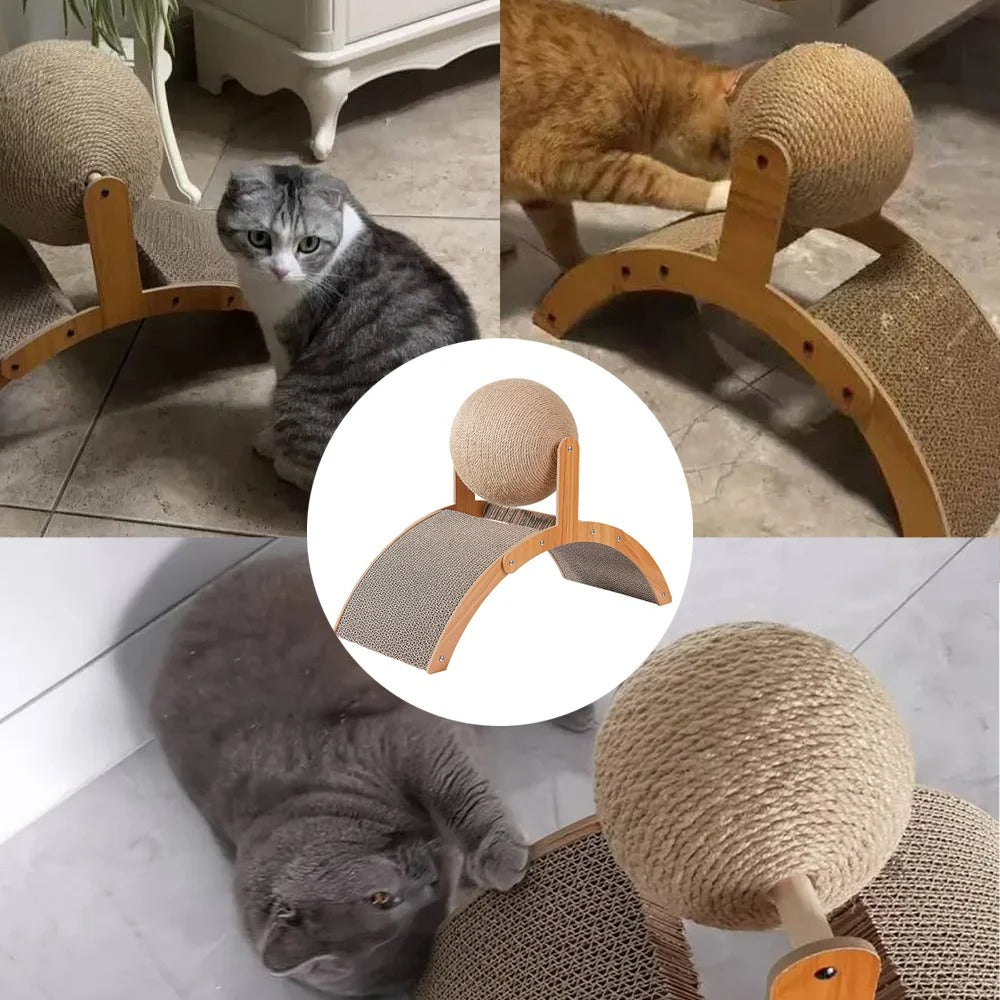
Scratching in multi-cat households
In homes with more than one cat, scratching becomes even more important. Shared spaces can create subtle competition, even between cats that get along well.
Providing multiple scratching zones helps reduce stress and prevents resource guarding. Ideally, each cat should have access to scratching surfaces in different rooms.
A combination of freestanding trees and wall-mounted options allows cats to choose spaces that suit their comfort level.
Our article on how cat trees support behaviour offers further insight into this dynamic: how cat trees influence feline behaviour.
Training is about guidance, not force
Cats cannot be trained the same way as dogs. Punishment does not work and often increases anxiety-related scratching.
Instead, training focuses on encouragement:
- Place scratchers near existing problem areas
- Reward use with calm praise or treats
- Gradually move scratchers once habits form
Consistency matters more than speed. When cats feel their needs are understood, behaviour often improves naturally.
If you are introducing new furniture, our guide on helping cats adjust may be useful: introducing cats to new climbing furniture.
Creating a scratching-friendly home
A scratching-friendly home does not need to look like a pet store. Modern cat furniture is designed to blend into real homes while still meeting feline needs.
Scratching areas can be:
- Integrated into cat trees
- Mounted vertically on walls
- Combined with sleeping and play zones
The goal is to make scratching a natural part of daily movement, not a separate activity.
We explore this balance further in our article on protecting household furniture while supporting natural behaviour: the role of cat trees in reducing furniture scratching.
Our approach at Cat Tree Haven
At Cat Tree Haven, we design and curate cat furniture with behaviour in mind. We believe scratching should feel satisfying for cats and stress-free for owners.
Every product we offer aims to support:
- Natural communication
- Territorial confidence
- Physical comfort
- Long-term durability
By understanding why cats scratch, we can choose solutions that respect their instincts rather than fight them.
If you are unsure where to start or need help choosing the right option for your home, we are always happy to help.
👉 Contact Cat Tree Haven to speak with our team and find a scratching solution that works for your cat and your space.
Frequently Asked Questions
Why do cats scratch even when their claws are trimmed?
Scratching is not only about claw length. It is also about marking territory, stretching muscles, and releasing scent from paw glands.
Is scratching a sign of stress in cats?
It can be. Increased scratching may appear during changes in routine or environment, but it is also a normal daily behaviour.
How many scratching posts does a cat need?
Most cats benefit from more than one scratching area, especially in multi-cat homes or larger spaces.
Do cats prefer vertical or horizontal scratchers?
Many cats prefer vertical scratching for a full stretch, but preferences vary. Offering both can help identify what your cat enjoys most.
Can scratching behaviour be trained out of a cat?
Scratching should not be removed, only redirected. Providing suitable alternatives is the most effective approach.
Where should I place a scratching post?
Place it near areas your cat already scratches or near favourite resting spots. Visibility and accessibility are important.
Do older cats still need scratching furniture?
Yes. Scratching supports joint movement and confidence at all ages, though older cats may prefer more stable, lower-impact options.