
Key Takeaways
- Wooden and plush cat trees differ significantly in aesthetics, durability, ease of cleaning, and how well they suit different home environments
- Wooden cat trees tend to integrate more naturally into contemporary Australian interiors and are generally easier to clean and maintain over time
- Plush cat trees offer softer resting surfaces that many cats find comfortable, particularly for extended sleep and rest periods
- Neither material is inherently superior - the right choice depends on your cat's preferences, your household conditions, and your priorities as an owner
- Most modern cat trees combine both materials - a wooden frame and platforms with plush-lined condos or resting spots - rather than using one exclusively
- Maintenance requirements differ substantially between the two: plush collects fur and odour more readily, while wood and board surfaces wipe clean more easily
- Cat Tree Haven stocks a range of cat trees across both styles and hybrid designs, with free shipping across Australia
Choosing a cat tree involves more decisions than most people expect before they start looking. Height, stability, features, price - these are the obvious ones. But material and surface finish is a comparison that comes up consistently, and it's one where the differences are genuinely meaningful for day-to-day use rather than being purely aesthetic.
The two dominant material approaches in the cat tree market are what's broadly described as "wooden" design - natural wood or board surfaces with clean lines and minimal soft material - and "plush" design, which covers structures wrapped in carpet-style fabric or soft plush covering. Both have genuine advantages. Both have limitations that are worth understanding before you commit to one direction.
This article works through the comparison honestly, covering aesthetics, durability, maintenance, and how each material performs for the cat itself. The goal is to give you a clear picture of which direction suits your specific situation rather than declaring one better than the other in absolute terms.
What "Wooden" and "Plush" Actually Mean in Cat Tree Design
Before comparing them, it's worth being precise about what these terms refer to in practice, because the categories are a little more fluid than a simple wooden vs plush frame suggests.
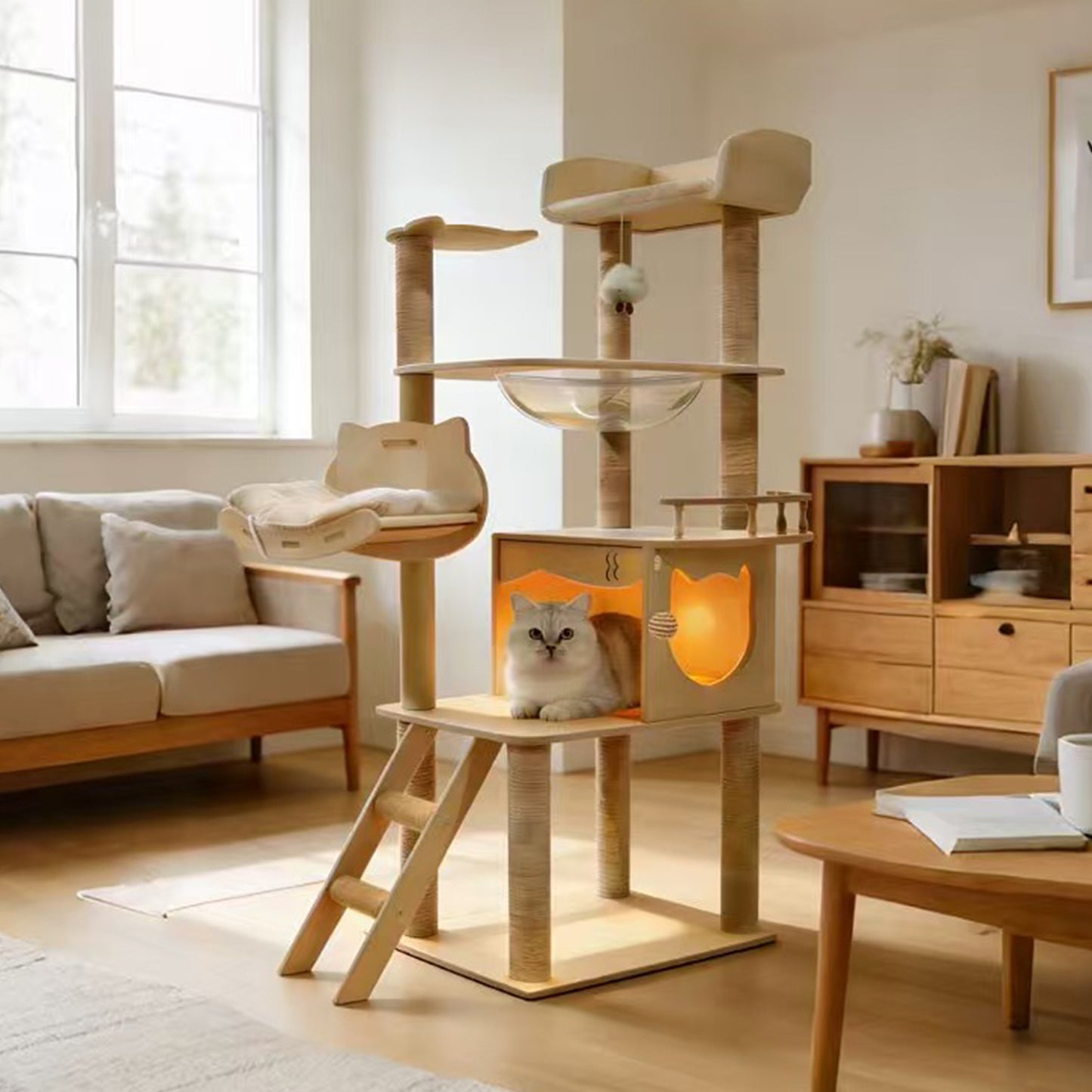
Wooden cat trees use natural wood panels, timber boards, or high-density board with a wood finish for their platforms and structural surfaces. The posts are typically wrapped in natural sisal rather than carpet. The aesthetic is clean, often Scandinavian-influenced, with visible wood grain or smooth panel surfaces and minimal soft material beyond the resting areas. Where soft material is used, it tends to be confined to specific resting spots or the interior of condos rather than covering the whole structure.
Plush cat trees use soft fabric - typically a short-pile fabric described as "plush" or, in older designs, a carpet-style covering - across most or all surfaces including the platforms, posts, condos, and structural elements. The soft covering gives the structure a more padded, upholstered appearance throughout. Posts on plush-dominated trees are often also carpet-covered rather than sisal-wrapped.
In practice, many modern cat trees sit between these categories. A tree might have wooden panel platforms with plush-lined condos, or a natural wood frame with soft fabric resting areas at each level. These hybrid designs are increasingly common as manufacturers respond to owner demand for both aesthetics and comfort. Understanding where a specific product sits on this spectrum is more useful than assuming it's entirely one or the other.
Aesthetic Integration in Australian Homes
This is the area where the difference between the two styles is most immediately obvious. Cat trees are significant pieces of furniture - particularly taller structures - and how they sit within the overall visual environment of a room matters, especially in homes where interior design is a genuine priority.
Wooden cat trees tend to integrate far more naturally into contemporary Australian interiors. The natural wood tones, clean geometric forms, and restrained use of soft material allow these structures to read as considered furniture rather than pet equipment. In a living room with timber floors, neutral furnishings, and modern design lines, a well-made wooden cat tree looks like part of the room. This is one reason the modern minimalist style of cat tree has grown significantly in popularity over the past several years - it solves the problem of cat furniture that announces itself as pet product from across the room.
Plush cat trees - particularly older-style designs with carpet covering throughout - can be harder to integrate aesthetically. The uniform soft covering, often in beige or grey, and the less refined construction approach can make them look more like pet equipment and less like furniture. This isn't a problem in households where aesthetics are less of a priority, but in homes where the living environment matters and the cat tree will be in a main room, the visual difference between wooden and plush designs is real.
That said, the plush category has evolved. Modern plush designs increasingly use higher-quality fabrics in more considered colours and avoid the carpet-heavy aesthetic of older generations of cat furniture. The gap between the two styles has narrowed in terms of aesthetics at the higher end of the market, even if the underlying material difference remains.
Durability: How Each Material Holds Up Over Time
Durability in cat tree materials operates at two levels: the structural durability of the frame and posts, and the surface durability of the resting platforms and covering.
Structural Durability
Solid wood frames are the most structurally durable option in both categories. A cat tree built with solid wood posts and a dense solid wood base will maintain its structural integrity longer than one built from hollow MDF or lightweight particleboard, regardless of whether the surface covering is wood-finish or plush fabric.
The post material matters here too. Sisal-wrapped posts - standard on wooden-style trees - tend to be more durable than carpet-covered posts under the type of force that scratching applies. Sisal wears by fraying, which maintains functional integrity for longer. Carpet wears by matting and pilling, which degrades the surface more quickly and less gracefully.
Surface Durability
This is where the distinction between wooden and plush surfaces becomes more practically significant.
Wood and board platform surfaces are hard surfaces. They don't absorb fur, don't pill or mat under a cat's claws, and don't degrade visually in the way that soft material does. The main wear that a wooden platform shows under regular cat use is scratching marks at edges and surfaces where claws make contact - which is relatively minor compared to the wear that soft material accumulates.
Plush surfaces accumulate fur, skin cells, and environmental debris in the pile of the fabric. In a household with a heavy-shedding cat, plush platforms can build up a noticeable fur layer quickly. The pile of the fabric also compresses and mats under repeated use, changing the texture and appearance of the surface over time. In a multi-cat household or with a very active cat, plush surfaces can look noticeably worn within a year or two of regular use.
This doesn't mean plush surfaces are unsuitable, but the maintenance implications are different - and significant.
Maintenance: The Practical Day-to-Day Reality
Maintenance is arguably the area where the difference between wooden and plush cat trees matters most for the long-term ownership experience.
Wooden surfaces can be wiped down with a damp cloth. Fur doesn't embed in the surface and can be removed with a soft brush or vacuum attachment. Spot cleaning is quick and effective. A wooden platform looks much the same after a year of use as it did when new, provided the structure itself remains intact.
Plush surfaces require more frequent and more effortful cleaning. Fur embeds in the pile and requires vacuuming rather than wiping - and vacuuming plush fabric effectively requires either a vacuum attachment designed for pet fur or a lint roller for surface-level removal. Over time, odour can accumulate in plush fabric in a way that wooden surfaces don't experience, particularly in humid environments or in households with cats who spend significant time on the tree.
Some plush platforms and removable covers can be machine washed, which significantly reduces the maintenance burden if the product is designed this way. Checking whether a plush tree's soft surfaces are removable and washable is one of the more practically important things to verify before purchasing.
In Australia's climate - where humidity varies considerably by region and summer temperatures can be significant - the odour retention of dense plush fabric is worth factoring in more seriously than it might be in a cooler, drier climate. Wooden surfaces don't present this concern in the same way.
For a detailed maintenance guide covering both surface types, our post on how to keep a cat tree clean and well-maintained over the long term is worth reading before making your decision.
How Each Material Suits Cats
Beyond the owner-facing considerations of aesthetics and maintenance, it's worth asking how the cat itself responds to each material.
For resting and sleeping, most cats show a preference for softer surfaces during extended rest periods. A plush-covered platform provides more cushioning than a bare wooden board, and many cats will choose the softer surface for longer sleep periods. This is one of the genuine functional advantages of plush design - it provides a warmer, softer resting experience.
That said, most wooden cat trees address this by incorporating soft material in specific resting zones - cushioned inserts in condos, padded platform covers, or fleece-lined sleeping areas - while keeping the structural surfaces in wood or board. This hybrid approach provides the soft resting experience where it matters without extending plush material to surfaces where it creates maintenance problems without adding functional value.
For scratching, the post material matters far more than the platform surface. A wooden-style tree with natural sisal posts serves the scratching function more effectively than a plush tree with carpet-covered posts, for the reasons covered in detail in our comparison of sisal versus carpet scratching post materials.
For temperature regulation, wooden and board surfaces are cooler in hot weather than plush fabric - a practical consideration for Australian summers. Cats often seek cooler surfaces during warmer months and may use elevated wooden platforms more readily in summer than plush-covered equivalents. In cooler months, the reverse can be true.
Specific Options from Cat Tree Haven
For households where the wooden aesthetic and low-maintenance surface are the priority, the 91cm modern solid wood cat tree with sisal scratching post, cosy beds, and toy ball is a well-executed option at a compact height. The solid wood construction, clean design, and sisal post deliver the core functional requirements without the maintenance demands of an all-plush design.
For a larger structure in the same aesthetic direction, the 166.5cm modern multi-level wood cat tree with scratching post provides substantial height and multiple levels in a natural wood design that works well in contemporary Australian living spaces. The structure uses wood throughout for the platforms and frame, with targeted soft elements for resting comfort.
For households where warmth and comfort are the priority - perhaps for older cats, cats who spend more time resting than climbing, or cats who have a strong preference for soft surfaces - the luxury cat castle tree with elevated lounges, capsule bed, and scratching posts (140-155cm) balances elevated platforms with a well-padded capsule sleeping area and plush resting surfaces, giving the cat genuine comfort while maintaining a more refined overall design than traditional all-carpet trees.
The Cat Tree Haven large cat tree and tower collection (100-200cm) covers the full range of styles from wooden minimalist through to feature-rich hybrid designs, making it the most useful place to browse when comparing options across this spectrum. For compact spaces where a smaller structure is needed, the small cat tree collection (under 100cm) includes wooden-style options that deliver clean design and easy maintenance in a form that works in apartments and smaller rooms.
How to Decide: A Simple Framework
If you're still weighing up which direction to go, these questions tend to point toward a reasonably clear answer for most households.
Is aesthetics a genuine priority?
If you're particular about how your home looks and the cat tree will be in a main living space, wooden-style designs integrate more naturally into contemporary Australian interiors and are worth prioritising on this basis alone.
How heavy a shedder is your cat?
A heavy-shedding cat on a plush tree creates a significant maintenance task. If you already know that cat fur on soft furnishings is a management challenge in your household, extending that challenge to a cat tree is worth thinking through before choosing plush.
Does your cat prefer soft surfaces for rest?
Watch where your cat currently chooses to sleep for extended periods. A cat who consistently seeks soft surfaces may benefit more from plush resting spots on the tree than one who regularly sleeps on hard floors or wooden furniture.
What's your climate like?
In a hot and humid Australian summer, plush surfaces can retain odour more readily and feel less comfortable for cats seeking a cooler surface. Wooden platforms have a practical advantage in warmer conditions.
Are you willing to commit to more frequent cleaning?
Plush surfaces don't necessarily cause problems, but they require more consistent maintenance effort to stay hygienic and presentable. If your schedule makes regular vacuuming of cat furniture unlikely to happen, a lower-maintenance wooden design is more practically suited to your lifestyle.
Our post on how to match cat furniture to your home's design and your cat's personality covers the aesthetic side of this decision in more depth and is worth reading alongside this comparison if design integration is a significant factor in your decision.
Have a Question About Which Style Suits Your Cat or Home?
If you're comparing specific products and not sure which direction fits your situation, our team at Cat Tree Haven is happy to help. We can answer questions about materials, construction, maintenance, and which options are likely to work best for your cat and your home.
Get in touch with the Cat Tree Haven team and we'll help you find the right fit.
Frequently Asked Questions
Are wooden cat trees better than plush cat trees?
Neither is better in absolute terms. Wooden-style cat trees tend to integrate more naturally into contemporary interiors, are easier to clean, and hold up better visually over time. Plush cat trees offer softer resting surfaces that many cats prefer for extended sleep periods. The right choice depends on your cat's preferences, your maintenance capacity, and how the tree needs to function within your home environment. Many modern designs combine both materials to capture the advantages of each.
Do cats prefer wooden or plush surfaces on cat trees?
This varies between individual cats. For active climbing and observation, cats tend to be less particular about surface material as long as the structure is stable. For resting and sleeping, many cats show a preference for softer surfaces, which is why plush resting spots are common even on predominantly wooden designs. Cats in warmer climates or during hot weather often prefer the cooler surface of wood or board over plush fabric.
Are wooden cat trees easier to clean than plush ones?
Yes, generally. Wooden and board surfaces can be wiped clean with a damp cloth, and fur doesn't embed in the surface in the way it does with fabric pile. Plush surfaces require more regular vacuuming and are more prone to odour retention over time, particularly in humid conditions or in households with multiple cats. If easy maintenance is a priority, wooden-style designs have a clear practical advantage.
Do wooden cat trees last longer than plush ones?
Solid wood construction tends to be more durable structurally than lightweight board, regardless of surface finish. For surface durability specifically, wooden platforms hold their appearance over time better than plush fabric, which can mat and pill under regular use. A well-made wooden cat tree with natural sisal posts can remain both structurally sound and visually presentable for considerably longer than a comparable plush design under equivalent use.
Can I get a cat tree that has both wooden and plush surfaces?
Yes, and this is increasingly the standard approach in the mid-to-upper segment of the cat tree market. Many modern designs use wooden or board platforms for the structural surfaces - which are easier to clean and integrate better aesthetically - with plush fabric or cushioned inserts in enclosed condos and specific resting areas where softness provides genuine comfort benefit. This hybrid approach captures the maintenance and aesthetic advantages of wood alongside the comfort advantages of soft material.
How do I keep a plush cat tree clean?
Regular vacuuming with a pet-hair attachment is the most effective maintenance approach for plush surfaces. A lint roller works for surface-level fur removal between vacuum sessions. Spot cleaning with a damp cloth addresses localised marks. Where the plush covers or platforms are removable and machine washable, washing every few weeks is a practical option for deep cleaning. Odour can be managed with a light sprinkle of bicarbonate of soda left briefly on the surface before vacuuming. In humid Australian conditions, ensuring the tree is positioned in a well-ventilated area helps prevent odour buildup.
Are wooden cat trees safe for cats?
Yes, provided the wood or board used is from a reputable manufacturer and any finish applied is non-toxic. Solid wood is inherently safe. For board-based designs, the adhesives and finishes used in construction should be formaldehyde-free and non-toxic - which is the standard expectation from quality cat furniture manufacturers. If safety certification is a concern, it's worth checking product listings for any relevant material or safety information provided by the manufacturer.