
Key Takeaways
- The terms "cat tree" and "cat tower" are used interchangeably in the pet industry and do not refer to two distinct product categories
- Both describe freestanding structures that provide cats with vertical territory, scratching surfaces, and resting spots
- The more useful distinctions are between height ranges, feature sets, construction materials, and design styles rather than the name used
- Taller, narrower structures are sometimes called towers; wider multi-branching structures sometimes called trees - but these distinctions are inconsistent across brands and retailers
- Choosing between them is really about matching the structure's features and dimensions to your cat's needs and your home's layout
- Cat Tree Haven stocks a wide range of cat trees and cat towers across multiple height ranges and styles, with free shipping across Australia
If you've spent any time shopping for cat furniture online, you've probably noticed that "cat tree" and "cat tower" seem to be used to describe very similar - often identical - products. You click on something listed as a cat tree and it looks exactly like what's being sold as a cat tower two listings later. And then there's the cat condo, the cat climbing frame, the cat activity centre. The terminology across the pet industry is genuinely inconsistent, and it creates real confusion for people trying to make an informed purchase.
The honest answer is that "cat tree" and "cat tower" do not have universally agreed-upon definitions that distinguish them as separate product categories. They are largely interchangeable terms used by different brands and retailers to describe the same broad class of product: a freestanding cat furniture structure that provides vertical territory, scratching surfaces, and elevated resting positions.
That said, there are some loose conventions in how the terms tend to be applied, and there are genuinely meaningful distinctions within the cat furniture category that are worth understanding - even if the naming doesn't always reflect them reliably. This article unpacks what those distinctions actually are and how to use them to make a better purchasing decision.
Where the Terminology Comes From
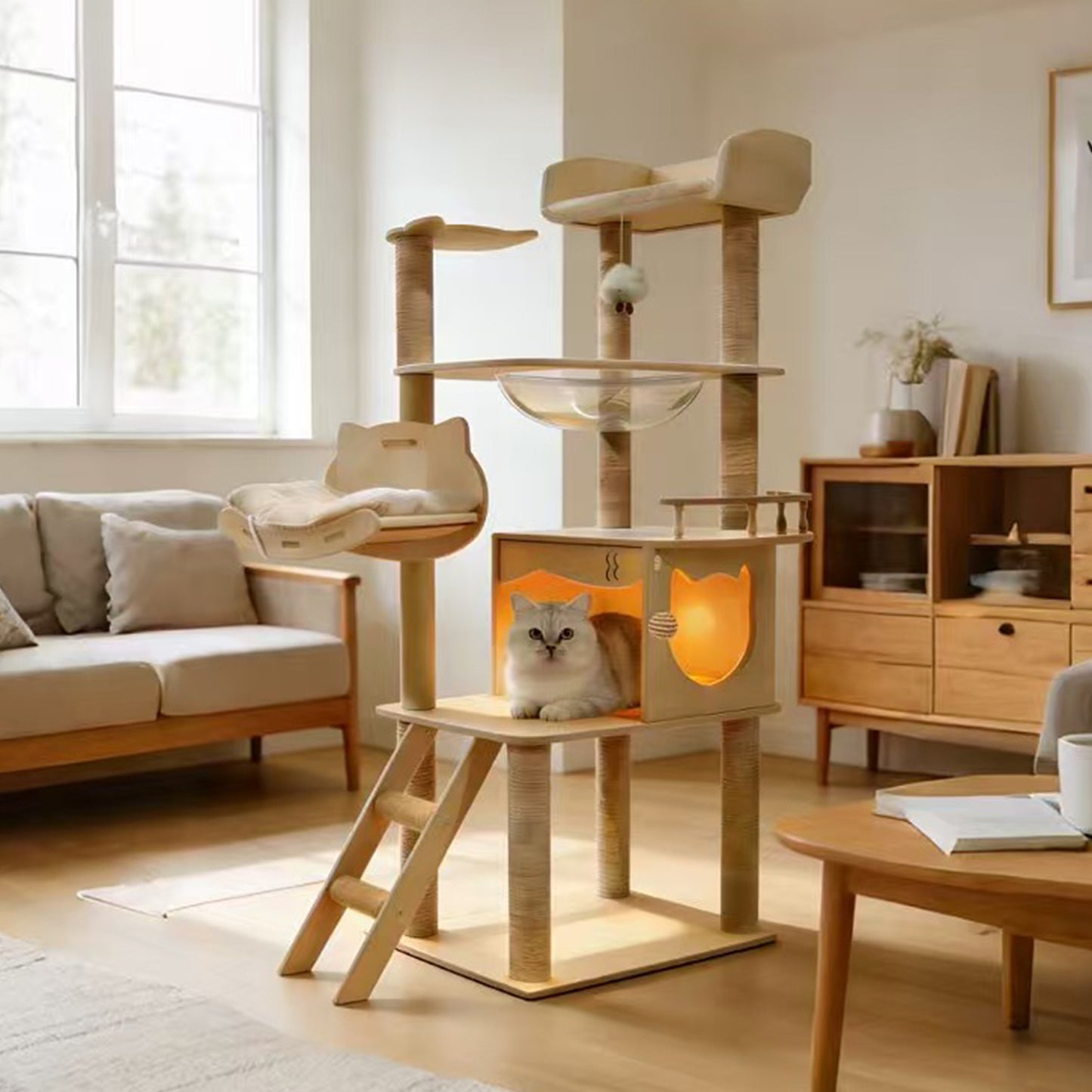
The term "cat tree" draws on an obvious visual metaphor. Early designs of this type of furniture - structures with a central pole and multiple branching platforms - resembled a stylised tree, with the pole as the trunk and the platforms as branches. This is still a recognisable design template today, particularly in larger multi-level structures where platforms extend outward at different heights from a central column.
"Cat tower" is a term that emphasises height and vertical structure. It's perhaps more commonly applied to taller, narrower designs - structures that prioritise maximum height over horizontal spread - though this convention is far from universal. A search for "cat tower" on any major retailer will return products that range from compact 60cm structures to floor-to-ceiling installations well over 200cm.
Other terms you'll encounter include "cat condo" (usually refers to a structure with an enclosed box or sleeping compartment, though it's also used as a general term), "cat climbing frame" (tends to emphasise active climbing rather than resting), and "cat activity centre" (often applied to structures with multiple interactive features like dangling toys and tunnels alongside climbing platforms).
None of these terms are standardised. The same product can appear under several different names depending on which retailer is selling it.
The Distinctions That Actually Matter
Since the terminology isn't reliable, it's more useful to focus on the structural and functional distinctions that actually affect which product suits your cat and your home. These are the variables worth paying attention to when comparing options.
Height and Vertical Range
The most significant practical distinction in cat furniture is height. A compact structure under 100cm serves different needs from a 180cm multi-level tower, which in turn is very different from a floor-to-ceiling pressure-mounted structure at 250cm or above. Height determines how much vertical territory the cat has access to, how many distinct levels can be incorporated, and what kind of vantage point the cat can achieve at the top.
For cats in apartments or smaller homes, a taller structure in a compact footprint often makes more sense than a wide, low structure. For multi-cat households, height creates distinct vertical territory that reduces competition between cats. For senior cats or cats with reduced mobility, height range matters less than step spacing and platform accessibility.
Cat Tree Haven organises its range by height for this reason. The small cat tree collection (under 100cm) covers compact options for smaller spaces and less active cats, while the large cat tree and tower range (100-200cm) covers the most popular range for active adult cats and multi-cat households.
Feature Set
The features integrated into a structure are a more useful distinguishing factor than the name. Key features to consider include:
Enclosed condos or sleeping compartments. These provide the combination of height and enclosure that anxious cats particularly benefit from, and that most cats use for extended rest periods. Not all cat trees include them - structures marketed as "towers" sometimes prioritise height and open platforms over enclosed spaces.
Scratching posts. The material (sisal vs carpet), diameter, height, and number of scratching posts varies considerably between products. A structure with a single thin carpet post at the base serves the scratching function much less effectively than one with multiple tall sisal posts at different levels.
Hammocks. A suspended hammock provides a resting option that many cats find appealing, particularly for lighter-weight resting during the day. Not all structures include one, and quality varies between products.
Play features. Dangling toys, tunnels, and interactive elements are more common in structures marketed toward younger, more active cats. They add engagement but also add to the overall size and complexity of the structure.
Platform size and number. More platforms at varied heights give cats more options and are particularly useful in multi-cat households. Platform size matters for larger breeds or for cats who like to stretch out when resting.
Construction Material and Quality
Material quality is probably the most important variable that the terminology of "tree" vs "tower" tells you nothing about. Both terms are applied to products ranging from very cheap lightweight constructions to solid wood structures built to last many years.
Solid wood and high-density board with solid wood posts provide significantly better stability and durability than lightweight hollow-post constructions. This matters particularly for larger cats, multi-cat households, and any situation where the structure will receive heavy or frequent use.
Sisal quality also varies. Natural sisal wound tightly around a post of adequate diameter is the most satisfying and durable scratching surface. Loose or thin sisal wrapping wears quickly and is less effective for the cat.
Design and Aesthetic
Design style is an area where the cat furniture market has changed considerably over the past decade. Alongside the traditional carpet-and-sisal structures that still dominate the lower-price market, there is now a substantial range of modern minimalist options using natural wood, clean lines, and neutral plush that integrate more naturally into contemporary Australian homes.
These aren't just aesthetically different products - they're often structurally different too, using solid wood frames and different construction methods that affect both durability and the experience of the cat using them.
When the Terms Are Used More Consistently
While the terms aren't standardised, there are some loose patterns in how they tend to be applied that are worth knowing when browsing.
Structures described primarily as "cat trees" tend more often to be wider, multi-branching designs with several platforms at different heights that spread horizontally as well as vertically. The visual resemblance to a branching tree is more apparent in these designs.
Structures described as "cat towers" tend slightly more often to be taller, more vertically oriented structures with a smaller footprint and platforms arranged more linearly up the height of the structure rather than spreading outward.
But these tendencies are inconsistent enough that they shouldn't be relied upon. A product's actual dimensions, features, and construction materials tell you far more than its name.
Specific Examples from the Cat Tree Haven Range
To illustrate how varied the products within this category actually are, it's worth looking at a few specific examples.
The 152cm cat tree with multi-level cat tower uses both terms in its name - which is telling in itself. It's a multi-level structure with platforms at varied heights, scratching posts, and a design that sits comfortably in the overlap between what might be called a tree and what might be called a tower depending on who's doing the describing.
The modern wooden nine-level luxury cat tree with cosy condo, hammock, ladder, and 178cm height is a structure that emphasises height, multiple distinct levels, and a comprehensive feature set in a design that uses natural wood throughout. Whether you call it a tree or a tower is less relevant than the fact that it provides nine distinct platforms, an enclosed condo, and a hammock within a single structure built from quality materials.
The luxury cat castle tree with elevated lounges, capsule bed, and scratching posts (140-155cm) uses yet another naming convention - "castle" - to describe a structure that nonetheless fits within the same broad product category. Its distinguishing feature is the capsule-style enclosed sleeping space alongside open elevated lounges, making it particularly suited to cats who want a variety of resting options.
These examples illustrate why the name used matters far less than the specifications.
How to Choose Between Options
Given that the terminology isn't a reliable guide, here's a more useful framework for narrowing down the right option.
Start with height. How much vertical territory does your cat actually use or seek out? A cat who consistently climbs to the top of the wardrobe needs more height than one who is happy at mid-level. Ceiling height in your room sets the upper limit.
Consider your cat's specific needs. An anxious cat benefits from an enclosed condo. A large breed needs wider platforms. A kitten or senior cat benefits from smaller steps between levels. An active young cat benefits from multiple features at various heights.
Think about your home layout. A large sprawling structure works in a spacious living room and feels overwhelming in a studio apartment. A tall narrow structure makes sense where floor space is limited. A modern minimalist design makes sense where aesthetics matter.
Assess construction quality. Check what the posts and frame are made from. Look at whether the base is wide and heavy enough for the height of the structure. Read whether sisal is natural and tightly wound. These factors predict durability and whether the cat will consistently use the structure.
Match features to what your cat actually does. If your cat never uses hammocks, a tree without one isn't a compromise. If your cat consistently seeks enclosed spaces, a structure without a condo is a missed opportunity.
Our post on how to choose between a small cat tree and a large cat tower for your specific situation works through this decision-making process in more detail, with guidance on how to match the structure to your cat's needs and your home.
For a broader look at how to assess quality before buying, our post on the warning signs of a poorly made cat tree or tower covers the construction details worth checking regardless of what the product is called.
And if you're trying to understand which type of structure genuinely suits your cat's behaviour rather than just their size, our post on how to match cat furniture to your cat's specific personality and habits provides a practical framework for thinking through that question.
The Practical Summary
Cat tree and cat tower mean the same thing in practice. The terminology is marketing language rather than a meaningful product classification. What matters when choosing is the structure's height, feature set, construction quality, and suitability for your specific cat and home - none of which the name reliably tells you.
At Cat Tree Haven, we stock a range that covers the full spectrum from compact structures suited to smaller spaces and calmer cats, through to large multi-level towers and floor-to-ceiling structures suited to active cats and multi-cat households. Every product listing includes the dimensions, features, and material information you need to make an informed decision regardless of what the product happens to be called.

Have a Specific Question About Which Option Suits Your Cat?
If you're comparing options and not sure which one fits your cat's needs and your home layout, our team is happy to help. We can point you toward structures that match your specific requirements rather than leaving you to sort through terminology.
Get in touch with the Cat Tree Haven team and we'll help you find the right option.
Frequently Asked Questions
Is a cat tree the same as a cat tower?
Yes, in practical terms. Both "cat tree" and "cat tower" refer to freestanding cat furniture structures that provide vertical territory, scratching surfaces, and elevated resting positions. The terms are used interchangeably across the pet industry and do not refer to distinct product categories with different specifications. The more useful distinctions are height, feature set, and construction quality rather than the name.
What is the difference between a cat tree and a cat condo?
A cat condo most specifically refers to the enclosed box or sleeping compartment that is integrated into many cat trees and towers. It's also sometimes used as a general term for the whole structure. When a product is described as including a "condo," it means it has an enclosed sleeping space with an opening - a feature that provides cats with a secure, partially hidden resting spot. Not all cat trees include a condo.
What is better for cats - a cat tree or a cat tower?
Neither is inherently better. The right choice depends on your cat's size, age, activity level, and preferences, as well as the available space in your home. A tall, narrow structure with multiple platforms suits an active cat in a smaller space. A wider, multi-branching structure with an enclosed condo suits a cat who wants variety in resting options. Assessing the structure's features and dimensions against your cat's specific needs is more useful than choosing based on the product name.
How tall should a cat tree or tower be?
This depends on your cat and your room. For most adult cats, a structure of at least 100-150cm provides meaningful vertical territory and a genuinely satisfying vantage point. For very active cats or multi-cat households, taller structures in the 150-200cm range or above provide more territory. For smaller cats, senior cats, or very compact spaces, a structure in the 70-100cm range may be more appropriate.
What features should a good cat tree or tower have?
The most important features are: a stable, wide base that won't tip under a jumping cat's weight; sisal-wrapped scratching posts of adequate height and diameter; at least one enclosed condo or sleeping compartment; multiple platforms at different heights; and construction from solid wood or high-density materials rather than lightweight hollow posts. Additional features like hammocks, dangling toys, and tunnels add enrichment but are secondary to these core functional elements.
Do cats prefer cat trees or cat towers?
Cats respond to the features and positioning of a structure rather than its name. A cat who prefers enclosed spaces will gravitate toward any structure - tree or tower - that has a well-sized condo. A cat who likes to climb to maximum height will use the tallest structure available. What cats prefer is a structure that meets their specific needs in terms of height, resting options, and scratching surfaces, placed in a location that matters to them behaviourally - typically near windows or in socially central areas of the home.
Are cat trees or towers better for multiple cats?
For multiple cats, height and the number of distinct resting levels are the most important factors - more so than whether the product is called a tree or a tower. A structure with multiple separate platforms, at least one enclosed condo, and several sisal posts at different heights gives each cat a meaningful place to be without direct competition. Taller structures with more levels are generally better suited to multi-cat households than compact single-perch options regardless of what they're named.