
At some point, most cat owners face a version of the same dilemma. You find yourself staring at two cat trees online. One is $79. The other is $219. They look broadly similar in the product photos. Both have sisal posts and plush platforms. Both claim to be sturdy and well-made. So what, exactly, are you paying for with the more expensive one?
This is a fair question, and it deserves a direct answer rather than vague reassurances about quality. At Cat Tree Haven, we have spent considerable time examining what actually separates a budget cat tree from a well-built one, and where the real differences show up in daily use over time. Here is what the honest comparison looks like.
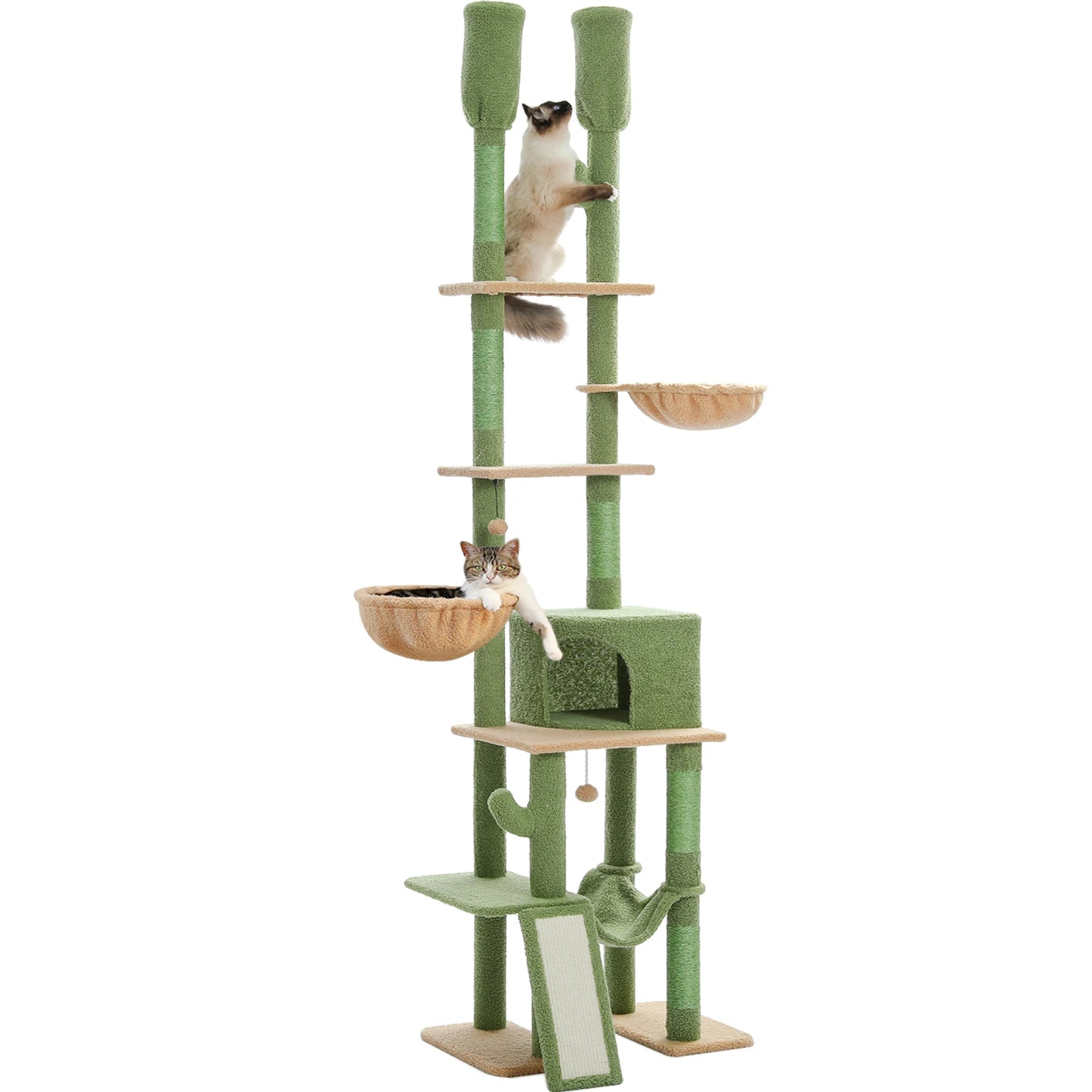
Where Cheap Cat Trees Actually Cut Corners
The price difference between a $79 tree and a $219 tree has to come from somewhere. In most cases, it comes from the quality of specific components that are easy to overlook when you are looking at product photos.
Board thickness and core material
Cheap cat trees almost universally use thin MDF (medium-density fibreboard) or low-density particleboard for the platforms, base plate, and structural boards. These materials are not inherently problematic - many good cat trees use MDF successfully. The issue with budget trees is the thickness. Very thin board compresses and begins to flex over time, particularly at the join points where bolts pass through. Once a board starts to flex, the whole structure becomes less stable, and stability is what a cat needs to trust and use the tree consistently.
Budget trees also frequently use cardboard tubes for the central post - the column that runs from base to top platform. Cardboard tubes are light, cheap to produce, and reasonably rigid when new. Under sustained load from daily jumping and landing, particularly with a heavier cat, they compress and lose stiffness over months.
Better-built trees use thicker board (you can usually tell by the weight of the assembled tree) and solid or hollow-but-substantial posts. A post that does not flex when you push against it at mid-height is one indication of adequate construction.
Sisal quality
Sisal is the natural fibre rope wound around scratching posts, and the difference between cheap and quality sisal is immediately apparent if you compare them side by side. Budget trees use short-fibre sisal wound loosely around the post. It looks like sisal, but it frays within weeks of regular scratching and can begin to unravel from the ends within a few months.
Quality sisal uses long fibres wound tightly and densely. It maintains its texture and grip under sustained daily scratching, and the good stuff can last years before showing significant wear. Natural sisal from Cat Tree Haven's range is selected specifically to hold up to Aussie cats' vigorous scratching habits - not just to look good on arrival.
Carpet-wrapped posts are another common budget substitute. They provide a scratching surface but are less satisfying to cats than sisal and can actually encourage scratching of household carpet, since the textures feel similar.
Fabric coverings
The plush fabric on platforms, condos, and perches in cheap cat trees tends to be very thin synthetic material with a low pile. It looks soft in product photos but pills, loses texture, and develops bald patches quickly under daily use. Most budget fabrics also retain odours more readily than denser, better-quality alternatives.
Well-made cat trees use thicker plush with a denser construction that holds its shape and texture through regular cleaning and sustained use. Some better trees also use wipe-clean surfaces in specific high-contact areas, which makes ongoing maintenance more practical.
Join and hardware quality
This is the component most overlooked by buyers and most consequential over time. The connections between posts, platforms, and the base are where structural integrity either holds or fails. Budget trees frequently use small, low-grade screws and plastic fittings that loosen relatively quickly under the dynamic load of a cat jumping on and off the structure repeatedly.
Better-built trees use metal barrel nuts, larger-diameter bolts, and pre-drilled precision holes that align components securely. The result is a structure that maintains its rigidity after months and years of use rather than developing progressive wobble as fixings loosen.
The Cost Per Year Calculation
One of the more illuminating ways to think about cheap versus expensive cat trees is cost per year rather than upfront price.
A $79 tree that lasts 12 to 18 months before it becomes genuinely unstable or looks too worn to be comfortable costs between $53 and $79 per year. A $180 tree that remains stable and presentable for four to five years costs between $36 and $45 per year. The maths consistently favours the better-built option over any meaningful timeframe.
There is also the disposal cost to consider. A worn-out cat tree that goes to landfill within 18 months represents a real material and environmental cost alongside the financial one. A tree built to last five or more years with the same materials used for a fraction of the waste.
Our detailed post on what makes cheap cat tree prices misleading when you factor in longevity explores this comparison in more depth, including how retail pricing structures inflate the apparent cost of quality in traditional pet store channels.
Where High Prices Do Not Equal Better Quality
This is equally important to understand: price and quality are not the same variable.
Some cat trees carry a high price tag because of where they are sold and how many hands they pass through before they reach you. A product leaving a factory at $90 may end up priced at $280 or more in a premium pet boutique with high retail rent, after passing through an importer, a distributor, and a retailer who each add their own margin. The product is the same cat tree at every step. The price is not reflecting the materials or the build - it is reflecting the cost structure of the distribution chain.
This is the model that Cat Tree Haven was specifically built to work outside of. We work directly with manufacturers and sell online, which removes the layered markups of traditional retail. Our goal has always been to offer well-built, thoughtfully designed cat furniture at a price that reflects the product rather than the overhead of bringing it to a physical store shelf. That is why customers frequently compare our products to high-end European and Japanese cat furniture at a fraction of the price - the construction quality is genuinely comparable, but the pricing model is very different.
The practical upshot for buyers is this: do not assume a higher price means a better product. Evaluate construction detail independently of price.
How to Evaluate Construction Detail Before Buying
Whether you are looking at a $100 tree or a $250 tree, the same checklist applies.
Check the base dimensions in the specifications, not just the overall height. A base plate that is wide relative to the tree's height is the most reliable indicator of stability. A narrow base on a tall tree is a structural weakness regardless of what the listing says about sturdiness.
Look for the post construction material. Solid wood or thick hollow posts are meaningfully different from thin cardboard tubes. If the listing does not specify, the weight of the assembled tree is usually an indicator - a genuinely heavy tree tends to have denser construction.
Assess the sisal description. Natural sisal is the right material. Descriptions that specify "natural sisal rope" and show tightly wound posts are more credible than generic references to "sisal-covered posts" with loose or sparse wrapping visible in the photos.
Read customer reviews for specific stability comments. Reviews that mention wobbling after a few months, posts that became unstable, or bolts that loosened are the most useful signals about long-term build quality. Reviews about assembly experience and initial stability are less informative about how the tree holds up over time.
Our post on how to identify a poor-quality cat tree before you commit to buying it goes through these indicators in detail with practical guidance for online buyers who cannot physically inspect the product before purchase.
Products That Represent Genuine Value
At Cat Tree Haven, the trees we select for our range are specifically assessed for the construction criteria above rather than simply being chosen on price or appearance. Here are a few options that illustrate what genuine quality at a fair price looks like.
The 148cm solid wood tall cat tree with large cosy condo, plush stairs, and sisal scratching posts uses solid wood construction rather than thin MDF, which means the structural integrity holds up under heavy use without the joint compression that causes cheaper trees to wobble progressively. The stairs design also makes upper levels accessible for cats who prefer stepping to jumping, making it suitable across a wider range of ages and physical conditions.
The 142cm large solid natural wood cat tree with condo and scratching post is a similarly solid-wood construction that holds up under the sustained load of larger or more active cats. The natural wood frame handles repeated dynamic load - the impact force from a cat jumping and landing - substantially better than particleboard, which is why this option is often recommended for larger breeds or multi-cat households.
For those looking across a wider range of multi-level options at this quality level, our large cat tree collection from 100cm to 200cm includes the specifications needed to assess construction detail for each product, and our cat scratching post collection covers high-quality standalone sisal options for households where a supplementary scratching surface is the priority.

The Honest Summary
The real differences between cheap and expensive cat trees are in the thickness and density of structural boards, the quality of the sisal rope, the robustness of the join hardware, and the depth and durability of the fabric coverings. These differences show up clearly over time, particularly under the sustained daily use of an active cat or multiple cats.
What those differences do not map onto is price alone. A genuinely well-built cat tree at $150 from a direct-to-consumer Australian retailer can be a better purchase than an overpriced boutique product at $350 that carries a high price because of retail overhead rather than superior materials.
The approach that consistently produces the best outcome is evaluating construction detail independently of price - checking base dimensions, post construction, and sisal quality rather than treating the price tag as a proxy for quality.
If you have a specific cat, a specific space, and you are not sure which option is built well enough to suit the situation, Cat Tree Haven is happy to talk it through.
Get in touch with our team here and we will help you find the right fit for your cat and your home.
Frequently Asked Questions
What is the main difference between cheap and expensive cat trees?
The primary differences are in the quality of structural materials (board thickness and density, post construction), sisal rope quality (fibre length and winding density), join hardware (bolt size and fitting material), and fabric durability. These differences show up progressively over time rather than immediately, which is why the cost per year comparison tends to favour better-built trees.
Are expensive cat trees always better quality?
No. Price and quality are not directly correlated in the cat tree market. Some expensive cat trees carry a high price because of retail overhead, branding, and distribution markups rather than superior construction. Evaluating base dimensions, post thickness, and sisal quality gives a more accurate picture of build quality than the price tag alone.
How long should a well-built cat tree last?
A mid-range to well-built cat tree with quality materials should last three to five years or more with regular cleaning and monthly checks of the fixings. Budget trees under heavy use from an active or large cat may show significant wear within 12 to 18 months.
Is cheap sisal the same as quality sisal?
No. Cheap sisal uses short fibres wound loosely, which leads to fraying and unravelling relatively quickly under regular scratching. Quality sisal uses long fibres wound tightly and densely, maintaining its texture and grip for considerably longer. The difference in durability under daily use is meaningful.
How can I tell if a cat tree is well-built before I buy it?
Check the base plate dimensions relative to the overall height, look for specifications about post construction material, read customer reviews specifically for comments about stability over time, and note whether the sisal posts appear tightly wound in product photos. The assembled weight of the tree - listed in specifications - also tends to indicate board density: a heavier tree usually has denser construction.
Why do some cheaper cat trees look similar to expensive ones online?
Product photography and descriptions tend to present all cat trees in their best light. A tree photographed from the optimal angle with good lighting can look very similar to a more expensive alternative regardless of material quality. The differences in board thickness, sisal quality, and join hardware are not visible in a standard product photograph.
Is it worth buying a cheap cat tree as a starter option?
For a kitten whose preferences you are still learning, or as a low-commitment secondary tree in a room where a full-scale investment does not make sense, a budget option can be reasonable. For an adult cat that will use the tree daily, or for a multi-cat household with heavy use requirements, the cost per year comparison generally favours investing in something better-built from the outset.