
When a cat reaches its senior years, the instinct of many owners is to gradually phase out the "active" elements of their environment - to replace the cat tree with a comfortable bed at floor level and assume that climbing and perching are no longer relevant. This is understandable, but it is not always the right call.
The reality is more nuanced. Older cats do still benefit from having a cat tree - the need for elevated resting spots, gentle physical activity, and a sense of territorial security does not disappear with age. What changes is the type of tree that suits them, and how it is set up. A cat tree designed for a young, active climber will be poorly matched to a stiff-jointed twelve-year-old. But a thoughtfully chosen, low-access structure can be genuinely valuable for a senior cat's physical and mental wellbeing.
At Cat Tree Haven, we work with owners across all stages of their cat's life. Here is a thorough look at what older cats actually need from a cat tree, what to look for when choosing one, and what warning signs suggest your senior cat may need a vet visit alongside any changes to their environment.
What "Senior" Means for a Cat's Body
Cats are typically considered senior from around eleven years of age, though this varies by breed and individual health history. Some cats remain remarkably active and physically capable well into their early teens. Others begin showing signs of joint stiffness, reduced muscle mass, or changes in coordination earlier than that.
The changes most relevant to cat tree use include:
Joint health. Arthritis is common in older cats, though it is often underdiagnosed because cats are skilled at masking pain and discomfort. A cat with arthritic joints may hesitate before jumping, take longer to settle into a position, or stop accessing perches they previously used regularly. Arthritis does not mean a cat cannot or should not use a cat tree - it means the tree needs to accommodate reduced joint comfort rather than demand performance from joints that are no longer capable of it.
Muscle mass. Cats lose muscle mass as they age, which affects their strength, balance, and the confidence with which they move between levels on a cat tree. Platforms that required no particular effort to navigate at age five may feel less manageable at age thirteen, even if the cat's arthritis is mild.
Balance and coordination. Age-related changes can affect a cat's balance, making wide, stable platforms more important than they might have been earlier in life. A narrow perch that was perfectly comfortable at eight may feel less secure at twelve.
Energy and motivation. Senior cats sleep more and are generally less inclined toward vigorous play. A cat tree that worked well when your cat was using it for extended climbing sessions may be better replaced by something with fewer levels, more emphasis on comfortable resting, and less emphasis on interactive features.
Why Cat Trees Are Still Relevant for Senior Cats
The instincts that make cat trees valuable do not switch off at a certain age. Cats still want to observe their environment from a position of safety, still benefit from having their own territorial space, and still need the gentle physical activity that a thoughtfully designed tree can provide.
Elevated resting positions. Senior cats still seek height for the security it provides. A low-to-mid height perch with a view of the room gives an older cat a feeling of control over their environment without requiring them to climb to a height that would be challenging or risky.
Gentle exercise. Movement is important for joint health even in older cats with arthritis. Gentle, low-impact activity - stepping between closely placed platforms, a small amount of climbing, stretching on a sisal post - helps maintain circulation, joint flexibility, and muscle tone. Complete inactivity tends to make stiffness worse rather than better, and a cat bed at floor level does not encourage any movement at all.
Scratching for claw and joint health. Scratching behaviour does not stop with age. The act of scratching on a sisal post involves a stretch that is beneficial for the spine and shoulder muscles. Senior cats still need appropriate scratching outlets, and a sisal-covered post at a height and angle they can access comfortably serves this need alongside the resting and perching functions of the tree.
Mental stimulation and territory. In multi-cat households, older cats particularly benefit from having their own established elevated spot - a place that is clearly theirs, where they are not displaced by younger or more active cats. The territorial security that comes from having a reliable perch contributes to reduced stress, which matters for a senior cat's overall quality of life.
Our post on how cat trees support feline health across different life stages explores the health and wellbeing case for cat trees in more detail, including considerations relevant to less active and ageing cats.
What to Look for in a Cat Tree for an Older Cat
The design criteria for a senior-friendly cat tree are different enough from a standard tree that it is worth going through them specifically.
Low platforms with small steps between levels
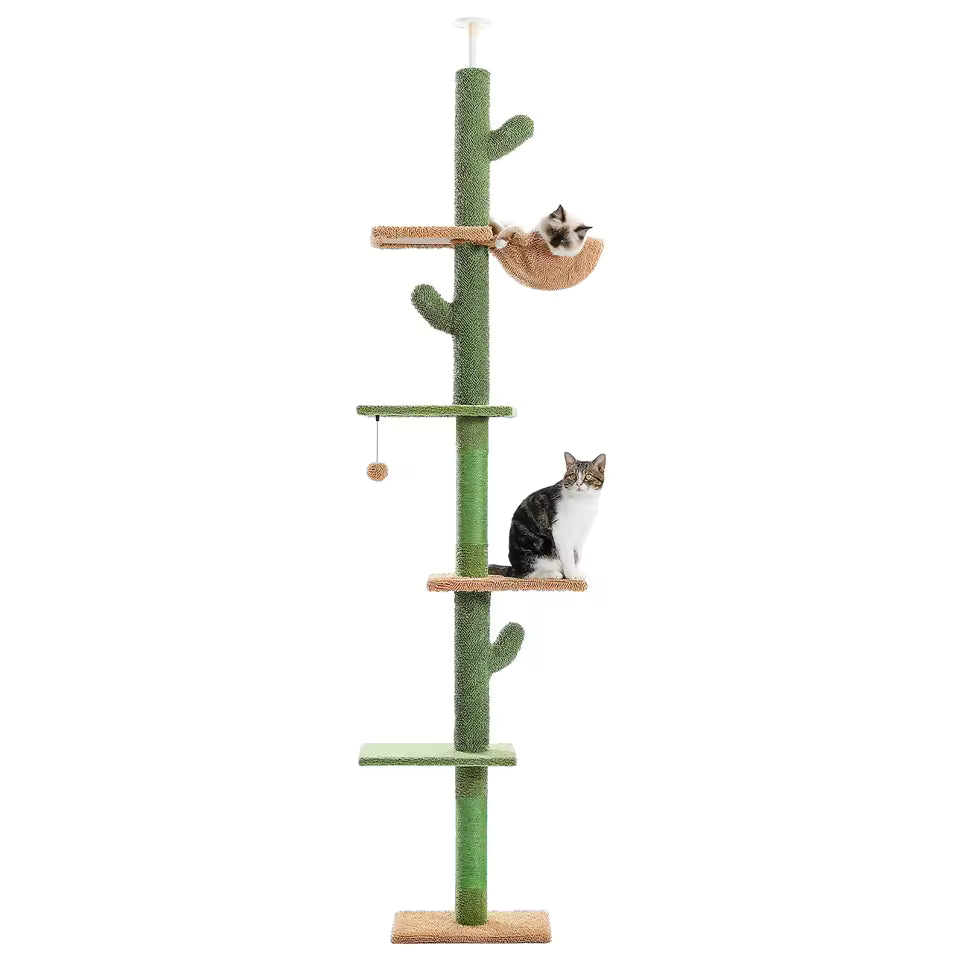
The most important structural feature for an older cat is that platforms are close enough together that the cat can step or climb between them rather than having to jump. Large gaps between levels - the kind that present no challenge to a young athletic cat - can be uncomfortable or even risky for a cat with joint pain or reduced muscle strength. Look for trees where the platforms are distributed at modest intervals, allowing progressive stepping rather than leaping.
Platform width and stability
Wider platforms are more comfortable for a senior cat who may need more space to settle into a position or who has difficulty with balance on a narrow perch. Stable, non-wobbling construction is also more important for older cats - a tree that rocks slightly when a younger cat uses it may cause a senior cat to lose footing.
Soft, padded resting surfaces
Older cats spend more time resting and less time in active movement. Plush, cushioned platforms are meaningfully more comfortable for a cat with joint stiffness than a firm carpet-covered surface. If the tree's perches are padded rather than simply fabric-covered, this is worth prioritising.
Moderate overall height
A tree in the 70 to 120cm range is typically well-suited to senior cats who still want some elevation but do not need - and may not be able to safely access - a very tall structure. The goal is a height that provides a genuine vantage point without requiring a difficult or potentially painful climb to reach.
Enclosed condo space
Many older cats become more inclined toward enclosed, sheltered resting spaces rather than open perches as they age. A condo or enclosed den at an accessible height gives them the option of a covered resting space that may feel more comfortable and secure than an open platform.
Products Worth Considering for Senior Cats
For owners looking to find the right option at Cat Tree Haven, here are a few specific products that align well with senior cat needs.
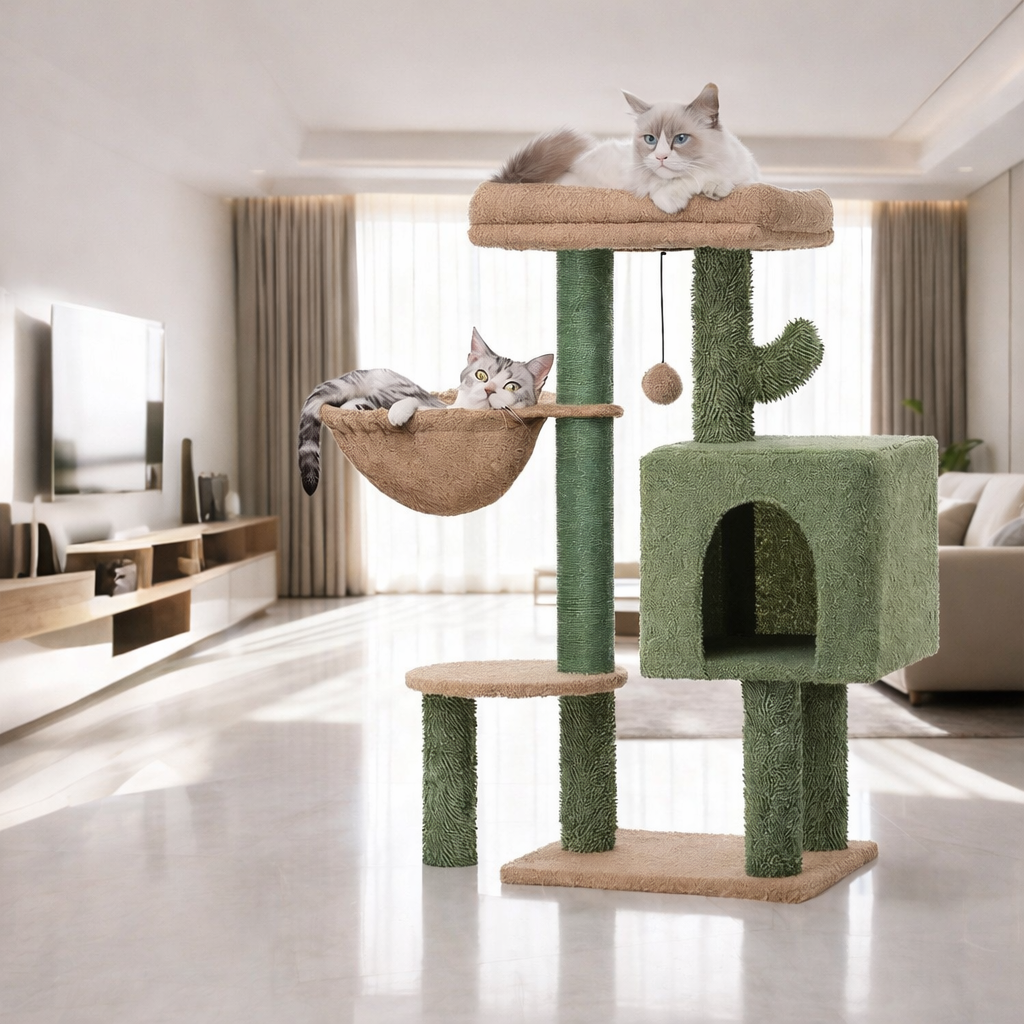
The 83cm cute cat tree with condo, scratching post, and cat scratcher sits at a comfortable moderate height, includes an enclosed condo as well as a perch, and has a scratching post for claw care. Its compact design makes it accessible without requiring significant jumping, and it suits cats who want a cosy retreat alongside a resting spot.
For a cat that primarily wants a comfortable elevated perch and a scratching outlet without the complexity of a multi-level structure, the 91cm modern solid wood cat tree with sisal scratching post and cosy beds offers solid wood construction with a sisal post and soft resting surfaces. The solid wood base and frame provide the kind of stability that older cats benefit from, and the height is suitable for a senior cat that can still manage a moderate step up.
Our broader compact cat tree collection for smaller spaces and lower heights is the most practical starting point when shopping for a senior cat, as the height range of these trees naturally aligns with what is accessible for older, less mobile animals. Many of the designs in this collection include condos, perches, and sisal posts within a footprint that does not demand demanding jumps or significant climbing ability.
When a Dropped Cat Tree Use Signals a Vet Visit
One of the most important things to understand about senior cats and cat trees is that a sudden or gradual change in how much a cat uses its tree can be a meaningful health signal, not just a shift in preference.
If your cat previously used their tree regularly and has stopped, or has begun accessing only the lower levels when they previously climbed higher, this is worth paying attention to. Cats are instinctively skilled at masking pain and discomfort - they rarely vocalise in response to joint pain in the way dogs might. Instead, the signal tends to be behavioural: avoidance of the activities that cause discomfort.
A senior cat that stops using its cat tree, shows hesitation before jumping onto furniture it previously accessed easily, or seems stiff when rising from a resting position should be assessed by a vet. Arthritis is manageable with appropriate veterinary input, and identifying and addressing joint discomfort can genuinely improve a senior cat's quality of life - including their ability to continue using and enjoying a cat tree suited to their needs.
Our post on choosing a cat tree for older or less mobile cats covers additional considerations for cats whose mobility is changing, including how to assess what level of access is realistic for your individual cat.
Adapting the Environment Around an Existing Tree
If you already have a cat tree that your senior cat is using less than they previously did, it may be possible to adapt the setup before replacing the tree entirely.
Placing a step or a small stool next to the base of the tree can allow a cat to access the first level without having to jump from floor height. A non-slip mat under the base adds stability and reduces any rocking. Adding a soft blanket or a familiar cushion to the main perch can make a resting surface more appealing and more comfortable for a cat with joint stiffness.
Placement near a window remains relevant for senior cats - even a cat that cannot access the top perch of a multi-level tree may happily use a lower platform if it provides a view of outdoor activity. The mental stimulation of watching birds or movement outside is valuable for older cats who are spending more of their day at rest.
For further practical guidance on keeping an older or less active cat engaged with their environment, our post on encouraging cats that are less active to climb and move more offers complementary advice alongside the senior-specific considerations in this article.
The Short Answer
Yes, older cats still need cat trees - they just need different ones. The instincts for elevated resting, territorial security, scratching, and gentle movement remain present throughout a cat's life. What changes is the physical capability available to express those instincts, and a well-chosen senior-friendly tree meets the cat where they are rather than where they were at age three.
If you are trying to identify the right option for your senior cat's specific mobility and health situation, the team at Cat Tree Haven is happy to help.
Get in touch with us here and we can talk through what would work best for your cat's age, size, and individual needs.
Frequently Asked Questions
At what age is a cat considered senior?
Cats are generally considered senior from around 11 years of age, though some veterinary guidelines place this at 10 or 12 depending on the framework used. Individual health, breed, and lifestyle all affect how a cat ages, so age alone is not the only indicator to consider.
Do senior cats still like cat trees?
Many senior cats continue to use cat trees, particularly for resting at height, scratching, and maintaining a sense of territorial security. The preference for elevated spots is instinctive and tends to persist with age. What changes is the type of tree and access level that is comfortable and manageable.
What type of cat tree is best for an older cat?
Shorter trees with closely spaced platforms, wide and well-padded perches, enclosed condo spaces, and solid, stable construction are most suitable for senior cats. Trees that require significant jumping or have large gaps between levels tend to be less well-matched to older cats with joint stiffness or reduced muscle strength.
Can a cat tree help with arthritis in cats?
Gentle movement, including stepping between low platforms and stretching on a sisal post, can support joint flexibility and circulation in cats with arthritis. However, the tree must be appropriately designed - demanding significant jumping from an arthritic cat would cause discomfort rather than benefit. Veterinary advice on managing feline arthritis is recommended alongside any environmental changes.
Why has my older cat stopped using the cat tree?
A sudden or gradual reduction in cat tree use in a senior cat is often a sign of pain or physical discomfort rather than a simple change in preference. Joint pain, muscle weakness, or balance changes can make previously easy access difficult. If this change is observed, a vet assessment is advisable alongside considering whether a more accessible tree design would help.
Should I replace my cat's existing tree when they get older?
Not necessarily immediately. If the existing tree has levels that are still accessible to the cat, adaptations such as adding a step at the base, placing a non-slip mat underneath, and adding soft bedding to the perch can extend its usefulness. If the tree requires jumping heights that are no longer comfortable for the cat, a lower-access design is worth considering.
Is it safe for a senior cat to use a tall cat tree?
This depends on the individual cat's mobility and physical condition. A tall tree with large gaps between levels carries a real risk of a painful landing or fall for a cat with joint stiffness or reduced balance. For most senior cats, a moderate height tree with closely spaced platforms is a safer and more practical choice than a tall multi-level structure.