
Key Takeaways
- The right cat tree does not need to be hidden - it can be chosen and placed to feel like a deliberate part of the room
- Material, colour, and silhouette are the three factors that most determine whether a cat tree blends in or stands out
- Placement is a design decision, not just a practical one - where you put the tree shapes how the whole room reads
- Connecting the cat tree to other elements in the room through material or tone creates visual cohesion
- Minimalist and solid wood designs tend to integrate most naturally into modern Australian living rooms
- A cat tree that belongs in the room is more likely to be used, because it gets placed well rather than pushed aside
Most cat owners reach a point where they quietly wish the cat tree could just disappear. Not permanently - the cat loves it, and that matters - but visually. It sits in the corner looking like it belongs in a different room entirely, covered in synthetic carpet in a shade of brown that matches nothing, taking up space without contributing anything to the space.
The frustrating part is that this outcome is not inevitable. A cat tree that genuinely looks like part of your living room is entirely achievable, and it does not require a large budget or a particularly unusual taste in furniture. What it requires is a bit of deliberate thinking before you buy, and a different approach to placement once you do.
At Cat Tree Haven, we work with Australian cat owners across a range of home styles and living situations. The question of how to make cat furniture feel intentional rather than incidental comes up constantly. Here is what actually works.
Start with How the Room Already Looks
Before you look at a single cat tree, spend a moment thinking about the existing visual logic of your living room. What materials are dominant - timber, fabric, metal, rattan? What tones are most present - warm neutrals, cool greys, deep colours, pale whites? What is the general silhouette of the furniture - slim and angular, soft and rounded, low to the ground or tall?
These three things - material, tone, and silhouette - are what allow a piece of furniture to feel like it belongs in a room. When a cat tree shares at least two of these three qualities with the existing furniture around it, it tends to read as part of the room rather than an intrusion. When it shares none of them, it will always look out of place, regardless of how much you paid for it or how much the cat enjoys it.
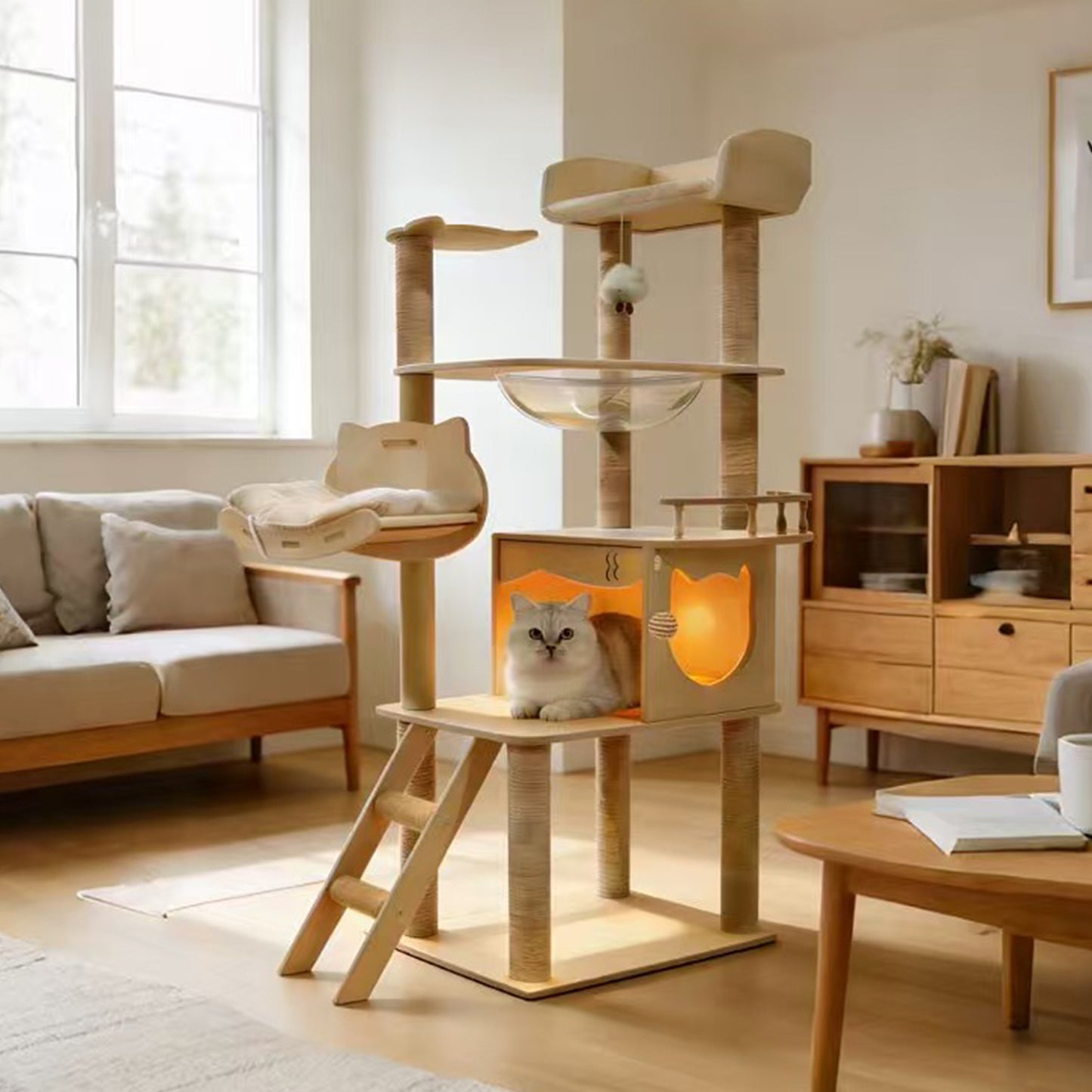
This is not about matching everything precisely. It is about speaking the same design language. A room with warm timber floors, linen cushions, and rattan accents speaks a natural, organic language. A cat tree in that room should ideally carry timber, sisal, or a neutral upholstery - not because it has to match exactly, but because those materials are part of the same vocabulary.
Choose the Right Material for Your Living Room
Solid Wood
Timber is the most versatile material in cat furniture because it connects naturally to so many common interior styles - Scandinavian, contemporary, coastal, mid-century, and transitional interiors all use timber extensively. A cat tree with a solid wood or wood-look frame will almost always integrate more easily than one built from particleboard or heavily finished MDF.
Our 166.5cm modern multi-level wood cat tree with scratching post is a good illustration of this. The timber construction and clean multi-level design mean it reads as furniture rather than pet equipment. In a room that already carries wood tones - whether in flooring, shelving, or furniture legs - a piece like this connects to the space naturally.
Sisal
Sisal scratching surfaces are far more visually compatible with natural interiors than carpet-wrapped posts. The texture is similar to rope, rattan, and woven materials that appear frequently in Australian living rooms, and it does not carry the visual weight that synthetic carpet does. If the room already has woven or textured elements, sisal posts will slot in without drawing attention to themselves.
Neutral Upholstery
For the sleeping platforms and condo elements, neutral upholstery in warm grey, oat, linen, or cream connects to the soft furnishings most commonly found in Australian living rooms. The key is choosing a tone that sits within the existing palette rather than contrasting with it. If the sofa is a warm beige, a cat tree in a similar neutral will disappear into the room in the most flattering way.
Silhouette and Scale Matter as Much as Material
A cat tree that is proportionate to its room tends to look like it belongs. One that is too wide, too bulky, or too visually dense for the space will draw attention to itself regardless of colour or material.
In living rooms with standard ceiling heights and moderate floor space, a lean, vertical silhouette is usually the most compatible choice. It does not interrupt sightlines at eye level, and it takes advantage of height rather than width. Wide-base designs with multiple sprawling platforms at ground level tend to compete with the furniture around them and feel more like obstacles than objects.
Our 97cm Scandinavian-style cat tree demonstrates how a compact footprint with considered proportions can sit naturally within a living room. It is not a particularly large piece, but it provides meaningful vertical interest and scratching surface without dominating the floor space around it.
For larger living rooms where a more substantial piece makes sense visually, our 148cm solid wood tall cat tree with condo, plush stairs, and sisal scratching posts offers height and structure without the heavy footprint that makes some larger designs feel oppressive in a room. The sisal posts and timber elements keep the material language natural, which helps it sit within a contemporary living room rather than competing with it.
We have also written specifically about how to think through placement so your cat tree gets used rather than avoided, which covers the practical side of this decision in more detail.
Placement Is a Design Decision
Where you put a cat tree is just as important as what you choose. Placement that responds to the room's layout and existing focal points will always look more intentional than placement driven purely by convenience.
Near an Existing Vertical Element
Placing a cat tree alongside a bookshelf, a floor lamp, or a window creates a visual grouping that makes the piece feel like part of a considered arrangement. Your eye reads the grouping as a zone rather than seeing a lone cat tree sitting awkwardly in the middle of the room.
Against a Feature Wall
If the room has a feature wall - a painted wall in a deeper tone, a wall with shelving, or a wall with artwork - positioning the cat tree against it anchors it to the room's architecture. The tree becomes associated with that wall rather than floating independently in the floor space.
Near a Window
Window placement works for two reasons. It gives the cat what it naturally wants - a warm, elevated spot with a view - and it places the furniture in a location that makes visual sense. A piece next to a window reads as purposeful: the cat uses it, and the position explains why it is there.
Avoid Corridor Placements
Cat trees placed in the path of natural circulation - in doorways, at the end of hallways, or in the middle of a walking route between rooms - will always look like they are in the way, because they are. Even a beautifully chosen piece loses its visual quality when it reads as an obstacle.
The thinking behind creative placement is something we have explored in a broader look at placement ideas for cat furniture in Australian homes, which is worth reading if you are rethinking how your current setup is arranged.

Connect It to the Room Through Accessories
Once the cat tree is in place, there are small steps that help it feel more connected to the room around it.
Adding a plant nearby - particularly a tall plant in a natural pot - creates a visual grouping that gives the cat tree organic context. It starts to read as part of a cluster of objects rather than a solitary piece.
Using a cushion or small throw on the cat tree's sleeping platform in a fabric or colour that echoes something already in the room - the sofa cushions, the rug, a chair - creates a subtle thread that ties the piece to the rest of the space. It does not need to match precisely; it just needs to belong to the same palette.
Keeping the area around the cat tree tidy also makes a significant difference. A cat tree in a clear, uncluttered space looks intentional. The same cat tree surrounded by scattered toys, bags, and other objects loses whatever design quality it has.
Multi-Functional Pieces Earn Their Place
One of the strongest arguments for choosing a well-designed cat tree over a cheaper alternative is that a piece with genuine design quality tends to earn its position in the room. Visitors notice it as furniture first and pet equipment second, and that changes how it feels to live with day to day.
This is particularly true of multi-functional designs that incorporate condos, hammocks, and multiple resting spots within a single considered structure. These pieces justify their footprint because they offer real value to the cat - which means they stay in place, get used, and become part of the room's visual logic over time.
For small-space living rooms in particular, we have written about how multi-functional cat furniture can work harder without taking up more room, which is relevant if you are working with limited floor space.
If you are looking across a broader range to find the right height and scale for your specific room, our extra-large cat trees over 200cm are worth exploring for larger living areas, while our cat bed collection offers resting options that complement a cat tree without adding visual weight.
A Final Note on Compromise
Designing a living room around a cat's needs does not mean giving up on the room's aesthetic. The two are compatible when the choices are made carefully. The key shift is treating the cat tree as a piece of furniture that deserves the same level of consideration as anything else in the room - not as a functional afterthought that gets purchased quickly and placed wherever it fits.
At Cat Tree Haven, we stock a range of pieces designed with exactly this balance in mind. If you are unsure where to start or want help identifying options that suit your specific living room, we are happy to assist.
Ready to Find a Cat Tree That Belongs in Your Room?
If you have a particular style, space, or question in mind, the Cat Tree Haven team would love to help you find the right fit.
Get in touch with us here and we can point you toward options that work for your cat and your living room.
Frequently Asked Questions
How do I make a cat tree look good in a living room?
Choose a cat tree in materials and tones that match the existing palette of your room - natural wood, sisal, and neutral upholstery work well in most Australian living rooms. Place it near a window, feature wall, or existing vertical element so it reads as a deliberate part of the room rather than an afterthought.
What type of cat tree blends in best with modern home decor?
Minimalist designs with solid wood frames, sisal scratching posts, and neutral upholstery tend to integrate most naturally into modern Australian homes. Slim, vertical silhouettes with a small footprint suit contemporary living rooms better than wide, heavily padded designs.
Where is the best place to put a cat tree in a living room?
Near a window is often the most effective placement - it gives the cat a perch with a view and places the piece in a location that makes visual sense. Against a feature wall or alongside other vertical elements such as shelving or floor lamps also works well.
What colour cat tree looks best in a living room?
Warm neutrals - including oat, linen, greige, and natural timber tones - work well in most living rooms because they connect to common soft furnishing palettes without standing out. Mid-tones are also the most practical for managing visible fur from most coat colours.
Can a cat tree be a design feature in a living room?
Yes. A well-chosen cat tree in natural materials with a considered silhouette can read as a design object rather than pet equipment. Pieces with solid wood construction, clean lines, and neutral finishes tend to earn their place in a living room rather than working against it.
How do I stop my cat tree from looking out of place?
Connect it to the room through material, colour, or placement. Choosing a piece that shares at least two visual qualities with the existing furniture - similar timber tones, matching neutral fabric, or a comparable silhouette - creates enough visual connection for the piece to feel like it belongs. Placement near other objects rather than in isolation also helps.
Should I match the cat tree to my sofa or floor?
You do not need to match precisely, but connecting the cat tree to one dominant element in the room - the floor tone, the sofa fabric, or a nearby wall - creates a visual thread that helps it feel cohesive. Natural timber tones are the most flexible starting point because they connect to both flooring and furniture in most living rooms.