
Cat furniture rarely wears out all at once. More often, one scratching post becomes frayed, a platform loosens, or the overall design no longer suits your space. When that happens, many cat owners are unsure whether to throw the whole thing away or try to make it work a little longer.
At Cat Tree Haven, we believe extending the life of cat furniture is one of the simplest ways to reduce waste while still supporting your cat’s wellbeing. Upcycling and repurposing can be safe and effective, provided it is done with care and realistic expectations.
This guide walks through how to assess old cat furniture, what can be reused safely, and when it is time to retire a piece altogether.
Key takeaways
- Many cat furniture components can be reused safely with basic checks
- Stability and material condition matter more than appearance
- Upcycling can reduce waste and extend furniture lifespan
- Some damage cannot be repaired safely and should not be ignored
- Thoughtful replacement is part of responsible ownership
Start with a safety check, not a design idea
Before thinking creatively, it is important to assess whether the furniture is still structurally sound. Safety should always come before aesthetics or sustainability goals.
Look closely at:
- The base and main supports for cracks or movement
- Joints, screws, and fixings for looseness or rust
- Scratching posts for exposed staples, nails, or sharp edges
- Fabric or carpet for excessive shedding or loose threads
If the frame wobbles significantly or weight-bearing sections are compromised, repurposing may not be appropriate. In these cases, replacement is the safer option for your cat.
We encourage owners to compare their setup against the stability principles outlined on Cat Tree Haven when deciding whether a piece is still suitable for use.
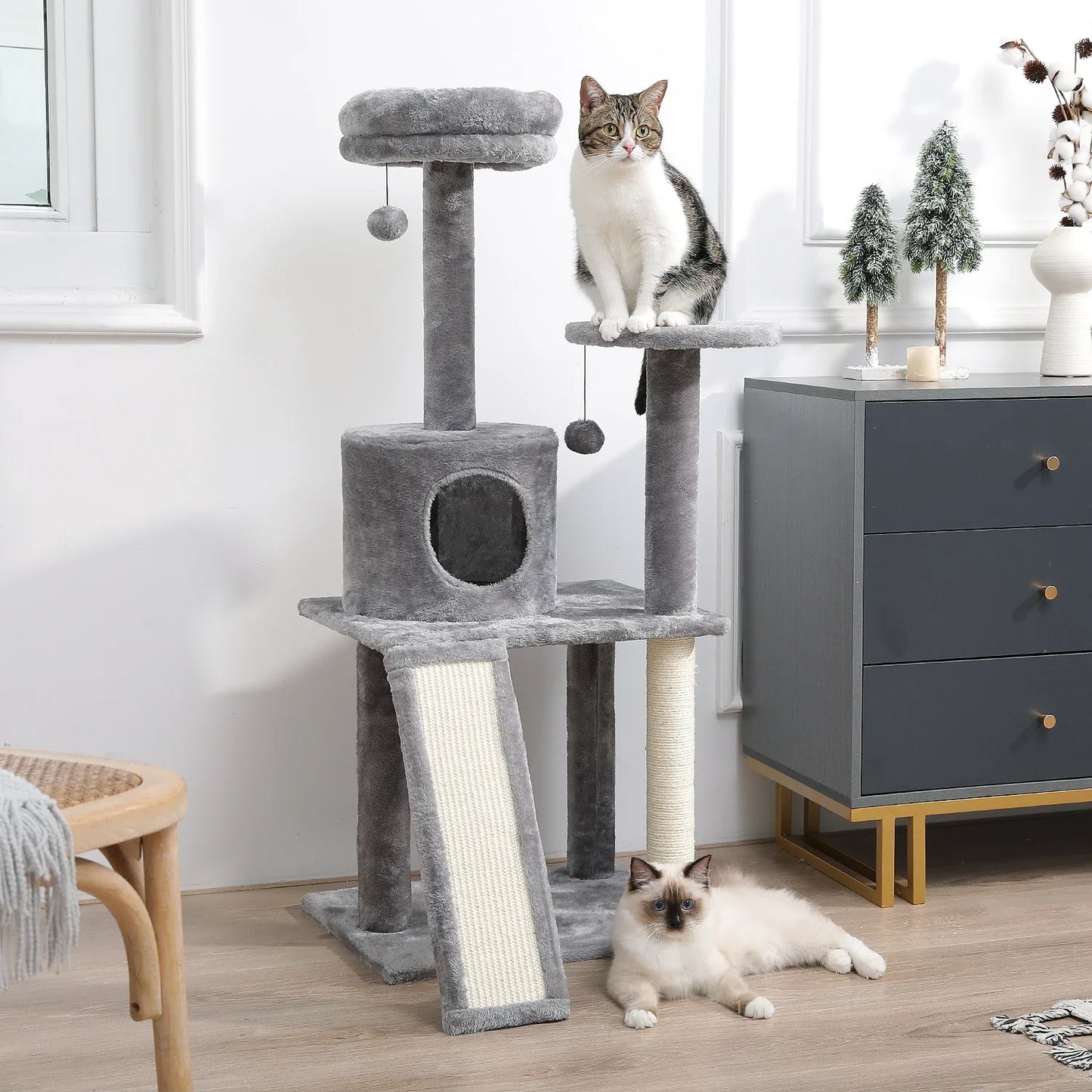
What parts of cat furniture are easiest to repurpose
Not all components age the same way. Some elements can remain useful long after others have worn out.
Scratching surfaces
Scratching posts and panels often wear faster than the rest of the structure. If the base and frame are stable, worn sisal rope can sometimes be removed or covered with new scratching material.
Smaller pieces can also be detached and reused as standalone scratchers. This works particularly well for low-impact scratching areas or quieter corners of the home.
If your cat prefers floor-level scratching, a dedicated option like the natural sisal scratching board can complement repurposed furniture without adding bulk.
Platforms and perches
Solid platforms that are still secure can be reused at lower heights. This reduces fall risk while still offering resting spots.
Some owners choose to mount these platforms closer to the floor or against a wall, creating a simple step or lounge area rather than a full climbing structure.
Cleaning and preparation matter more than creativity
Before reusing any old furniture, thorough cleaning is essential. Dirt, oils, and loose fibres can irritate paws or discourage use.
Safe preparation steps include:
- Vacuuming to remove hair and debris
- Spot cleaning with mild, pet-safe cleaners
- Allowing surfaces to fully dry before reuse
- Trimming loose threads or fibres carefully
We cover detailed cleaning guidance in our article on keeping cat furniture hygienic and safe over time, which applies equally to upcycled pieces.
When repurposing makes sense for your space
Upcycling works best when the repurposed item still matches your home layout and your cat’s habits.
For example:
- Older, shorter trees can become resting stations for senior cats
- Detached posts can protect furniture in high-scratch areas
- Small platforms can support window viewing without climbing
In apartments or compact homes, repurposed pieces can supplement purpose-built solutions from collections like our wall-mounted cat furniture range, helping you maximise vertical space without unnecessary waste.
Understanding your cat’s changing needs
Cats change over time. A piece of furniture that once supported high-energy play may no longer suit an older or less mobile cat.
Repurposing allows you to adapt without starting from scratch. Lowering access points, reducing height, or simplifying layouts can make old furniture usable again.
If mobility has become a concern, our guide on choosing appropriate setups for older cats provides helpful context when deciding what to keep and what to modify.
Knowing when not to upcycle
Sustainability also means knowing when to let go. Some damage cannot be safely repaired.
Avoid repurposing furniture if:
- Wood panels are split or collapsing
- Structural joints cannot be tightened securely
- Toxic glues, paints, or coatings are exposed
- The furniture no longer supports your cat’s weight
In these cases, replacing with a durable, well-designed alternative is the safer choice. Products like the large cat tree with integrated sisal columns are built for long-term use and can reduce the need for frequent replacements.
Combining old and new thoughtfully
Upcycling does not have to be all or nothing. Many owners successfully combine repurposed items with new furniture.
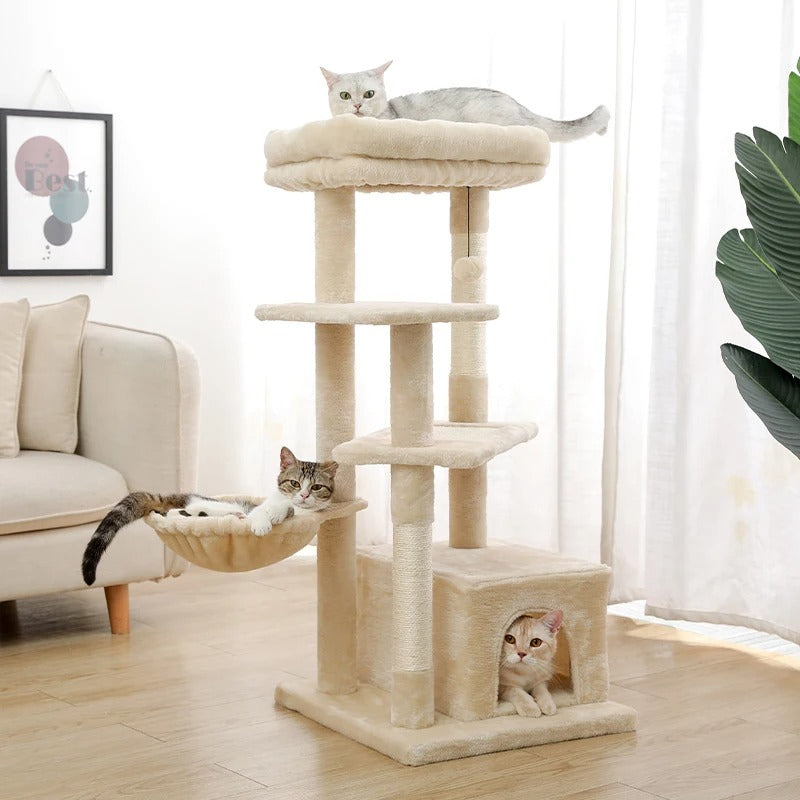
For example, an older scratcher can be paired with a new central structure such as the multi-level cat tree with condo and scratching areas. This approach spreads wear more evenly and extends the life of all pieces.
If space is limited, a compact option from our small cat tree collection can replace unstable furniture while allowing older components to remain useful elsewhere.
Environmental benefits of safe repurposing
Every piece of furniture kept in use longer reduces demand for new materials, packaging, and shipping. While upcycling alone does not solve environmental challenges, it is a practical step within everyday households.
We discuss this broader perspective in our article on repairing and extending the life of cat furniture, which expands on the role of maintenance and mindful replacement.
Our perspective at Cat Tree Haven
At Cat Tree Haven, we support practical sustainability. That means encouraging owners to care for, adapt, and responsibly replace cat furniture based on safety and function.
Upcycling is valuable when it keeps cats safe, comfortable, and engaged. When it no longer does so, investing in durable, well-designed furniture is the responsible next step.
If you are unsure whether your current setup can be repurposed or whether replacement is the better option, we are always happy to help you assess your space.
Contact us here: Get in touch with Cat Tree Haven
Frequently asked questions
Is it safe to upcycle old cat furniture?
Yes, if the structure is stable and materials are in good condition. Safety checks are essential before reuse.
Can I replace worn scratching rope myself?
Some owners do, but it must be secured properly to avoid loose strands or sharp fixings.
How do I know if furniture is no longer safe?
Excessive wobbling, cracked panels, or exposed sharp components are signs it should be retired.
Is cleaning old furniture enough to make it safe again?
Cleaning helps, but it does not fix structural issues. Both hygiene and stability matter.
Can senior cats still use repurposed furniture?
Yes, especially when height is reduced and access is made easier.
Does repurposing really reduce environmental impact?
Extending the usable life of furniture helps reduce waste and replacement frequency.
When should I consider buying new furniture instead?
When safety, stability, or your cat’s comfort can no longer be reliably maintained.