
Key Takeaways
- Scratching is a normal, healthy behaviour driven by instinct - it cannot and should not be eliminated, only redirected
- Cats choose surfaces based on texture, orientation, location, and stability - if the scratching post doesn't match what the cat is looking for, the furniture will
- Post placement is one of the most commonly overlooked factors - a post positioned in the wrong part of the home will often be ignored in favour of furniture
- Material matters significantly: sisal is the most effective scratching surface for most cats, while carpet-covered posts can confuse boundaries between acceptable and unacceptable surfaces
- Post height and stability affect whether cats will use it - a short, wobbly post is a poor match for a cat who wants to stretch fully while scratching
- Most furniture scratching problems can be resolved with the right combination of post material, positioning, and introduction approach
- Cat Tree Haven stocks a range of cat scratching posts and cat trees with integrated sisal posts, with free shipping across Australia
Few things frustrate cat owners more reliably than watching a cat walk past a perfectly good scratching post to scratch the couch instead. You bought the post. You placed it in what seemed like a reasonable spot. You may have even tried to demonstrate its use or sprinkled catnip on it. And yet the couch corner continues to get shredded while the post sits untouched.
This is one of the most common complaints we hear from cat owners, and it's genuinely fixable in most cases. But fixing it requires understanding why it's happening rather than simply trying different deterrents or moving the post around at random. Cats are not scratching your furniture out of spite or stubbornness. They're making rational decisions based on what each surface offers them - and in most cases where furniture wins over a post, the furniture is actually doing a better job of meeting the cat's scratching needs than the post is.
This article explains the mechanics of why cats choose furniture over posts, and what to change to shift that preference reliably.

First: Why Cats Scratch at All
Before getting into why cats prefer furniture, it's worth being precise about what scratching actually is and what it does for a cat. Understanding the function of the behaviour is the starting point for choosing the right response to it.
Cats scratch for three interconnected reasons.
Claw maintenance. Scratching pulls away the outer sheath of the claw - the dead layer that sits over the growing claw underneath. Without this regular maintenance, the outer sheath builds up and becomes uncomfortable. This is a functional physical need rather than a preference.
Physical stretch. The motion of scratching - extending the front legs fully upward or outward against a fixed surface - provides a deep stretch through the legs, shoulders, chest, and back. Cats often scratch immediately after waking, which is consistent with the stretching function. The surface being scratched needs to be tall enough and stable enough to allow this full extension.
Territorial marking. Cats have scent glands in their paw pads. When they scratch a surface, they deposit scent that communicates their presence in that space. Scratching also leaves a visual mark. Both the scent and the visual mark function as territorial signals - to the cat themselves as well as to any other cats who share the space.
Each of these functions has implications for what kind of scratching surface a cat will choose. A surface that doesn't allow full stretch, or that doesn't hold scent well, or that's positioned away from territory the cat wants to mark, will be passed over in favour of one that does these things better.
Why Furniture Wins: The Real Reasons
The Texture Is More Satisfying
Many scratching posts - particularly cheaper ones - are covered in carpet. Carpet feels similar underfoot to some household flooring, and it doesn't provide the same resistance and sensory feedback that cats are instinctively drawn to when scratching. Natural sisal, by contrast, has a texture that cats find highly satisfying: it catches the claw properly, allows the sheath to be removed effectively, and provides genuine resistance to push against.
Upholstered furniture - particularly sofa fabric and woven textiles - often provides a texture that is closer to what cats are instinctively seeking than a carpet-covered post does. The fabric catches the claw, allows a satisfying pull, and provides the tactile feedback associated with effective scratching. From the cat's perspective, the sofa is simply doing a better job than the post.
There's a secondary issue with carpet-covered posts: they blur the boundary between acceptable and unacceptable scratching surfaces. A cat who has a carpet-covered post as their designated scratching outlet is receiving a signal that carpet is an appropriate scratching surface - which can make it harder to establish clear distinctions between the post and the carpet in other parts of the home.
Switching to natural sisal - either a standalone post or the integrated sisal posts on a cat tree - resolves the texture mismatch in most cases. Sisal is widely considered the most effective scratching material for cats and is the standard used in quality cat furniture for this reason.
The Location Is Wrong
This is the most commonly overlooked factor in furniture scratching problems. Cats scratch in specific locations for a reason. Those locations are typically in socially significant areas of the home - near entrances, near their sleeping spots, and in spaces where they spend time near their owners. Scratching in these locations serves the territorial marking function most effectively: the scent and visual marks are placed where they carry the most communicative weight.
A scratching post positioned in a spare room, a hallway the cat rarely uses, or tucked out of sight behind furniture is not in a location that serves the cat's territorial needs. The cat will scratch the socially significant surfaces - which are usually the furniture the owners use most frequently - because those surfaces are in the right location even if they aren't the right material.
The fix is to position scratching posts near the furniture being scratched and near the areas where the cat spends the most time. This feels counterintuitive - putting a scratching post right next to the couch is not the aesthetic most owners are aiming for - but it works consistently because it matches the post to the locations the cat has already identified as worth marking.
Once the post is established as the cat's preferred scratching spot in that location (usually over a period of several weeks), it can often be moved gradually over time - a few centimetres at a time - to a position that works better for the household, without losing the cat's habit of using it.
The Post Is Too Short
If a cat cannot fully extend their body while using a scratching post, the physical stretch function of scratching cannot be met. A post that reaches only to a cat's shoulder height when they're sitting is too short to allow the full upward extension that cats perform when scratching. The couch arm or the corner of the sofa, by contrast, often provides the height and stability needed for a full stretch.
As a general guideline, a vertical scratching post should be tall enough for an adult cat to extend fully while standing on their back legs - typically at least 60-70cm for an average-sized cat. For larger breeds, proportionally taller posts are needed.
This is one of the practical reasons cat trees with integrated tall sisal posts are often more effective than short standalone posts. The post height on a cat tree is typically sufficient for a full-body stretch, whereas a small standalone post sold separately may be too compact to serve this function properly.
The Post Is Unstable
Cats apply real force when scratching. They lean into the surface, pull against it, and in the case of vertical posts, use their body weight to generate resistance. A post that wobbles, tips, or slides when this force is applied will be avoided - and once a cat has had a bad experience with an unstable post, they may be reluctant to return to it even after it's been repositioned or weighted.
Furniture is stable. Sofas, chairs, and bookcases don't move when a cat pushes against them, which makes them reliable surfaces for the kind of forceful scratching that provides the stretch and resistance the cat is seeking.
A good scratching post needs a heavy, wide base that stays flat under load. The post itself should have no flex or wobble when tested by hand. This is worth checking before purchasing, as base weight and stability vary considerably between products.
The Post Is the Wrong Orientation
Some cats prefer horizontal scratching surfaces over vertical ones, or vice versa. Most commercial scratching posts are vertical, but a cat who consistently scratches the arms of chairs (a horizontal or angled motion) or who scratches along the carpet at the base of furniture (a horizontal surface) may be expressing a preference for a different orientation.
Providing both vertical and horizontal options gives the cat the choice they're looking for. Horizontal scratching pads or inclined scratching boards alongside a vertical post will address a broader range of scratching preferences.
Practical Solutions: What to Change
Switch to Sisal
If your current post is carpet-covered, replacing it with a natural sisal post is the single most impactful change you can make for most cats. A natural sisal cat scratcher and mat with multiple scratching surfaces provides the texture and resistance cats are instinctively drawn to and works well as a horizontal option for cats who prefer that orientation.
For a vertical post with good height and stability, the wooden cat scratching board with sisal ball, Ferris wheel turntable, and catnip combines proper scratching surface with interactive elements that encourage initial engagement.
Position the Post Correctly
Move the post to where the scratching is happening. If the cat is scratching the left arm of the sofa, place the post directly in front of that spot. Leave it there for at least four to six weeks before considering moving it. Use positive reinforcement when the cat uses the post - calm praise or a small treat - but avoid punishment for furniture scratching, as this tends to create anxiety rather than redirect behaviour.
Consider a Cat Tree with Integrated Sisal Posts
A cat tree with multiple tall sisal posts addresses the material, height, and stability requirements simultaneously, while also providing the vertical territory and retreat spaces that a standalone post does not. For a cat who is scratching furniture in the main living area, a well-positioned cat tree near the furniture being targeted is often the most effective solution.
Our cat scratching post collection includes standalone options at various heights and orientations, while the large cat tree range (100-200cm) covers options where the sisal posts are integrated into a structure that also provides climbing and resting territory.
The wooden sisal cat scratch ball - a two-in-one wear-resistant grinding paw toy and scratch board is a useful supplementary option for cats who have a preference for varied scratch surfaces rather than a single fixed post.
Protect the Furniture During the Transition
For a sofa arm your cat already targets, a cat scratch couch protector with a scratchable carpet surface can create a designated scratching patch over suitable upholstery. Use it alongside a well-placed post and reward-based training, rather than expecting a covering alone to change behaviour. Measure the area, check fabric-care guidance and test the adhesive in a hidden spot before fitting.
While you're establishing the post as the preferred scratching spot, covering the furniture surfaces being targeted can help break the habit of returning to them. Double-sided tape, furniture protector covers, or repositionable anti-scratch strips all work by making the furniture surface temporarily less appealing. These are transitional measures rather than long-term solutions - the goal is to use them while the post becomes the established habit, then remove them once the cat is consistently using the post.
Our post on how to stop cats scratching furniture without causing distress covers the furniture protection side of this in more detail, with practical guidance on what works and what to avoid.
For additional context on the broader relationship between scratching behaviour and territorial instincts, our post on the role of scratching in cat communication and territory marking explains the mechanism behind why location matters so much for scratching behaviour.
What Doesn't Work
A few common approaches are worth avoiding, as they tend to create problems rather than solve them.
Punishment. Spraying a cat with water, making loud noises, or physically removing them from a scratching spot creates anxiety and damages trust without redirecting the behaviour. The cat learns to scratch when you're not watching rather than learning to use the post.
Declawing. This is a surgical procedure involving the removal of the last bone of each toe and is considered inhumane by veterinary organisations in many countries including Australia. It causes significant pain and long-term physical and behavioural consequences. It is not a solution to furniture scratching.
Covering the post with catnip alone. Catnip encourages investigation and rolling, not scratching. It can be useful for introducing a new post but won't fix the underlying issue if the post doesn't meet the cat's physical scratching needs in terms of material, height, and position.
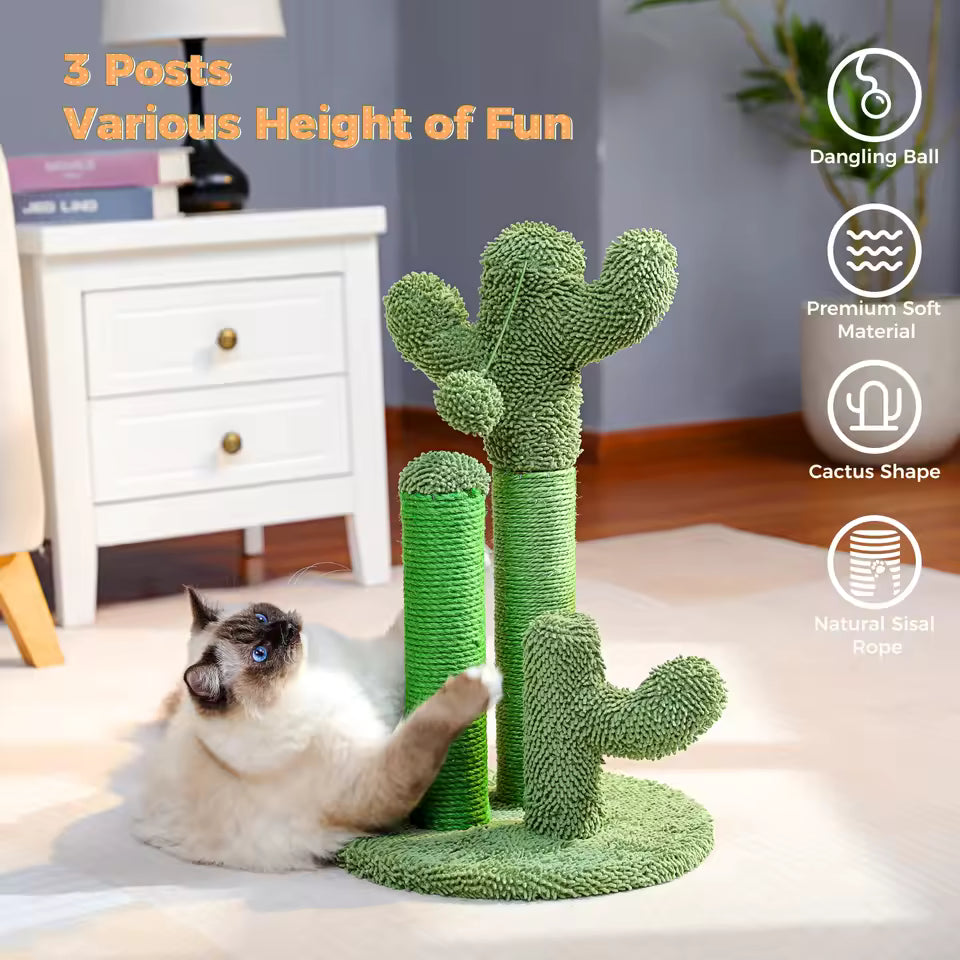
Getting the Right Post for Your Cat
At Cat Tree Haven, we stock a range of scratching posts and cat trees with quality sisal posts at various heights, orientations, and configurations. Finding the right combination of material, height, and design for your cat's specific preferences is worth taking the time to get right.
Get in touch with the Cat Tree Haven team if you'd like guidance on which option suits your cat and your home situation. We're happy to help you find something that actually gets used.
Frequently Asked Questions
Why does my cat scratch the sofa but not the scratching post?
In most cases, the sofa is meeting the cat's scratching needs better than the post is - through a more satisfying texture, a better location, or greater stability. Common causes include a carpet-covered post that doesn't provide enough resistance, a post that's too short for a full-body stretch, a post positioned away from socially significant areas, or an unstable post that wobbles when used. Addressing these factors - typically by switching to sisal, repositioning near the scratching site, and ensuring adequate height and stability - redirects scratching in most cases.
What is the best material for a cat scratching post?
Natural sisal is widely considered the most effective scratching material for cats. It provides the texture, resistance, and tactile feedback that cats instinctively seek when scratching. It also holds scent from the paw pad glands, which supports the territorial marking function of scratching. Carpet-covered posts are less effective and can blur the distinction between acceptable and unacceptable scratching surfaces in the home.
How tall should a scratching post be?
A vertical scratching post should be tall enough for an adult cat to extend their body fully while standing on their back legs - typically at least 60-70cm for an average-sized cat. Larger breeds need proportionally taller posts. A post that's too short to allow full extension fails the physical stretch function of scratching, which is one reason cats return to furniture where a full stretch is possible.
Where should I put a scratching post to stop furniture scratching?
Position the post directly in front of the furniture being scratched. Cats scratch in socially significant locations - near the areas they use most, near entrances, and near their owners' furniture. A post positioned in a remote area of the home won't serve the territorial marking function and will typically be ignored. Once the post is established as the cat's preferred spot, it can often be moved gradually over several weeks without losing the habit.
Can I train a cat to use a scratching post instead of furniture?
Yes, in most cases. The most effective approach combines providing the right post - correct material, height, stability, and orientation - with placing it near the furniture being scratched and using positive reinforcement for any use of the post. Consistency and patience are required, but most cats develop a reliable preference for a well-chosen, well-positioned post over several weeks.
Why does my cat scratch immediately after waking up?
Post-sleep scratching is connected to the physical stretch function of scratching. Cats stretch after resting in the same way that many animals do, and scratching combines this stretch with claw maintenance and scent marking. A cat who scratches reliably after waking is showing normal behaviour. Providing a post near their sleeping area can redirect this post-sleep scratching effectively.
Does catnip help with scratching post training?
Catnip can encourage a cat to approach and investigate a new scratching post, which can be useful during initial introduction. However, catnip does not directly trigger scratching behaviour - it tends to produce rolling, rubbing, and vocalisation in cats who respond to it. It's a useful introductory tool but doesn't address the underlying factors that determine whether a cat will use a post consistently. The right material, position, and stability matter more than catnip for long-term use.