
You bought the cat tree. You assembled it with varying degrees of success, placed it in what seemed like a reasonable spot, and stood back feeling like a responsible cat owner. Then your cat walked past it, gave it a single suspicious sniff, and went back to sleeping on the couch cushion they have occupied since approximately forever.
This scenario is so common that at Cat Tree Haven we hear about it regularly from Australian cat owners who are genuinely puzzled. The tree looked great online. The reviews were good. And yet there it sits, untouched.
The good news is that a cat ignoring a cat tree is rarely a permanent situation, and it is almost never about the cat being unusually difficult. In most cases, there are one or two specific reasons the tree is being avoided, and once you identify them, the fixes are practical and straightforward. Here is a thorough guide to what actually works.
First, Understand Why Your Cat Is Ignoring It
Before trying any strategies to encourage use, it helps to understand what is actually causing the avoidance. The most common reasons fall into a few clear categories.
The placement is wrong. This is by far the most frequent cause. Cats do not want to climb something placed in an isolated corner, away from the household activity they like to observe, or in a room they rarely use. If the tree is in a back bedroom or a quiet hallway, it may simply be in a location that does not match how your cat uses the house.
The tree feels unstable. Cats are instinctively cautious about surfaces that move under their weight. A tree that wobbles when they step on the first platform will be assessed and rejected - quickly. Cats will not risk climbing something their body has registered as unreliable, regardless of how many platforms or toys it has.
The tree smells wrong. New cat furniture often carries chemical or manufacturing scents that are unfamiliar and mildly off-putting to a cat's sensitive nose. A brand-new tree that smells of packaging, glue, or synthetic fabric is going into your cat's environment as an unrecognised foreign object, and most cats will take a cautious approach until it smells more familiar.
The design does not suit that specific cat. A very low-energy or older cat may have no interest in a tall, multi-level climbing structure with dangling toys at every level. Some cats want a single elevated perch with soft bedding. Others prefer enclosed condos over open platforms. The wrong tree for a cat's personality and physical condition will tend to be ignored.
The cat has had a negative experience with it. If the tree wobbled when they first stepped on it, or if another cat claimed it aggressively, or if something startling happened nearby when they were first exploring it, that memory can make them cautious around the tree going forward.
Identifying which of these is at play shapes which approach will be most effective.
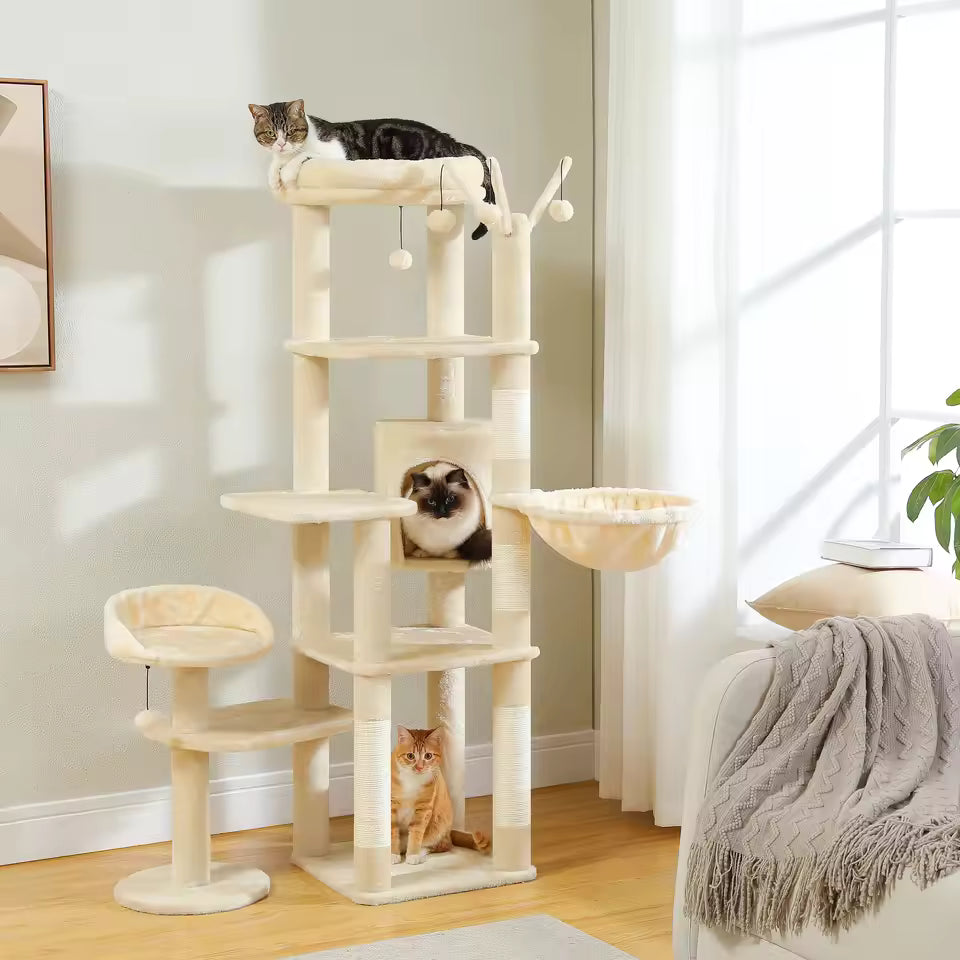
Move It to Where Your Cat Already Spends Time
If there is one single change that makes the biggest difference for most ignored cat trees, it is placement near a window in a room your cat already occupies.
Cats are drawn to windows for the visual stimulation - birds, movement in the garden, passersby, light shifts across the day. A cat tree positioned so that the top perch has a window view becomes much more appealing because the tree now has something to offer that the couch does not. The window is the draw; the tree is how they reach it.
Beyond windows, place the tree in the room where your cat currently spends the most time. If they follow you to the living room in the evenings and sleep near where you sit, that is where the tree belongs - not in a spare bedroom that no one enters until guests arrive.
Avoid placing tall trees in the middle of open floor space where the cat is visible from all sides while perched. Cats prefer positions where they can see the room without feeling exposed themselves. A corner placement, or a spot against a wall with a window to one side, tends to work well.
Make the Scent Familiar Before Expecting Use
One of the most overlooked tactics is scent introduction. Before expecting your cat to climb the tree, spend a few days making it smell like them.
Place a worn item of your clothing - a t-shirt or an old jumper that carries your scent - on one of the perches. Your cat is familiar with your scent and associates it with safety. A blanket or towel your cat already sleeps on is even better, since it carries their own scent and the familiar smell of something they already trust.
Some cats respond well to catnip applied directly to the sisal posts or sprinkled on a perch. It is worth noting that catnip response is genetic - roughly 50 to 70 percent of cats respond to it, so if your cat does not react, that is not unusual. Catnip extract sprays are sometimes more concentrated and effective than dried catnip in small quantities.
Avoid using strong cleaning products on a new tree before your cat has been introduced to it, as these can layer unfamiliar chemical scents over the already-foreign smell of the new furniture.
Use Play to Build Positive Association
Play is one of the most effective tools for encouraging a cat to explore a cat tree, because it transforms the tree from an unfamiliar object into a site of positive, engaging activity.
Use a wand toy or feather teaser to draw your cat toward the base of the tree, then gradually move the toy up the first platform and onto the second. Let them chase the toy onto the tree naturally rather than placing them on it. The movement and the game do the work - the cat is following instinct, not being asked to interact with something unfamiliar.
Keep sessions short, particularly at first. Five to ten minutes of play near and on the tree, once or twice a day, is more effective than a single long session. Short, positive associations stack up and shift the tree from "new and uncertain" to "this is where good things happen."
Over time, move the play progressively higher up the tree. There is no need to rush to the top perch immediately. Let your cat set the pace by following the toy to whatever level they are comfortable with, and gradually extend the range as their confidence builds.
Use Treats Strategically
Treats are a straightforward way to encourage exploration, particularly for cats who are food-motivated. Place a small treat on the first platform and let your cat find it on their own. Once they are comfortable taking treats from that level, place another on the second level. This step-by-step approach encourages the cat to explore progressively higher levels at their own pace without any pressure.
The key is patience. Do not hover or encourage while they are exploring. Simply set the treats and leave the tree available. A cat that discovers something interesting on their own terms tends to return to investigate further - a cat that feels watched or managed while exploring may become more cautious.
For cats who are less food-motivated, favourite toys or puzzle feeders placed on the platforms can serve the same purpose.
Check That the Tree Is Actually Stable
If your cat stepped on the tree, felt it move, and walked away - that impression may persist. The fastest way to address this is to make sure every fitting is fully tightened, and then to try gently rocking the tree yourself. If there is any noticeable movement, identify where the loose joint is and tighten it.
For trees on smooth hard floors, a rubber non-slip mat under the base makes a real difference. On carpet, make sure the base is sitting flat without any edge lifting. Repositioning the tree into a corner so that two walls provide backing support adds further stability without any modification.
Once the tree is genuinely steady, some cats need to be reintroduced using the play and treat strategies above, because the earlier negative experience may need to be overwritten with positive ones.
Consider Whether the Design Suits Your Cat
If you have tried placement changes, scent introduction, play, and treat-based encouragement over a couple of weeks and the tree remains mostly unused, it may be worth considering whether the design is the right match for your cat.
A senior cat or one with joint stiffness may find a tall, high-platform tree difficult or painful to climb. Shorter structures with easy access points, or trees with wider, lower platforms and a comfortable condo at a more accessible height, can make a genuine difference.
A cat that tends to hide rather than perch in open spaces may not be interested in an open platform at the top of a tall tower. An enclosed condo lower down may be much more appealing to their personality.
Our post on why cats sometimes ignore a cat tree and how to address each cause goes into more detail on matching tree design to cat temperament, and is worth reading if basic encouragement strategies have not moved things forward.
Products That Work Well for Less Active Cats
If you are purchasing a tree specifically for a cat who tends toward lower activity or older age, some designs lend themselves to this better than others.
The 99cm three-tier cat climbing tree with scratching post is a compact, accessible option with multiple levels that are not dramatically separated in height, making it easier for a less agile cat to explore without committing to a significant jump. The sisal post gives them a scratching outlet, and the modest height means the climb feels achievable rather than daunting.
For cats who are moderately active but primarily enjoy having a comfortable perch and enclosed sleeping space, the multi-level cat tree with condo and cat scrapers provides multiple activity zones including an enclosed condo, which suits cats who prefer sheltered resting over exposed perching.
For households where the goal is to encourage a bit more movement and activity over time, our cat scratching post collection includes standalone options that can act as a lower-commitment introduction - getting the cat comfortable with sisal and the associated scratch-and-stretch behaviour before committing to a larger multi-level structure.
Our post on encouraging less active cats back into regular climbing and play offers further practical strategies specifically tailored to cats whose activity levels have reduced with age or lifestyle, and is a useful companion to the tips in this article.
Be Patient With the Timeline
Some cats take a few days to adopt a cat tree. Others take a few weeks. A small number are slower still, particularly if they had an early negative experience with the tree or are naturally cautious animals. This is normal, and the timeline tends to shorten considerably once the tree is in the right location and the cat has had enough positive interactions in its vicinity.
What does not help is moving the tree repeatedly in the hope that a different location will suddenly unlock enthusiasm. Once you have identified the best position - near a window, in a frequently used room - leave it there and let the cat adjust at their own pace.
Our broader guide on what makes cat trees genuinely worth using for indoor cats covers the long-term health and enrichment case for encouraging consistent use, which may be useful if you are trying to explain to a reluctant household why the effort is worthwhile.
When to Ask for Help
If your cat is genuinely avoiding the tree after several weeks of patient, positive encouragement - and particularly if they are also showing other signs of reluctance to move, climb, or engage in play - it is worth a conversation with your vet. Reduced interest in physical activity can sometimes have an underlying medical component, including joint discomfort or pain, that is separate from the tree itself.
At Cat Tree Haven, we are happy to help you think through whether your current tree is the right match for your cat's needs, or whether a different design might work better.
Get in touch with our team here and we will do our best to point you in the right direction.
Frequently Asked Questions
Why does my cat ignore the cat tree?
The most common reasons are poor placement, an unstable structure, unfamiliar scent, or a design that does not suit the cat's personality or physical condition. Identifying which of these applies is the most effective starting point before trying encouragement strategies.
How do I get my cat interested in a cat tree?
Place the tree near a window in a room your cat already uses, introduce familiar scents using a worn blanket or your own clothing, use a wand toy to draw them toward and onto the tree during play, and place treats at progressively higher levels to encourage exploration at their own pace.
Does catnip help cats use a cat tree?
For cats that respond to catnip - which is genetically determined and not universal - sprinkling dried catnip or using a catnip spray on the scratching posts and perches can make the tree more appealing. However, roughly 30 to 50 percent of cats do not respond to catnip, so it is not a reliable strategy for every cat.
How long does it take for a cat to start using a cat tree?
This varies considerably. Some cats begin using a tree within days of it being introduced. Others take several weeks, particularly if they are naturally cautious or had an early hesitation when first encountering it. Consistent, low-pressure positive reinforcement through play and treats tends to shorten the timeline.
What if my cat used the tree for a while and then stopped?
A sudden loss of interest often has a trigger - a change in the tree's position, a negative experience nearby, another cat claiming the structure, or the tree developing a wobble as fixings loosen. Check the stability of the tree, consider whether anything changed in the environment around the time use dropped off, and reintroduce using treats and play if needed.
Is it worth getting a different cat tree if my cat ignores the current one?
Possibly, if the current tree does not match your cat's preferences in terms of height, accessibility, or enclosed versus open resting spaces. Before purchasing a different tree, try the placement and scent strategies outlined above, as these solve the majority of cases without requiring a new purchase.
Can older cats learn to use a cat tree?
Yes, though the process may take longer and the design requirements are different. Older or less mobile cats benefit from lower, more accessible structures with wider platforms and enclosed resting spaces rather than tall multi-level towers that require significant jumping. Meeting the cat where they are physically makes adoption much more likely.